










Strong Almond Prices and Water Concerns Shape 2026 Outlook

California almond growers are entering the 2026 season with cautious optimism as stronger prices, manageable inventories, and steady global demand help offset continuing concerns over water availability and production costs.
During a recent interview with “The Ag Meter” Nick Papagni, longtime almond industry leader Steve Malanca of West Valley Hulling in Firebaugh shared his outlook on the upcoming almond crop, market conditions, California water policy, and the future of agriculture in the Golden State.
According to Malanca, the 2026 almond crop appears likely to come in below last year’s production of approximately 2.7 billion pounds.
Following a spring marked by early heat, rain events, and strong winds in some growing regions, Malanca believes the crop could ultimately finish somewhere between 2.5 and 2.75 billion pounds.
“There were weather challenges throughout bloom and early development,” Malanca explained. “It looks like a pretty good crop, but not a barn burner and certainly not a 3-billion-pound crop.”
Water Remains Agriculture’s Biggest Challenge
While weather always influences almond production, Malanca emphasized that water continues to be California agriculture’s most significant long-term challenge.
Groundwater restrictions, rising pumping costs, and limited surface water allocations are creating increasing pressure on growers throughout the state. Some farming operations that rely heavily on groundwater are facing difficult decisions as regulations continue to tighten.
“There is talk that some farmers may eventually only be able to farm 60 out of every 100 acres because of water limitations,” Malanca said.
Even in years when reservoirs are relatively full, many West Side growers continue receiving limited allocations. Malanca expressed frustration that some farmers lost previously purchased water supplies because unused allocations could not be carried over into future years despite available reservoir capacity.
The result is a growing concern about the long-term sustainability of farming operations that depend on reliable water access.
Tighter Supplies Could Support Better Prices
While reduced production is never ideal, Malanca believes tighter almond supplies may help create a healthier market balance.
Just 18 months ago, almond prices hovered near $1.40 per pound. Today, some processors are reportedly offering more than $3 per pound for Nonpareil in-shell almonds.
One processor told Malanca it was the first time since November 2018 that a $3 price appeared on their pricing sheet.
For growers facing record production expenses, stronger pricing is welcome news.
Input costs remain elevated, and many almond growers continue carrying substantial investments in farmland and infrastructure. Improved pricing could provide some much-needed financial stability across the industry.
Inventory Levels Continue Improving
Market fundamentals have also strengthened thanks to strong almond movement.
Recent monthly position reports have shown shipments exceeding 200 million pounds, with one month reaching approximately 240 million pounds.
Those sales have helped reduce carryover inventories to more manageable levels, improving overall supply-demand balance.
International market factors are also helping California growers. Heavy rainfall in Australia has reportedly reduced competing supplies, potentially creating additional export opportunities for California almonds, particularly in China and other key markets.
Crop Quality Looks Promising
Despite weather fluctuations, early reports suggest almond quality should remain strong this season.
The early heat accelerated nut development, producing larger almonds in many orchards. Larger kernels often command premium pricing, though they can sometimes result in slightly lower overall yields.
Grower reports have varied throughout the state. Some orchards appear lighter than expected, while others are carrying heavy loads.
Overall, Malanca expects quality to remain excellent.
The season is also running ahead of schedule. Similar to table grapes, blueberries, strawberries, and other crops, almonds are maturing earlier than normal due to accumulated heat units.
As a result, harvest could begin earlier than usual throughout much of California.
Fortunately, processors and hullers have completed offseason maintenance and are prepared to receive an early crop.
The Need for More Water Storage
A significant portion of the discussion focused on California’s water infrastructure and storage capacity.
Malanca pointed to data from wet years showing massive volumes of water flowing through the Sacramento-San Joaquin Delta and ultimately reaching the ocean.
Using the winter of 2017 as an example, he noted that Delta outflows exceeded 300,000 cubic feet per second during peak storm events.
According to Malanca, California’s biggest water problem is not simply supply—it is storage.
“If Shaver Lake had been empty, it could have been filled approximately 60 times with the amount of water flowing out during those periods,” he explained.
Malanca believes expanding storage through raising existing dams and developing additional storage projects would benefit agriculture, communities, and environmental interests alike by providing more reliable water supplies during drought years.
Keeping Agriculture United
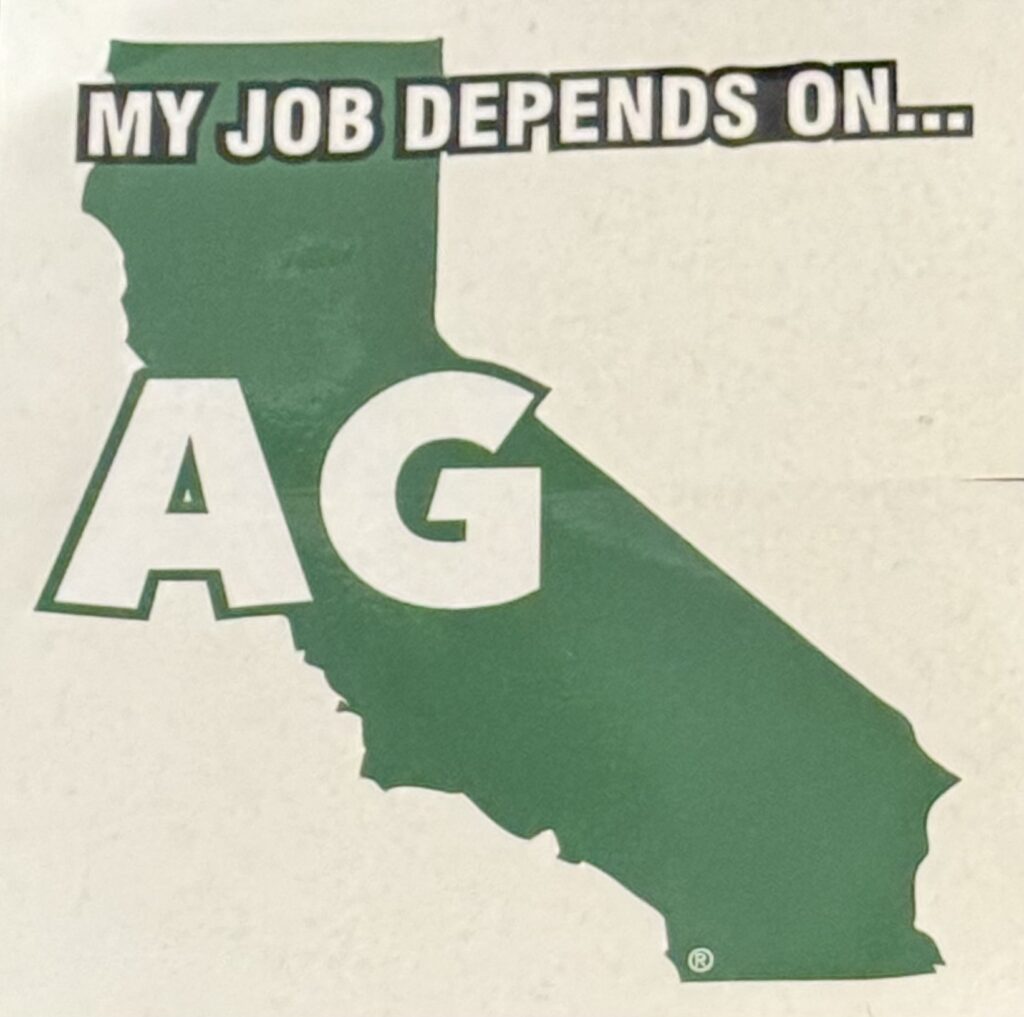
The conversation also highlighted Malanca’s work as co-founder of the “My Job Depends on Ag” movement alongside Eric Wilson.
For approximately 15 years, the campaign has helped raise awareness about agriculture’s role in California’s economy through decals, apparel, and public outreach efforts.
Malanca said he would like to see the movement continue growing but believes younger generations need to step forward and help carry the message.
“We need these young kids to grab it and run with it,” he said.
The campaign’s California-shaped logo symbolizes a statewide effort to unite agriculture across county lines and commodity sectors.
“We’re all in this together. That’s why the decal has the state of California on it,” Malanca explained.
Individuals interested in helping support or expand the My Job Depends on Ag campaign can contact Nick Papagni at:
Papagni offered to share ideas and connect interested supporters with Malanca and the movement’s leadership.
Looking Ahead to Harvest
As harvest approaches, Malanca remains cautiously optimistic about the almond industry’s direction.
He expects prices to strengthen further before harvest and believes the market is moving into a healthier position than growers have seen in recent years.
While questions remain regarding final crop size, weather conditions, and water supplies, California almonds continue to benefit from strong global demand and a reputation for unmatched quality.
For growers, processors, and consumers alike, the coming months will reveal whether the 2026 crop lands closer to 2.5 billion pounds or approaches last year’s production levels.
One thing remains certain: water, market access, and sound agricultural policy will continue shaping the future of California’s signature tree nut industry.
Listen to the Full Interview
This article only highlights a portion of the wide-ranging discussion between “The Ag Meter” Nick Papagni and Steve Malanca.
To hear their complete conversation on almond markets, water policy, crop conditions, California politics, and the future of agriculture, be sure to listen to the full interview.
The interview provides valuable insights from one of California agriculture’s most respected voices and offers a candid look at both the opportunities and challenges facing growers in 2026.