










Secretary Brooke Rollins Unveils New Assistance Program for Specialty Crop Producers in the San Joaquin Valley

California agriculture took center stage as U.S. Secretary of Agriculture Brooke Rollins visited the San Joaquin Valley to announce nearly $1.7 billion in financial assistance for specialty crop farmers through a newly launched federal support initiative. Speaking alongside David Valadao at Allied Potato Farms, Rollins highlighted the critical role California producers play in feeding America and the world while addressing the economic challenges currently facing farmers across the nation.
California Remains the Nation’s Agricultural Powerhouse
During her remarks, Rollins emphasized California’s unmatched importance to American agriculture. The state is home to more than 63,000 farms spread across approximately 24 million acres and generates over $60 billion in annual agricultural sales. California accounts for more than 10% of total U.S. agricultural sales and produces a vast range of commodities, including almonds, avocados, grapes, garlic, peaches, potatoes, and numerous other specialty crops.
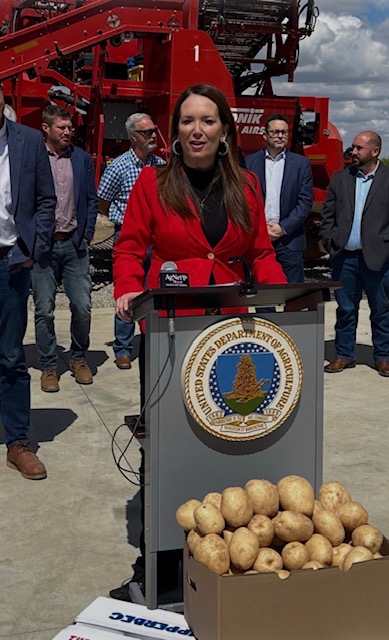
The event was held at Allied Potato Farms, where Rollins toured potato fields and met with local growers. She praised California farmers for their role in ensuring food security and maintaining the nation’s agricultural strength.
Economic Challenges Continue to Pressure Specialty Crop Producers
Rollins acknowledged the financial difficulties facing many producers. Rising input costs, labor expenses, import competition, and market pressures have created significant challenges for specialty crop growers.
Potato farmers, in particular, have faced severe financial strain. According to Rollins, fresh market potatoes have been sold at or below production costs for multiple consecutive years. In 2025 alone, U.S. potato growers experienced an estimated $700 million in losses. She noted that these challenges extend beyond potatoes and affect specialty crop producers nationwide.
Many growers are operating with shrinking margins while dealing with higher production costs and increasing economic uncertainty.
Trade Expansion Creating New Opportunities
A major focus of Rollins’ speech was the administration’s effort to expand agricultural exports and strengthen trade relationships.
She reported that fresh and frozen potato exports have increased by 3% compared to the previous year, while exports of tree nuts, dairy products, and other commodities are also growing. The administration has maintained tariff-free access to Canadian and Mexican markets while working to remove barriers and open new opportunities in countries such as Japan and throughout Southeast Asia.
Rollins noted that specialty crop exports have increased approximately 5% over the past year, crediting new trade agreements and expanded market access. She stated that 24 new trade deals have been completed during the past year, helping create additional demand for American agricultural products worldwide.
USDA Launches New Assistance for Specialty Crop Farmers Program
The centerpiece of the announcement was the creation of the Assistance for Specialty Crop Farmers (ASCF) program.
The USDA will provide nearly $1.7 billion in assistance to specialty crop producers, including potato growers, through the initiative. The program is designed to deliver financial support quickly while reducing administrative burdens on farmers.
According to Rollins, USDA has streamlined the application process by utilizing pre-filled applications and online enrollment through Login.gov as part of the agency’s “One Farmer, One File” approach.
Key program dates include:
- Online applications available beginning June 1.
- Farmers without Login.gov access may request pre-filled applications through local Farm Service Agency offices beginning June 8.
- Enrollment remains open through August 7.
Rollins said the goal is to ensure specialty crop producers receive assistance as quickly as possible while minimizing paperwork and bureaucratic obstacles.
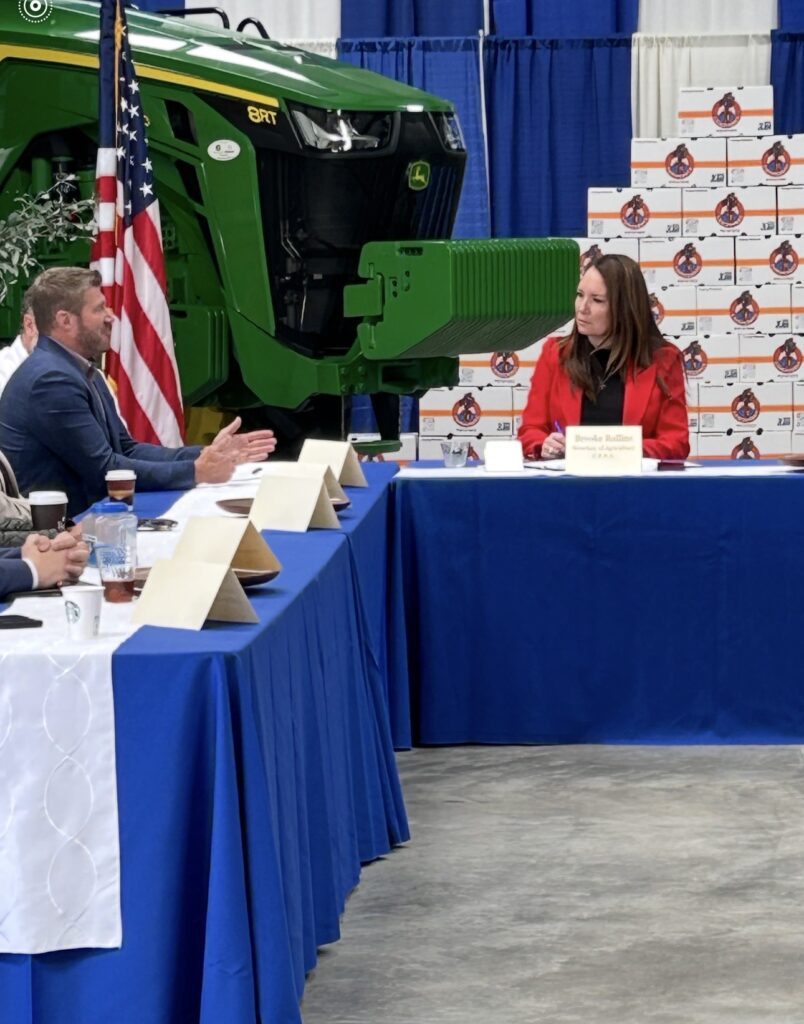
Food Security Is National Security
Throughout the event, both Rollins and Valadao repeatedly emphasized the connection between food production and national security.
Rollins argued that maintaining a strong domestic agricultural sector is essential to preserving American independence and reducing reliance on foreign nations for food and agricultural inputs. She stressed that farmers and ranchers are central to the future strength and security of the United States.
She also connected agricultural production to the administration’s “Make America Healthy Again” initiative, stating that products grown by American farmers—including potatoes, tree nuts, dairy products, citrus, and livestock—should play a larger role in national health policy discussions.
Congressman Valadao Highlights Central Valley Agriculture
Congressman Valadao praised the diversity of agriculture in California’s Central Valley and emphasized the importance of policies that support growers.
He noted that the region produces a wide variety of commodities and that successful farming depends on effective trade, labor, and water policies. Valadao stressed that farmers, farmworkers, and agricultural leaders all play essential roles in maintaining a safe and reliable food supply for the nation.
“The Central Valley produces America’s food and helps feed the world,” Valadao said, reinforcing the importance of protecting the region’s agricultural industry.
Discussion Turns to Leadership and Agricultural Priorities
During a question-and-answer session, AgNet West’s Nick Papagni, known as “The Ag Meter,” asked Rollins about the importance of leadership and upcoming California elections.
Rollins responded by discussing changes implemented at USDA since taking office, arguing that the department has shifted its focus toward serving farmers and ranchers. She emphasized the importance of agricultural policy, voter engagement, and leadership decisions that directly impact farming communities.
Looking Ahead
The announcement of the $1.7 billion Assistance for Specialty Crop Farmers program represents one of the largest recent federal investments aimed specifically at supporting specialty crop producers. For California growers facing rising costs, market volatility, and labor challenges, the program provides short-term financial relief while broader efforts continue to address long-term agricultural competitiveness.
As California remains the nation’s leading agricultural producer, federal officials and local leaders alike stressed that supporting farmers is not only an economic priority but a matter of national security, food independence, and the future of American agriculture.