








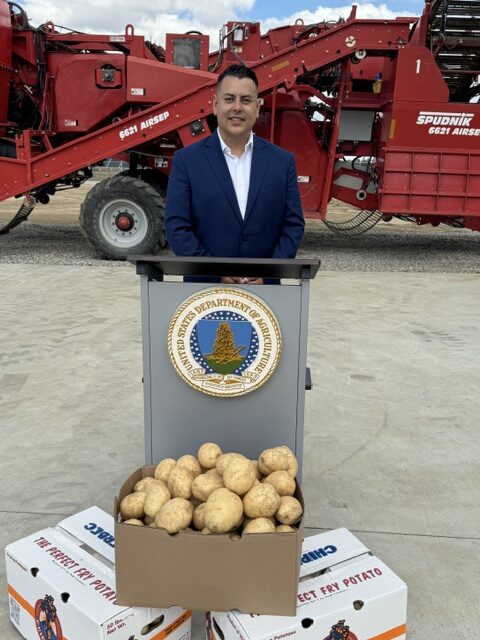
California’s agricultural communities depend on more than fertile soil and hard work—they depend on reliable infrastructure, economic investment, and access to water. During a recent visit to Bakersfield, USDA Rural Development State Director Bryan Anguiano discussed the agency’s commitment to supporting farmers, rural communities, and economic growth throughout California.
USDA Leadership Visits the Central Valley
Speaking with Ag Meter, Bryan Anguiano expressed enthusiasm about welcoming USDA Secretary Brooke Rollins to California’s Central Valley. He described the visit as an important opportunity for federal leadership to see firsthand the challenges and successes of one of the nation’s most productive agricultural regions.
According to Anguiano, visits from administration officials help strengthen communication between Washington and rural America, allowing decision-makers to better understand the needs of agricultural communities and the importance of policies that support farmers and ranchers.
Supporting Farmers, Dairies, and Rural Communities
As State Director for USDA Rural Development, Anguiano oversees programs focused on economic development in rural areas. He explained that Rural Development serves as the economic development arm of the USDA, providing resources that help communities build infrastructure, create jobs, and prepare for future growth.
The agency works closely with local governments, community organizations, and agricultural stakeholders to strengthen rural economies. These efforts are designed to ensure that farming communities remain viable and competitive while providing opportunities for future generations.
Anguiano also emphasized the close collaboration between USDA officials and agricultural leaders throughout California, noting that supporting farmers, dairy producers, and rural residents remains a top priority.
Water Infrastructure Remains a Critical Issue
One of the central topics of the discussion was water. For California agriculture, water availability is directly tied to economic activity, employment, and community stability. Small rural towns often rely on agriculture as their primary economic engine, making water access a critical concern.
Anguiano highlighted USDA Rural Development’s Water and Environmental Programs, which provide loans and grants to support essential water infrastructure projects. These programs help municipalities, water districts, counties, and cities fund projects such as:
- Water system repairs
- Water storage tanks
- Pipeline construction and upgrades
- Improvements to water distribution systems
- Environmental infrastructure projects
By investing in these systems, USDA helps ensure that rural communities have reliable access to clean water while also supporting agricultural operations that depend on dependable water supplies.
The Need for More Water Access
Throughout the conversation, Anguiano stressed the importance of expanding water access for California farmers. While infrastructure improvements are critical, he noted that ensuring adequate water supplies remains a major focus for the administration and agricultural leaders.
He explained that water distribution infrastructure is just as important as water availability itself. Without sufficient systems to move and deliver water efficiently, growing populations and expanding communities can place additional strain on existing resources.
As California’s population continues to grow, investments in water storage, transportation, and distribution infrastructure become increasingly important for both urban and rural communities.
Listening to Farmers’ Concerns
A key purpose of Secretary Rollins’ visit was to participate in discussions with farmers and agricultural leaders. Anguiano said these conversations provide valuable insight into how water challenges affect operations of all sizes.
By hearing directly from producers, USDA officials can better understand the real-world consequences of water shortages and infrastructure limitations. These firsthand accounts help inform policy discussions and provide information that can be shared with federal leadership.
The Importance of Representation
Anguiano also emphasized the importance of elected officials who understand the unique challenges facing agricultural communities. He expressed appreciation for Central Valley congressional representatives who advocate for water access, agricultural priorities, and rural development initiatives.
According to Anguiano, strong representation helps ensure that the concerns of rural America remain part of national policy discussions and that agricultural communities have a voice in decisions that affect their livelihoods.
Looking Ahead: A Summer Focused on Rural America
As the summer progresses, Anguiano plans to travel extensively throughout California’s rural communities. His goal is to increase awareness about USDA Rural Development programs and connect local leaders with resources that can support economic growth and infrastructure development.
These outreach efforts will focus on promoting job creation, strengthening infrastructure, and ensuring that rural communities have access to the tools they need to thrive in the years ahead.
Building a Stronger Future for Rural California
The conversation underscored the critical role that water, infrastructure, and economic development play in sustaining California agriculture. Through investments in rural communities and continued engagement with farmers, USDA Rural Development aims to help strengthen the foundation of California’s agricultural economy.
As challenges related to water access and infrastructure continue to evolve, collaboration between farmers, local communities, and federal agencies will remain essential in supporting the long-term success of rural California.
Listen to the Full Interview
This conversation offers just a glimpse into the important work being done to support California’s farmers, ranchers, and rural communities. To hear Bryan Anguiano discuss USDA Rural Development programs, water infrastructure investments, economic opportunities, and the administration’s priorities for the Central Valley in greater detail, be sure to listen to the full interview with “The Ag Meter” Nick Papagni. Their discussion provides valuable insight into how federal resources are being directed toward rural California and what the future may hold for the agricultural communities that help feed the nation. Don’t miss this informative conversation—tune in to hear directly from Bryan Anguiano about the challenges, opportunities, and vision for a stronger rural America.