








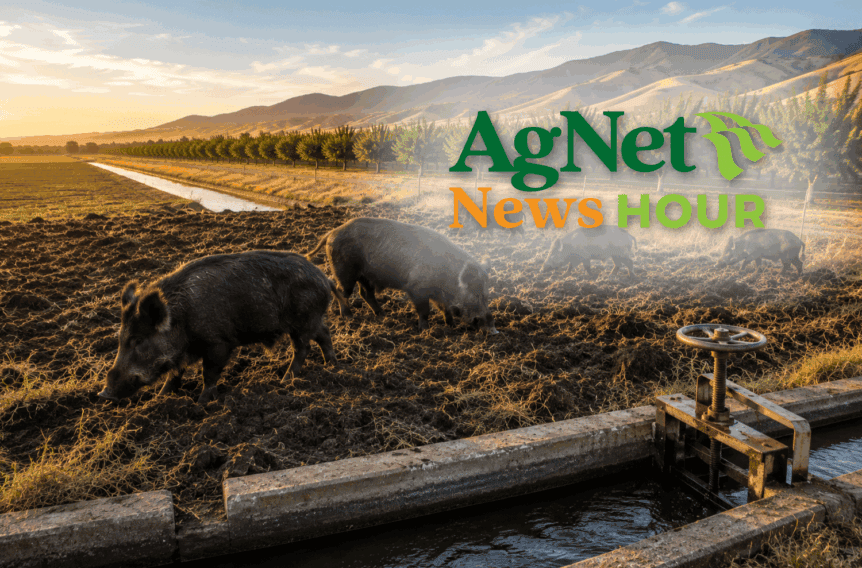
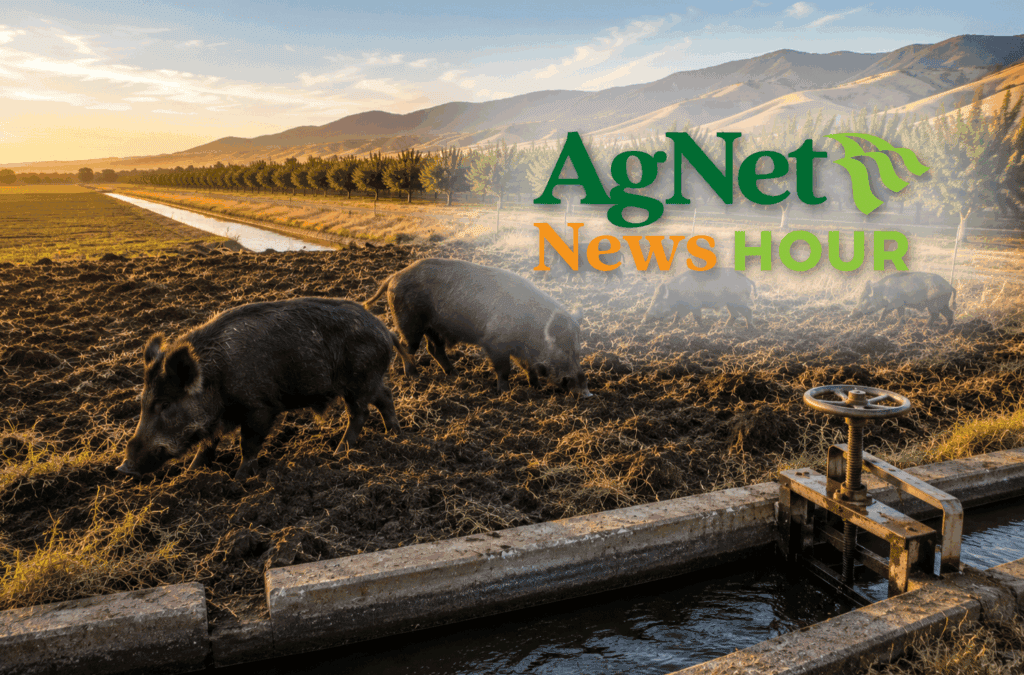
The U.S. Department of Agriculture is investing $35 million to help combat one of agriculture’s most destructive invasive species. During today’s episode of the AgNet News Hour, USDA Under Secretary for Farm Production and Conservation Richard Fordyce discussed the department’s newly announced Feral Swine Eradication Program, which will provide grant funding to help landowners and partners reduce wild hog populations that threaten farms, ranches and natural resources.
Fordyce said feral swine are among the most damaging invasive species affecting U.S. agriculture. The animals destroy cropland, pasture, irrigation infrastructure and wildlife habitat while also posing a serious disease risk to livestock.
“When we think about invasive species, they come in all different shapes and sizes,” Fordyce said. “Honestly, the feral swine probably could be the most invasive and probably cause the most damage.”
The program, administered jointly by USDA’s Natural Resources Conservation Service (NRCS) and the Animal and Plant Health Inspection Service (APHIS), will distribute $35 million in grant funding through qualified partners. Those organizations will work directly with landowners on education, trapping and other management practices designed to reduce feral swine populations.
Fordyce emphasized that the program is designed to address both the economic and biological impacts of wild hogs.
“They really don’t care what landscape they’re destroying,” he said, noting that feral swine damage forests, cropland, grazing land and sensitive natural areas while also carrying diseases that could spread to domestic swine and other livestock.
The discussion also highlighted California’s growing feral swine problem. While states such as Texas, Arkansas and Missouri have some of the nation’s largest populations, hosts Nick Papagni and Josh McGill noted that wild hogs have been reported across much of California and can cause extensive damage to farmland, orchards and rangeland.
For producers experiencing feral swine damage, Fordyce encouraged them to begin by contacting their local NRCS office.
“This is a pilot program,” he said. “Contact NRCS if you have these critters around and you want to see about how to get rid of them.”
Applications from eligible partner organizations are due September 21, with NRCS and APHIS working together to evaluate proposals and distribute funding. Fordyce said the goal is to support organizations that already have the expertise to help landowners effectively trap and remove feral swine populations.
As wild hog populations continue expanding across the country, Fordyce said the new initiative reflects USDA’s commitment to protecting agricultural production while reducing the environmental and economic damage caused by one of the nation’s most destructive invasive pests.
Listen to the full interview below or on your favorite podcast app.
Listen to previous AgNet News Hour episodes…