









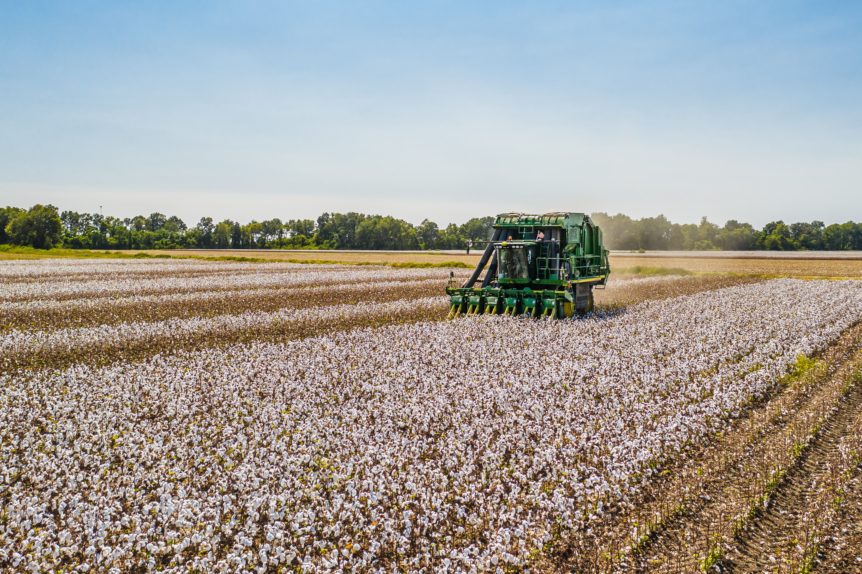
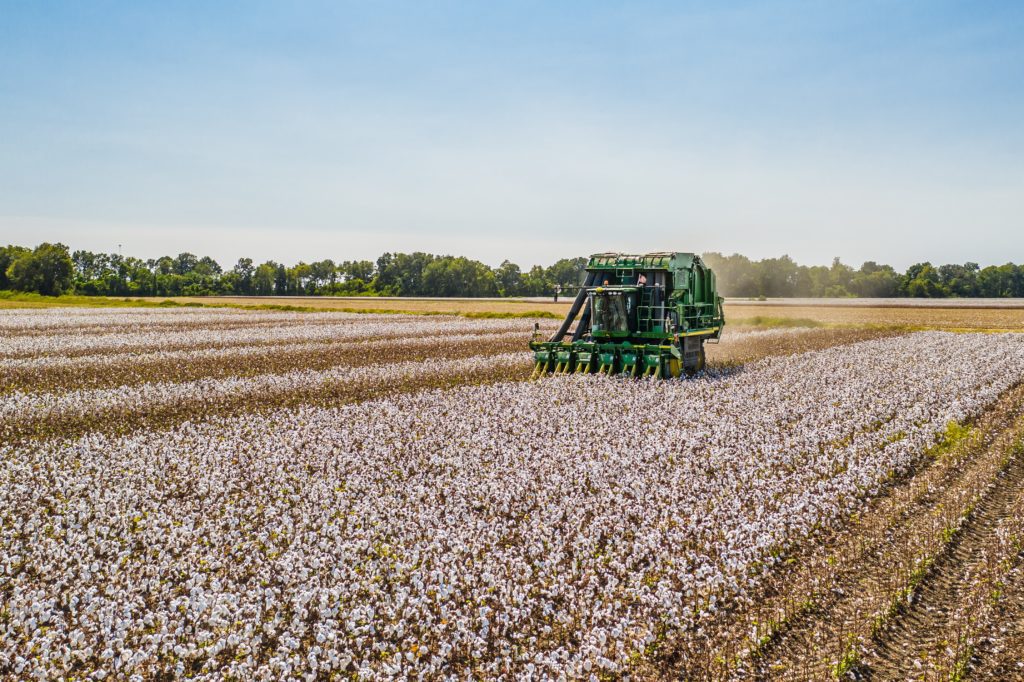
The latest U.S. cotton crop progress report shows planting activity moving steadily forward across much of the country, although weather-related delays continue to affect some key production areas. During a recent update, USDA Meteorologist Brad Rippey provided an overview of current planting, development and crop progress trends for the nation’s cotton crop.
According to Rippey, 86% of the intended U.S. cotton acreage had been planted as of June 14. While that figure remains slightly behind the five-year average, it is still ahead of last year’s pace.
“86% of the U.S. intended cotton acreage planted by June 14th, that is two points behind the five-year average, but ahead of last year’s pace of 84%,” Rippey said.
Several states have already completed planting for the season, including Arizona, California and Missouri, all of which reached 100% planted acreage.
U.S. Cotton Crop Progress Slowed by Texas Weather
While planting is largely complete in many regions, Texas remains a notable exception. As the nation’s leading cotton-producing state, Texas continues to trail its typical planting pace due to weather conditions.
“The only state that is reporting planting progress at least five percentage points behind its five-year average is Texas,” Rippey said. “80% planted, five-year average is 85%, and we have seen enough rain to slow things down for some of that later planting.”
Although delays can create concerns for producers, moisture conditions may ultimately benefit crop establishment in some areas if favorable weather continues through the growing season.
The Texas planting pace remains an important metric because of the state’s significant influence on overall U.S. cotton production.
U.S. Cotton Crop Progress Advances Into Development Stages
Beyond planting, cotton development is also progressing across much of the country. Rippey reported that 19% of the national crop had reached the squaring stage by June 14.
“Nationally, 19% is the value for June 14th, two points ahead of the five-year average, one point ahead of last year at this time,” he said.
Squaring represents an important milestone in cotton development as plants begin producing flower buds that eventually contribute to boll formation and yield potential.
Arizona is currently among the most advanced states, with 44% of the crop reaching the squaring stage. Meanwhile, boll development is beginning to emerge nationally.
“And cotton setting bolls, showing 2% setting bolls nationally, one point behind the five-year average, one point behind last year at this time,” Rippey said.
As planting nears completion and crop development accelerates, producers will continue monitoring weather conditions closely to determine the crop’s yield potential throughout the summer.
Hear more from USDA Meteorologist Brad Rippey on U.S. cotton crop progress and current growing conditions by listening to the report below.