









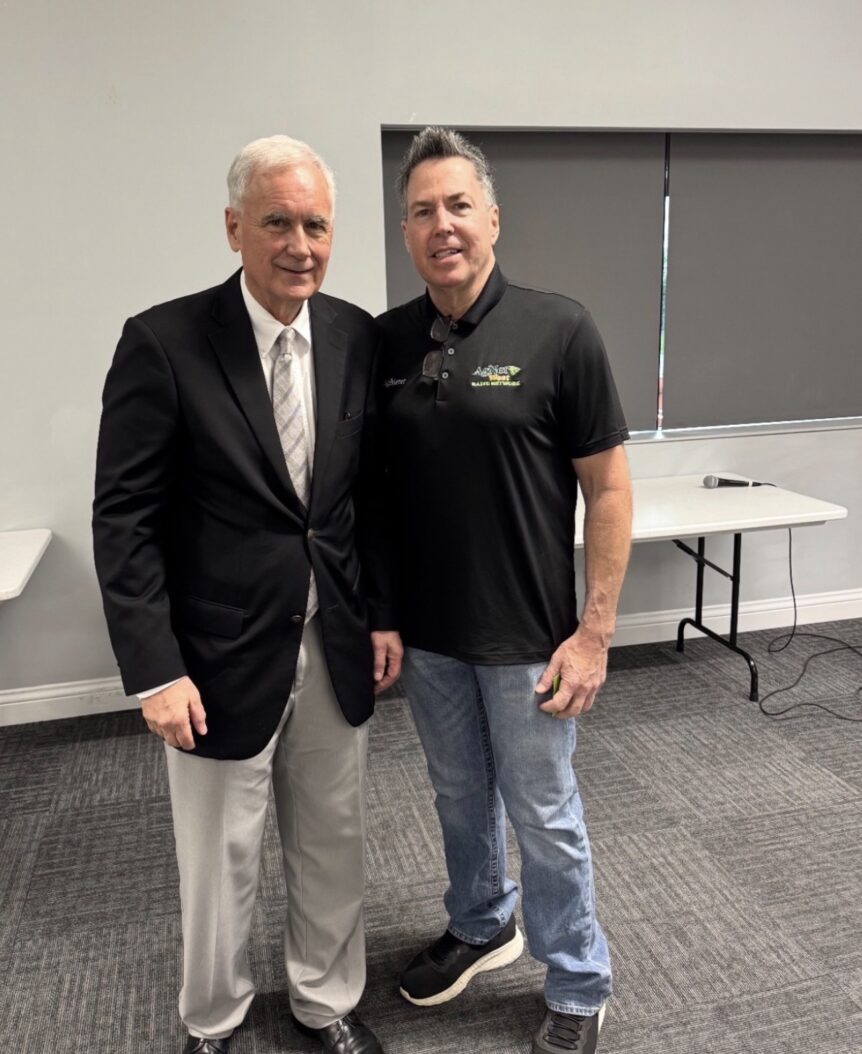
Tom McClintock Sounds the Alarm on California’s Future: Water, Agriculture, Energy, and Elections
California’s affordability crisis, water shortages, mounting regulations, election integrity, and the future of agriculture were front and center during a wide-ranging conversation between “The Ag Meter” Nick Papagni and Congressman Tom McClintock (CA-5). Throughout the interview, McClintock offered his perspective on the policy decisions he believes are reshaping California while outlining what he sees as the state’s path forward.
Representing California’s expansive Fifth Congressional District—which stretches from portions of the Central Valley into the Sierra Nevada and the Nevada border—McClintock discussed everything from water infrastructure and wildlife management to energy costs, housing, voter identification, and the upcoming gubernatorial election. The interview provides listeners with an in-depth look at many of the issues currently affecting California’s farmers, ranchers, businesses, and rural communities.
California’s Affordability Crisis
One of the central themes of the discussion was affordability. McClintock argued that California’s rising gasoline prices, electricity costs, housing shortages, and high taxes are the result of decades of public policy decisions.
He pointed to California’s significantly higher fuel and electricity prices compared to national averages and contrasted the state’s housing market with places like Texas, where new home construction continues at a much faster pace. According to McClintock, Californians are increasingly leaving the state because many families simply can no longer afford to live here.
He cited continued population losses to neighboring states such as Nevada and Arizona as evidence that residents are “voting with their feet,” saying California’s natural advantages should make it one of the nation’s most desirable places to live—not one people are leaving in record numbers.
Water Infrastructure Remains a Top Agricultural Issue
For California agriculture, water dominated much of the conversation.
McClintock argued that while droughts are natural, water shortages are largely the result of insufficient storage infrastructure. He emphasized that California receives abundant water but lacks the reservoirs and storage capacity needed to capture it for dry years.
He highlighted projects he believes could dramatically improve California’s water future, including raising Shasta Dam, completing the long-canceled Auburn Dam, expanding reservoirs, constructing additional aqueducts, and investing in hydroelectric facilities.
According to McClintock, California has not built a major dam since New Melones in 1979 despite decades of population growth. He maintained that expanding storage would improve water reliability for agriculture, cities, flood control, and electricity generation while reducing the amount of water flowing unused into the Pacific Ocean each year.
Agriculture Faces Increasing Regulatory Pressure
Speaking directly to California’s farming community, McClintock warned that policies affecting water delivery, energy production, mining, and agriculture remain among the industry’s greatest challenges.
He noted that virtually everything people use in everyday life is either grown or mined and argued that public policy should support—not hinder—those industries. Throughout the interview, he repeatedly emphasized the importance of reducing regulations that increase production costs for California farmers and ranchers.
Wildlife Management and Ranching
The discussion also explored growing concerns over wildlife management.
McClintock expressed concern about increasing mountain lion populations and the reintroduction of wolves into California. He argued that unmanaged predator populations threaten livestock, wildlife, and public safety while advocating for regulated hunting as an important conservation tool that helps maintain ecological balance.
Papagni echoed concerns frequently voiced by California ranchers regarding livestock losses and predator expansion into rural communities.
Election Integrity and Public Confidence
Election policy became another major topic.
McClintock discussed the federal SAVE Act, voter identification requirements, and election procedures, arguing that many other countries require government-issued identification to vote. He also expressed concerns about mail-in voting and advocated for restoring greater public confidence through traditional neighborhood polling places and stronger ballot chain-of-custody protections.
The conversation also touched on California’s upcoming elections and the importance of voter participation as residents weigh the state’s future direction.
Looking Ahead
As California prepares for another pivotal election cycle, McClintock said voters should carefully evaluate how public policy affects affordability, housing, energy, water infrastructure, and agriculture. He reflected on a time when California was known for abundant water supplies, affordable housing, lower taxes, strong universities, and growing economic opportunity, arguing that different policy choices could help restore many of those strengths.
The interview concludes with McClintock encouraging Californians to stay engaged, remain informed, and participate in shaping the state’s future.
Listen to the Full Interview
While this article highlights many of Congressman Tom McClintock’s views on California’s biggest challenges, the complete conversation with Nick Papagni, “The Ag Meter“, covers these topics in far greater detail. From water storage and agriculture to election policy, energy, wildlife management, and California’s future, the full interview offers an extended discussion on issues that matter to farmers, ranchers, rural communities, and all Californians.
Listeners interested in learning more about Congressman McClintock’s work or getting involved with his campaign can visit tommcclintock.com, the official campaign website he shared during the interview.
Be sure to listen to the full episode with “The Ag Meter” for the complete discussion between Nick Papagni and Congressman Tom McClintock.