








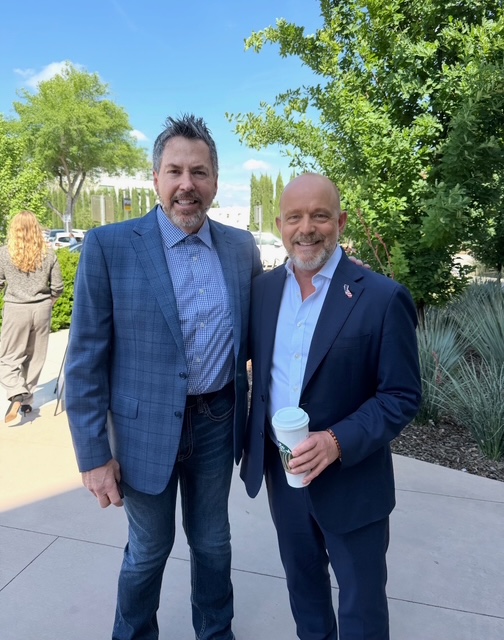
California gubernatorial candidate Steve Hilton joined “The Ag Meter” Nick Papagni for an energetic and wide-ranging interview focused on the future of California agriculture, water policy, energy costs, regulations, and what Hilton described as the urgent need for “common-sense leadership” in Sacramento.
Hilton immediately criticized recent California gubernatorial debates for failing to address agriculture, despite farming being one of the state’s largest and most important industries. He said California farmers and ranchers have been ignored for years by political leaders who continue pushing environmental regulations while overlooking the struggles facing rural communities throughout the Central Valley, Imperial Valley, Salinas, Monterey, Ventura County, and other major agricultural regions.
Throughout the interview, Hilton repeatedly emphasized that agriculture would have a major voice in his administration if elected governor. He told Papagni that California farmers are being “strangled and throttled” by excessive regulations, water restrictions, skyrocketing fuel prices, and climate policies that are making it increasingly difficult to operate farms and ranches across the state.
One of the biggest topics during the interview was water policy. Hilton pledged that one of his first actions as governor would be increasing water deliveries to California farms. He criticized the State Water Resources Control Board and environmental water diversion policies that send large amounts of water out to the ocean instead of supporting agriculture and rural communities. Hilton argued that California already has the infrastructure needed to improve water deliveries quickly if leadership changes direction.
Energy costs were another major concern raised during the conversation. Hilton argued that California’s climate regulations have dramatically increased the cost of diesel, gasoline, electricity, and natural gas, creating enormous financial pressure on farmers, ranchers, and food processors. He said everything from irrigation systems to transporting crops has become more expensive because of aggressive state climate mandates and electrification policies.
Hilton also addressed California’s broader economic problems, saying high taxes, excessive bureaucracy, and government waste are driving businesses and families out of the state. He discussed his “Cal DOGE” initiative, which aims to investigate fraud and misuse of taxpayer dollars in state government. According to Hilton, billions of dollars in wasteful spending could potentially be recovered through stronger audits and accountability measures.
For California agriculture specifically, Hilton announced that longtime farmer and businessman John Duarte of Duarte Nursery would serve as Secretary of Natural Resources in his administration. Hilton praised Duarte’s experience with water policy, forestry management, and rural economic development, saying his leadership would help restore balance to California’s natural resource policies.
The interview also focused heavily on transportation and infrastructure. Hilton sharply criticized California’s high-speed rail project, calling it a symbol of government incompetence and misplaced priorities. Instead, he argued transportation funding should be redirected toward practical improvements like widening Highway 99, a critical transportation corridor for farmers moving products throughout the Central Valley.
Hilton additionally promised reforms to California’s gas taxes and vehicle registration fees. He questioned why Californians pay some of the highest transportation taxes in the nation while dealing with some of the country’s worst roads. Hilton proposed a flat $71 annual vehicle registration fee and pledged to reduce regulations that he says unnecessarily increase infrastructure costs.
Another major theme throughout the interview was Hilton’s call for stronger cooperation between California and the federal government. Hilton highlighted his endorsement from President Donald Trump and said a positive working relationship with federal leaders would help California agriculture, infrastructure, and transportation projects move forward more efficiently.
Throughout the discussion, Hilton encouraged Republicans, independents, and moderate Democrats to unite around what he described as a “common-sense movement” focused on affordability, lower taxes, energy independence, reduced regulations, and stronger support for working families and agriculture.
As the interview concluded, Hilton delivered a direct message to California’s farmers and ranchers, telling them, “I love you. I’m with you.” He promised dramatic changes for agriculture if elected governor and urged Californians to participate in the June 2 primary election.
Listeners interested in learning more about Steve Hilton’s campaign or getting involved can visit stevehiltonforgovernor.com.
The full interview between Nick Papagni and Steve Hilton dives even deeper into California water policy, energy costs, transportation spending, government waste, and the future of California agriculture. Farmers, ranchers, and anyone concerned about the direction of the state will want to hear the entire conversation.