









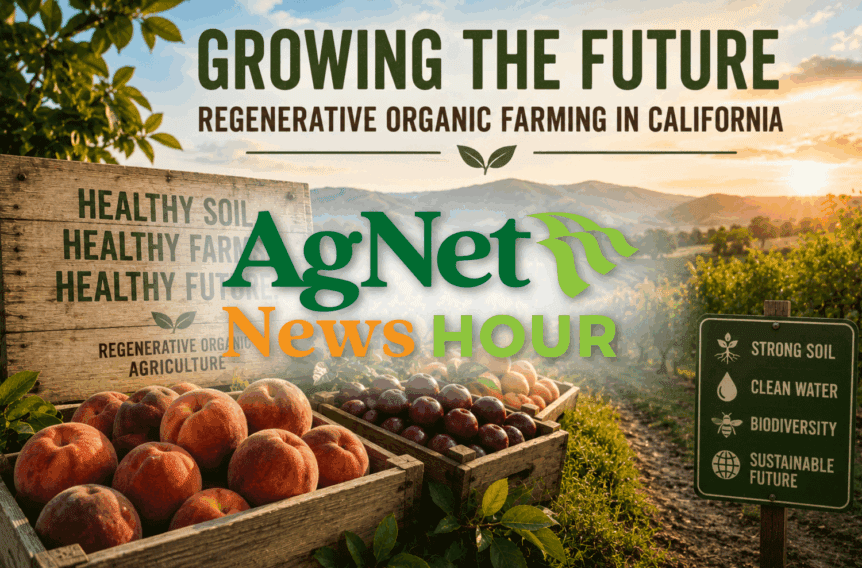
The AgNet News Hour continued its in-depth conversation with Homegrown Organic Farms Category Director Stephen Paul, focusing on regenerative organic farming, shifting consumer trends, marketing innovation, and the long-term future of California agriculture.
Paul emphasized that agriculture is changing rapidly, forcing growers to constantly adapt to shifting markets, weather conditions, labor shortages, and consumer demand.
“You have to stay ahead of the game,” Paul said while discussing how farming operations are evolving to meet changing expectations from retailers and consumers alike.
A major portion of the discussion centered on regenerative organic agriculture, an area where Homegrown Organic Farms has become a leader. Paul explained that many of their stone fruit operations are now certified regenerative organic, focusing heavily on soil health, biodiversity, and long-term sustainability.
“We are certified regenerative organic,” Paul explained. “The soil becomes alive.”
According to Paul, healthier soils lead to stronger ecosystems, improved microbial activity, and greater long-term sustainability for farming operations. However, regenerative farming also creates new management challenges, including increased pest pressure from birds and insects as fields become more biologically active.
“For every action, there’s a reaction,” he said.
Despite the added complexity, Paul believes regenerative practices represent an important step forward for agriculture, especially as consumers become increasingly interested in where their food comes from and how it is produced.
The conversation also highlighted the growing importance of transparency and education in the food industry. Paul said consumers today want stronger connections to farms, growers, and production practices.
“People want to know what they’re eating,” he explained.
At the same time, Paul defended conventional agriculture, stressing that California growers already operate under strict standards and care deeply about protecting their land and producing safe food.
“No one’s going to abuse their land,” Paul said.
Weather patterns and crop timing also remain major concerns heading deeper into summer. Paul noted that California blueberries experienced one of their earliest seasons in years after warm spring temperatures accelerated crop development nearly three weeks ahead of normal.
“Everything accelerated,” he said.
The episode also explored the importance of marketing and innovation in agriculture. Paul emphasized that growers can no longer simply plant crops and hope markets develop later. Instead, production decisions must align closely with consumer demand, retailer partnerships, and long-term planning.
“We’re not in a world where you can just plant anything anymore,” Paul explained.
Global trade and imports were another key topic during the interview, particularly within the berry industry. Paul described agriculture as increasingly interconnected, with products moving between California, Mexico, Peru, and other regions depending on seasonality and demand.
Beyond farming itself, Paul also encouraged greater involvement from agricultural leaders in public policy and local government, warning that farming voices are often underrepresented in political decision-making.
“Farmers solve problems,” Paul said. “We don’t have time to mess around.”
As California agriculture continues navigating regulation, changing markets, and evolving consumer preferences, Paul stressed that innovation, transparency, and strong relationships throughout the supply chain will be critical to keeping farms sustainable for future generations.
Listen to the full interview below or on your favorite podcast app.
Listen to previous AgNet News Hour episodes…