









A Look Back at Life on the Farm Before Electricity
For much of America’s agricultural history, rural life operated without one of the modern conveniences most people take for granted today: electricity. While cities and towns embraced electric power during the early decades of the 20th century, millions of farm families remained in the dark.
According to agricultural historian Mark Oppold, as late as the mid-1930s, nine out of ten rural homes still lacked electric service. This absence of electricity affected nearly every aspect of daily life, from household chores to farm productivity and economic development.
Daily Farm Life Without Electricity
Before rural electrification became widespread, farm families depended on manual labor for countless daily tasks.
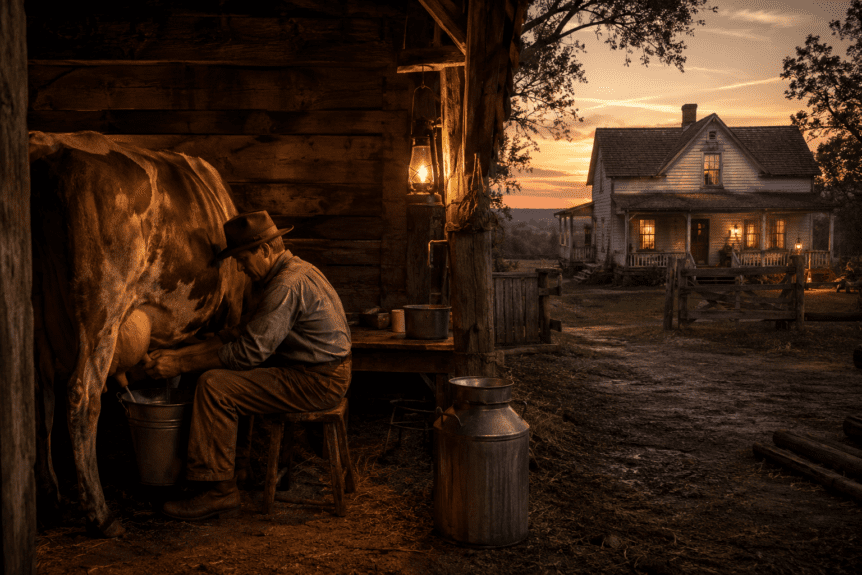
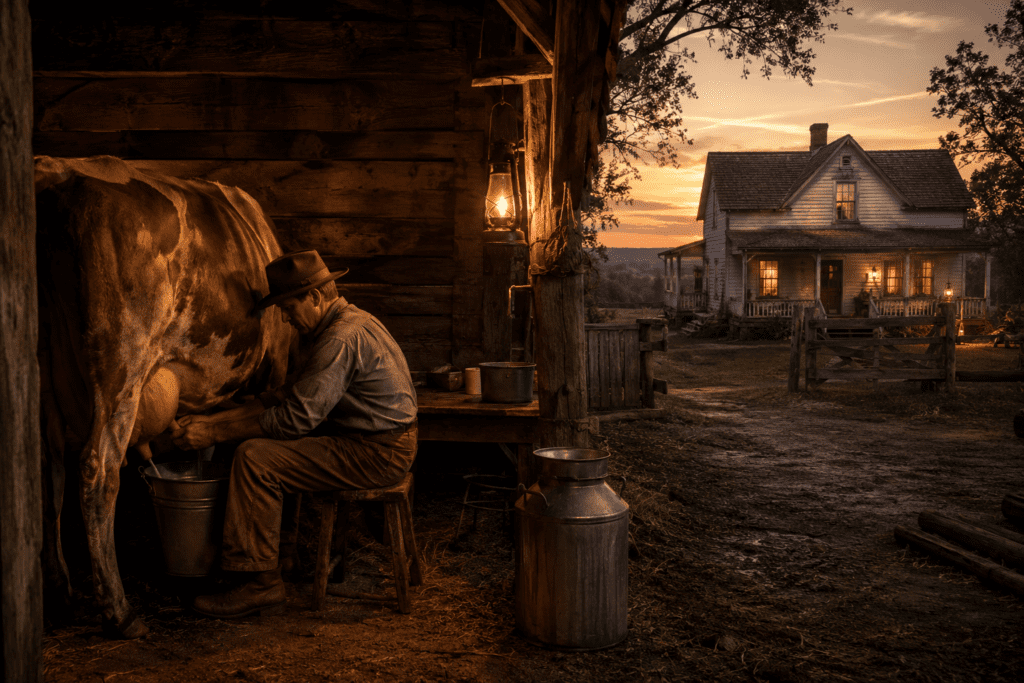
Dairy farmers milked cows by hand, often beginning before sunrise and working by the dim glow of kerosene lamps. Household chores were equally labor-intensive. Families cooked meals on wood-burning ranges and relied on washboards for cleaning clothes.
Without electric-powered appliances, even the most routine tasks required significant time and physical effort. Activities that could be completed in minutes today often consumed hours of a farmer’s day.
The lack of electricity also limited opportunities for modernization on farms. Equipment that could improve efficiency and increase production was unavailable to many rural households simply because there was no reliable power source to operate it.
The Economic Impact on Rural America
The absence of electric service affected more than just household convenience—it shaped the economic future of entire rural communities.
Because electricity was difficult or impossible to obtain in many farming regions, local economies remained heavily dependent on agriculture. Diversification into manufacturing and other industries was limited.
Factories, processing facilities, and businesses generally preferred to locate in urban areas where electric power was readily available. As a result, many rural communities struggled to attract new investment and job opportunities.
This created a widening gap between urban and rural America, with cities experiencing rapid industrial growth while many farming regions lagged behind in modernization and economic development.
The Tennessee Valley Authority and the Beginning of Change
A major turning point came during the Great Depression.
In May 1933, the federal government took a significant step toward rural electrification with the passage of the Tennessee Valley Authority (TVA) Act.
The TVA was created to improve economic conditions throughout the Tennessee Valley region by developing infrastructure, managing natural resources, and expanding access to electric power. The program demonstrated that affordable electricity could successfully reach rural communities that private utility companies had often considered unprofitable to serve.
The TVA became one of the earliest and most influential federal initiatives that paved the way for broader rural electrification efforts across the United States.
A Legacy That Transformed Agriculture
The expansion of electricity into rural America would ultimately revolutionize farming and rural life. Electric milking machines, refrigeration, water pumps, lighting systems, and countless other innovations became accessible to farmers, dramatically increasing productivity and improving quality of life.
Today, it is difficult to imagine American agriculture without electricity. Yet less than a century ago, most farm families lived and worked without it.
The story of rural electrification serves as a powerful reminder of how infrastructure investments can transform entire industries and communities. The efforts that began in the 1930s helped modernize American agriculture and laid the foundation for the highly productive farming sector that exists today.
As Mark Oppold highlights in this American Agriculture History Minute, the journey from kerosene lamps and hand-milking to the modern, technology-driven farms of today began with a simple but transformative goal: bringing electricity to rural America.