









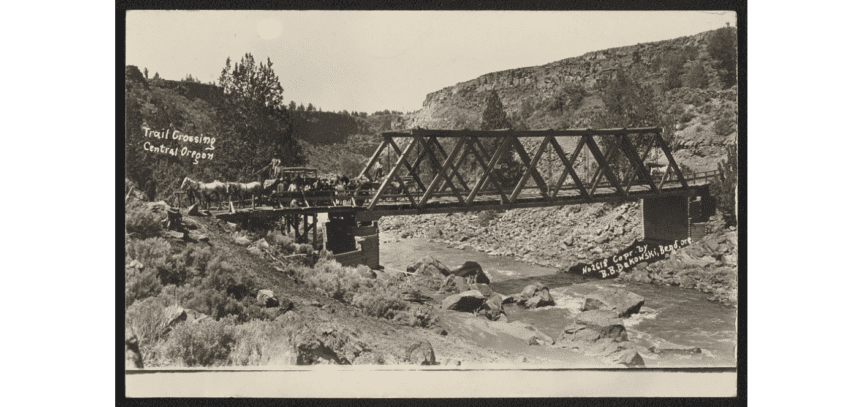
Mark Oppold, in his American Agriculture History Minute, highlights the Oregon Trail as one of the most significant routes in the development of American agriculture. This historic pathway not only connected regions of the growing nation but also helped shape the agricultural landscape of the United States.
The Route and Its Origins
The Oregon Trail stretched an impressive 2,170 miles, linking the Missouri River Valley to the fertile Willamette Valley in Oregon. This route became a crucial corridor for westward expansion, allowing settlers to move into lands rich with agricultural potential.
The trail’s origins date back to 1811, when it was first established by fur traders navigating the western territories. However, despite its early use, it wasn’t immediately suitable for large-scale migration by wagon trains.
Early Challenges and Limited Access
It wasn’t until 1836 that the first wagon train successfully traveled the Oregon Trail. Even then, progress was limited. The trail had only been cleared as far as Fort Hall, Idaho, and for several years, that point marked the end of practical travel for many settlers.
These early limitations highlight the difficulty of westward expansion and the gradual development of infrastructure necessary to support migration and agriculture.
A Pathway for Hundreds of Thousands
Despite its challenging beginnings, the Oregon Trail would go on to play a monumental role in American history. It is estimated that over 400,000 settlers traveled this route in search of new opportunities, land, and a future in agriculture.
This mass migration continued until 1869, when the completion of the transcontinental railroad dramatically changed how people and goods moved across the country, reducing reliance on the long and arduous trail.
Lasting Agricultural Impact
The Oregon Trail was more than just a migration route—it was a gateway to agricultural expansion. Settlers who traveled west established farms, ranches, and communities, particularly in the fertile Willamette Valley, helping to lay the foundation for America’s agricultural growth.
Conclusion
As Mark Oppold notes, the Oregon Trail remains a cornerstone of American agriculture history. From its origins as a fur trade route to its role in moving hundreds of thousands of settlers westward, it symbolizes determination, expansion, and the pursuit of agricultural opportunity in the United States.