









The Agricultural Push That Helped Shape a Nation
The story of American agriculture is closely tied to the nation’s westward expansion. As the United States grew beyond its original colonies, farmers played a central role in pushing the country’s boundaries farther west, transforming new territories into productive farmland and helping establish communities across the frontier.
According to agricultural historian Mark Oppold, by 1790 the western boundary of the young United States had already moved approximately 255 miles inland from the Atlantic coast, reaching the eastern edge of the Appalachian Mountains. This expansion reflected both the growing population and the increasing demand for agricultural land.
Farmers Dominated America’s Early Workforce
At the close of the 18th century, agriculture was the backbone of the American economy. The nation’s population was approaching 4 million people, and farmers accounted for roughly 90 percent of the labor force.
Agriculture was not simply an occupation—it was a way of life for the vast majority of Americans. Families relied on farming to provide food, income, and economic stability, while communities depended on agriculture to support local growth and trade.
As populations increased and available farmland became more limited in established settlements, many families looked westward in search of new opportunities and fertile land.
Crossing the Appalachian Barrier
For a time, the Appalachian Mountains presented a significant obstacle to westward migration. The rugged terrain made travel difficult and slowed the movement of settlers into new territories.
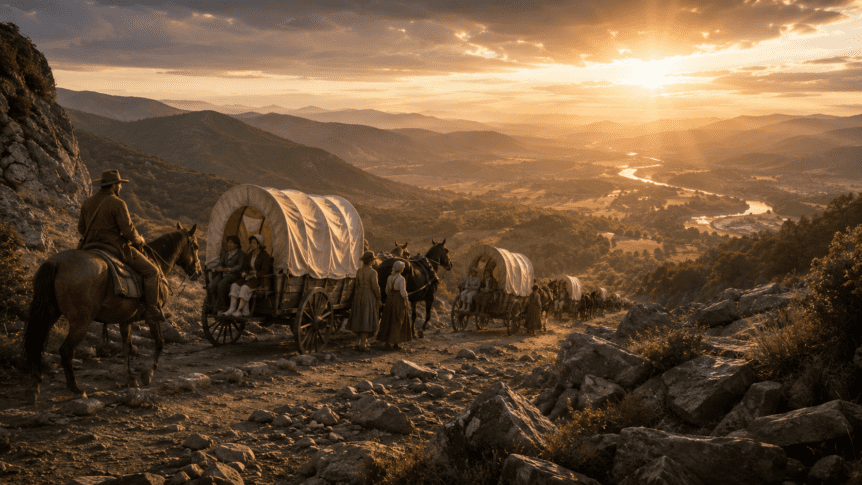
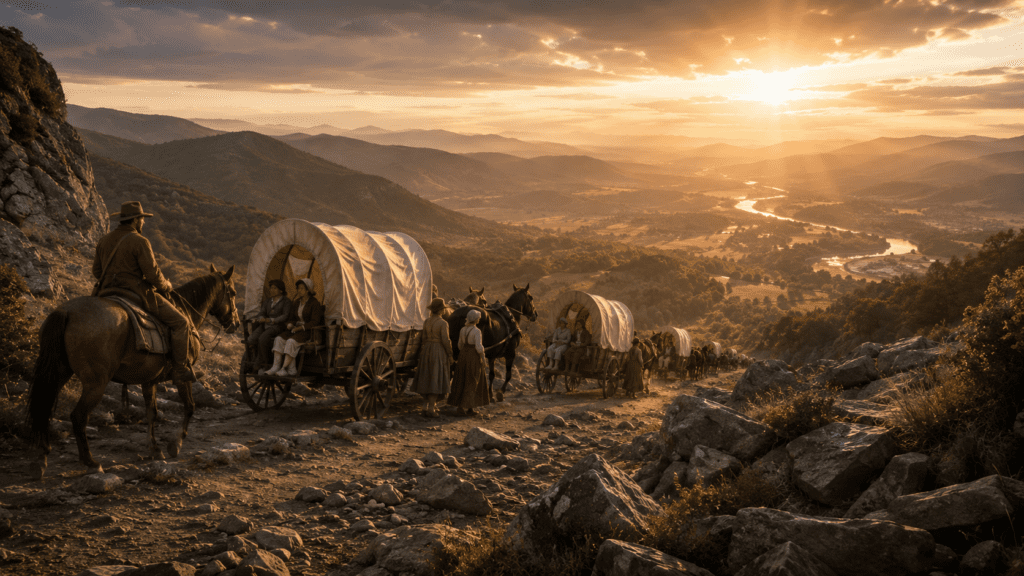
However, the desire for farmland and economic opportunity proved stronger than the geographic challenges. By 1800, settlers were successfully crossing the Appalachian Mountains in increasing numbers. Caravans and wagon trains carried families and supplies into the Tennessee and Ohio River valleys, establishing new farming communities throughout the region.
These frontier settlements became important centers of agricultural production and helped lay the foundation for future expansion across the continent.
Steamboats Accelerate Agricultural Growth
Transportation innovations soon made westward expansion even more practical and profitable. By 1815, steamboats were revolutionizing travel and commerce along America’s rivers.
Steamboat technology allowed farmers to move crops, livestock, and supplies more efficiently than ever before. Rivers became critical transportation corridors, connecting frontier farms with growing markets and population centers.
This advancement enabled American agriculture to expand even farther west, opening new opportunities for settlement and economic development. The combination of fertile land, growing demand, and improved transportation helped fuel one of the most significant periods of agricultural growth in U.S. history.
Agriculture’s Lasting Impact on American Expansion
The westward movement of American farmers was a driving force behind the nation’s growth during its early years. From the eastern edge of the Appalachians to the Tennessee and Ohio valleys, agriculture helped transform frontier lands into thriving communities.
By overcoming geographic barriers and embracing innovations like steamboat transportation, early American farmers laid the groundwork for the continued expansion of the United States and established agriculture as a cornerstone of the nation’s development.
As Mark Oppold highlights in this American Agriculture History Minute, the story of westward expansion is inseparable from the determination and resilience of America’s early farming families.