









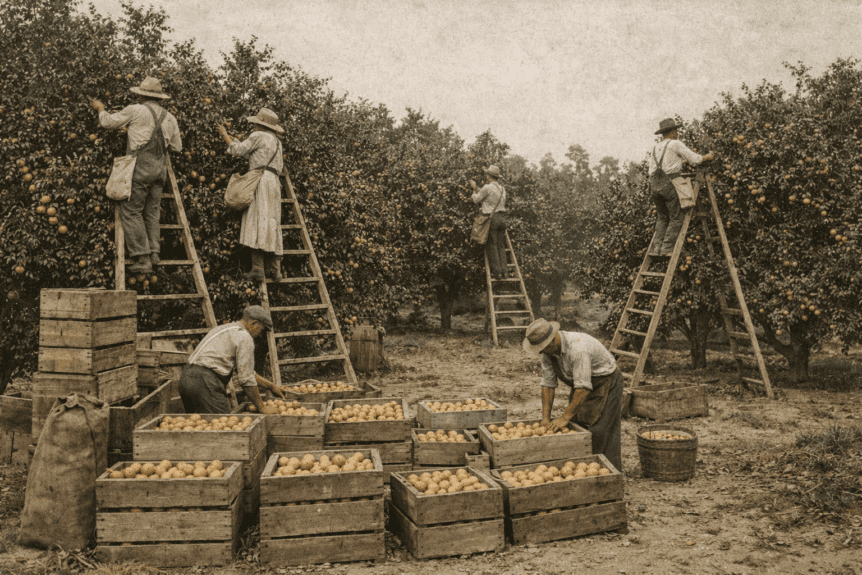
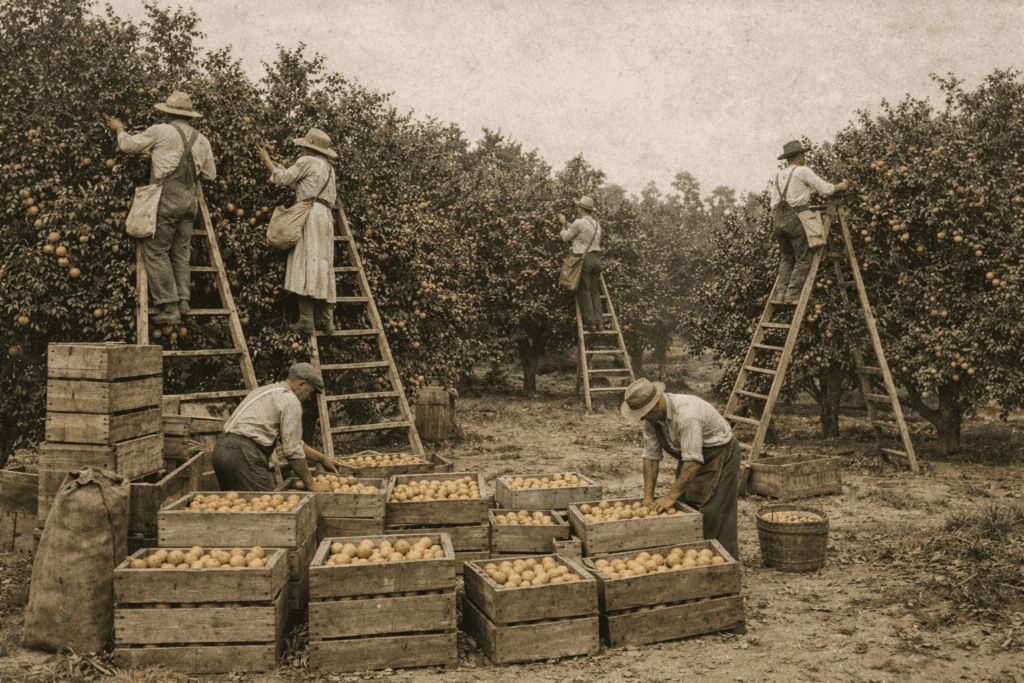
Citrus fruits are a staple of modern agriculture, found in kitchens, grocery stores, and farms across the United States. But their origins stretch back thousands of years and span continents, cultures, and trade routes. In this American Agriculture History Minute, Mark Oppold highlights the fascinating journey of citrus—from ancient beginnings to becoming a cornerstone of American agriculture.
The Mysterious Origins of Citrus
The exact origin of citrus fruits cannot be pinpointed with complete certainty. However, researchers widely believe that citrus first appeared in Southeast Asia as early as 4000 B.C. These early fruits likely included ancestors of modern varieties such as citron, pomelo, and mandarin.
Over centuries, natural hybridization and human cultivation helped diversify citrus into the many varieties we recognize today.
Expansion Through Trade and Empire
From Southeast Asia, citrus fruits gradually spread westward into Northern Africa. During the height of the Roman Empire, citrus gained popularity among the upper classes. Its rarity and exotic nature made it a symbol of wealth and status.
As trade routes expanded and demand grew, citrus cultivation spread throughout Southern Europe. The Mediterranean climate proved ideal for growing these fruits, allowing citrus to take root in countries like Italy and Spain.
Citrus Arrives in the Americas
The global journey of citrus took a major step forward during the Age of Exploration. Spanish explorers introduced citrus fruits to the Americas, planting seeds that would eventually grow into a thriving agricultural industry.
Citrus trees adapted well to the climates of the New World, particularly in regions with warm temperatures and ample sunshine.
Modern Citrus Production in the United States
Today, approximately 80% of the world’s citrus production takes place in the Northern Hemisphere. In the United States, the industry is concentrated in four key states:
- Florida
- Arizona
- California
- Texas
These regions provide the ideal growing conditions for oranges, lemons, limes, and grapefruits, making the U.S. one of the leading citrus producers in the world.
A Lasting Agricultural Legacy
From its uncertain beginnings in Southeast Asia to its prominence in American agriculture, citrus has followed a remarkable path shaped by trade, exploration, and innovation. What was once a rare and prized fruit for ancient elites is now an everyday essential enjoyed worldwide.
As Mark Oppold reminds us, even the most common foods have deep and global histories—connecting today’s farms to thousands of years of agricultural development.
Today’s American Agriculture History Minute — I’m Mark Oppold.