









The California Trail Helped Shape American Agriculture
The California Trail remains one of the most important migration routes in American history and played a major role in the expansion of agriculture across the western United States. During the mid-1800s, thousands of settlers traveled west in search of fertile farmland, economic opportunity, and a new life beyond the Mississippi River.
As explained by agricultural historian Mark Oppold, many early pioneers initially stopped along the Missouri River and settled in areas that are now part of Nebraska, Iowa, and Missouri. These regions became important agricultural centers because of their rich soil, access to water, and favorable growing conditions.
However, not all settlers stayed in the Midwest. The opening of the Oregon, California, and Santa Fe Trails encouraged continued westward movement and helped transform the American frontier into productive agricultural territory.
The Expansion of the American Frontier
The westward trails were more than transportation routes — they became pathways for agricultural development. Families traveled in wagon trains carrying farming tools, livestock, seeds, and supplies needed to establish homesteads in unfamiliar territory.
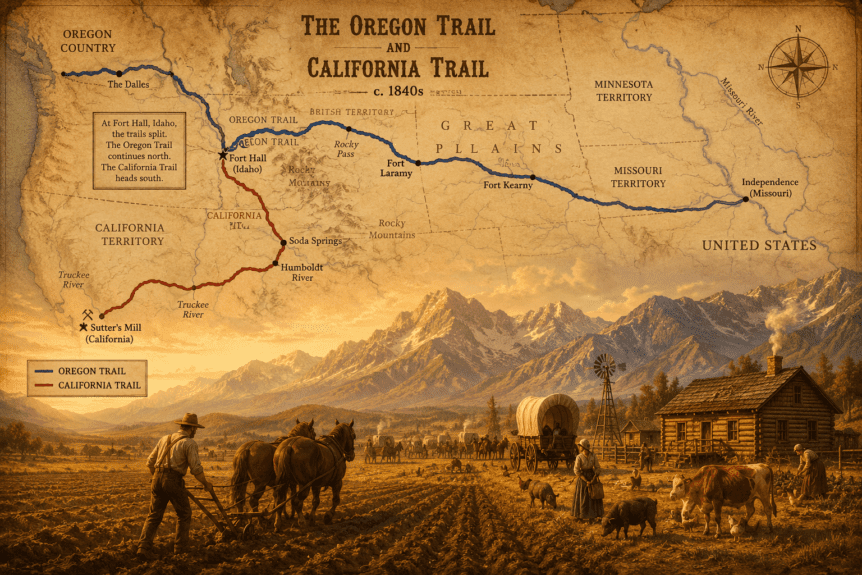
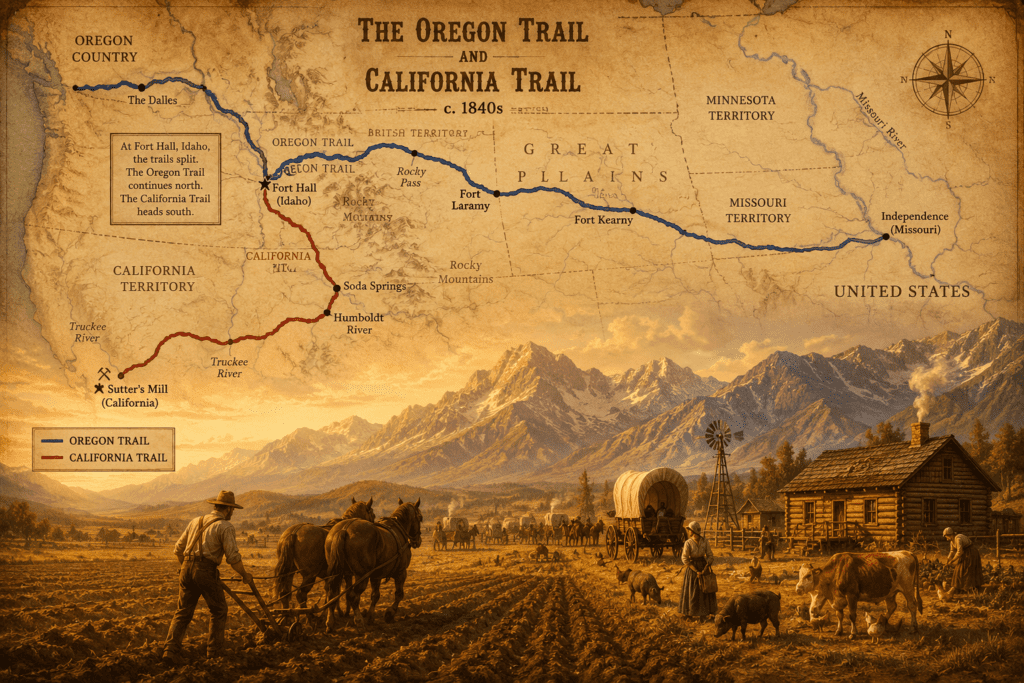
The California Trail followed much of the same route as the famous Oregon Trail during the early part of the journey. Travelers generally moved westward across the Great Plains before reaching Fort Hall in present-day Idaho.
At that point, the routes separated:
- The Oregon Trail turned north toward the Pacific Northwest.
- The California Trail headed south and southwest toward California.
This split became one of the defining moments for settlers choosing where to build their future.
Fort Hall: A Critical Decision Point
Fort Hall, located in present-day Idaho, served as a major supply and decision-making stop for westward travelers. Here, pioneers evaluated weather conditions, wagon supplies, livestock health, and the risks of continuing the journey.
Those choosing the California Trail faced difficult terrain, deserts, mountains, and long stretches without reliable water. Despite these dangers, the promise of opportunity in California motivated thousands to continue.
The trail ultimately ended near Sutter’s Mill, California — a location forever tied to American history because of the discovery of gold in 1848. While the Gold Rush attracted miners and fortune seekers, it also accelerated agricultural growth throughout California as farmers worked to feed rapidly growing communities.
Agriculture Followed the Trails West
The movement along the California Trail directly influenced the spread of farming and ranching across the American West. Settlers established farms, orchards, cattle operations, and rural communities throughout the regions connected by these migration routes.
The fertile valleys of California later became some of the most productive agricultural regions in the world. Crops such as wheat, fruits, vegetables, and grapes flourished due to the state’s climate and expanding irrigation systems.
Without the migration routes like the California Trail, the rapid agricultural development of the western United States would have looked very different.
The Legacy of the California Trail
Today, the California Trail stands as a symbol of determination, migration, and agricultural expansion. It represents the movement of families seeking opportunity and the transformation of the American landscape into one of the world’s leading agricultural regions.
The trail helped connect eastern settlements to the Pacific Coast and laid the foundation for future farming communities that continue to feed America and much of the world today.
Mark Oppold’s reminder of the California Trail highlights how transportation, migration, and agriculture have always been closely connected throughout American history.