








The AgNet News Hour focused heavily on California’s upcoming governor race and growing concerns throughout agriculture over regulation, food security, land pressure, and the future of family farming in the state.
Hosts Nick Papagni and Josh McGill opened the show by emphasizing what they described as one of the most important governor elections in California history, warning that policy decisions made over the next few years could significantly reshape agriculture, energy, water, and small business across the state.
“We’ve got to start talking about getting California back on track,” hosts said during the broadcast.
The conversation highlighted frustration over rising fuel costs, water uncertainty, labor shortages, freight expenses, and increasing regulations that continue putting pressure on farmers and small businesses statewide.
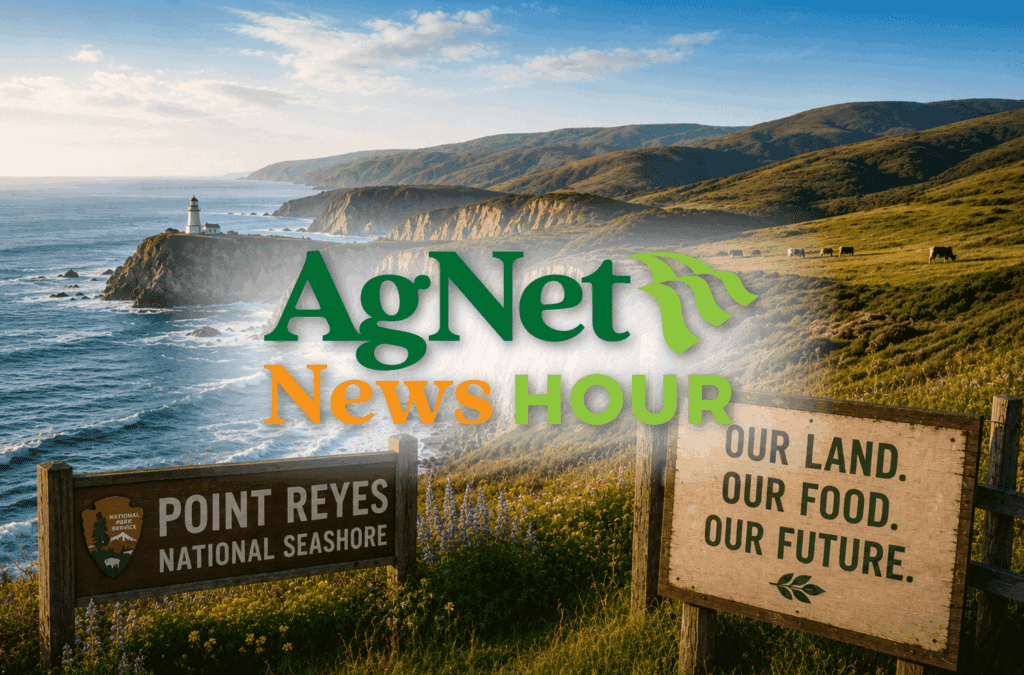
A major portion of the episode featured part two of an extended interview with Stephanie Moreda-Arend of Moreda Valley Dairy in Petaluma, who continues to speak out nationally about legal and political pressure facing family farms in Point Reyes and throughout California.
Moreda-Arend warned that many younger generations of farmers are beginning to walk away from agriculture because of mounting costs and regulatory burdens.
“I’ve heard farmers say out loud that they tell their kids, go find something else that you want to do,” Moreda-Arend said.
She explained that small family farms are increasingly vulnerable to lawsuits and financial pressure from activist organizations, particularly in high-value coastal areas where land is becoming more desirable for development and alternative uses.
“These organizations are environmental attorneys,” Moreda-Arend said. “They are using lawfare to come after farmers.”
Moreda-Arend stressed that agriculture and true environmental stewardship often work hand-in-hand, arguing that family farms naturally preserve open space, healthy soils, and working landscapes.
“Farmers are the greatest environmentalists people we have,” hosts added during the discussion.
The interview also focused heavily on food security and concerns about California becoming increasingly dependent on imported food if farms continue disappearing.
“If we lose our food security, we lose everything,” hosts warned repeatedly throughout the episode.
Moreda-Arend explained that replacing small dairy operations is nearly impossible due to the enormous startup costs, infrastructure requirements, and regulatory hurdles involved in modern agriculture.
“To build a new dairy farm is millions of dollars from the ground up,” she said.
The discussion also touched on the importance of local elections, with Moreda-Arend noting that her sister, Shalina Moreda, is now running for supervisor in Sonoma County because of concerns that existing leadership does not adequately support agriculture.
Beyond politics, the program explored how social media and alternative media platforms are increasingly shaping public understanding of agriculture, especially as many farmers feel mainstream media outlets overlook issues affecting rural communities and food production.
Hosts encouraged listeners to actively engage with neighbors and local communities about farming, food production, and California policy issues ahead of the election cycle.
“Spread the word about farming,” the show emphasized multiple times during the broadcast.
As California moves closer to the primary election, agriculture leaders continue warning that the future of food production, water infrastructure, and family farming may largely depend on the direction voters choose in the coming months.
Listen to the full interview below or on your favorite podcast app.
Listen to previous AgNet News Hour episodes…