









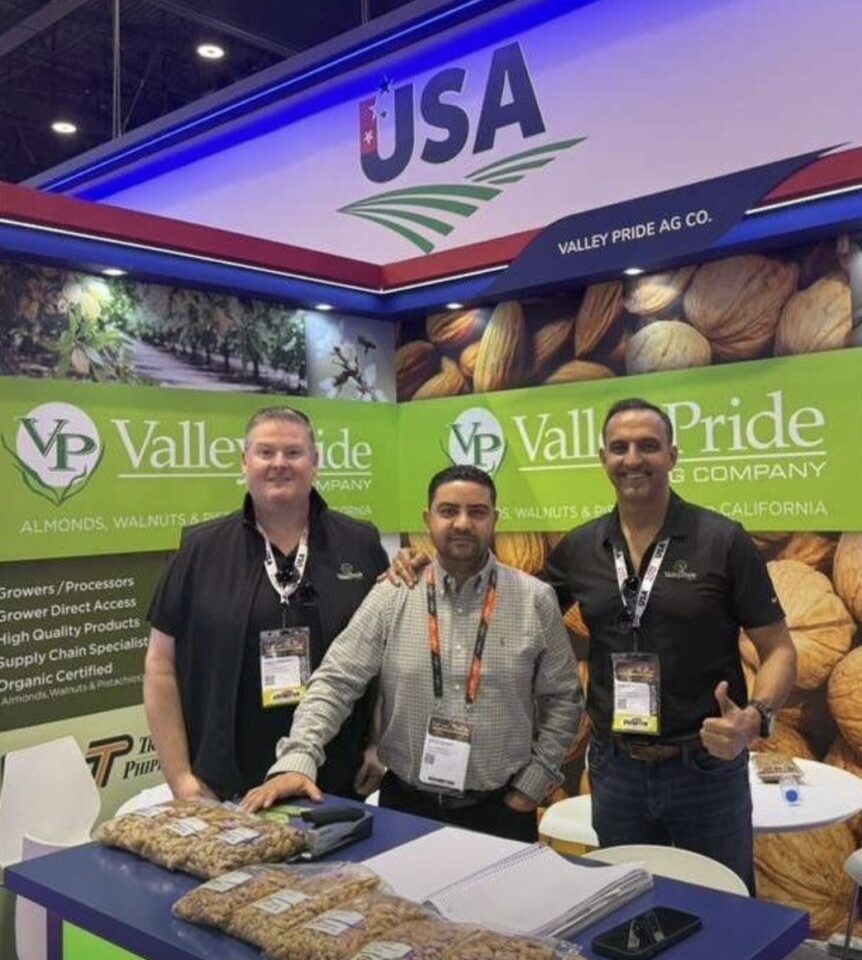
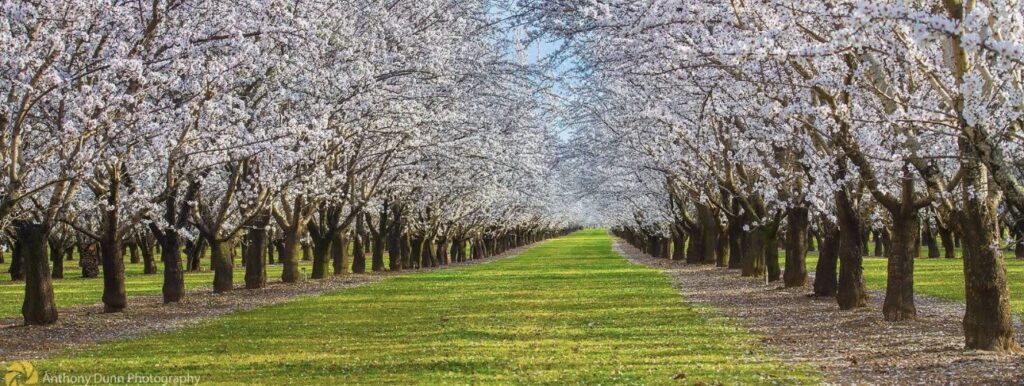
California’s almond industry is entering the 2026 harvest season with renewed optimism, thanks to strong export demand, stable pricing, and what appears to be another high-quality crop. During a wide-ranging interview with “The Ag Meter”, host Nick Papagni spoke with Sunny Toor, President of Valley Pride Ag, who joined the program while traveling through Dubai on his way to India to strengthen relationships with international almond buyers.
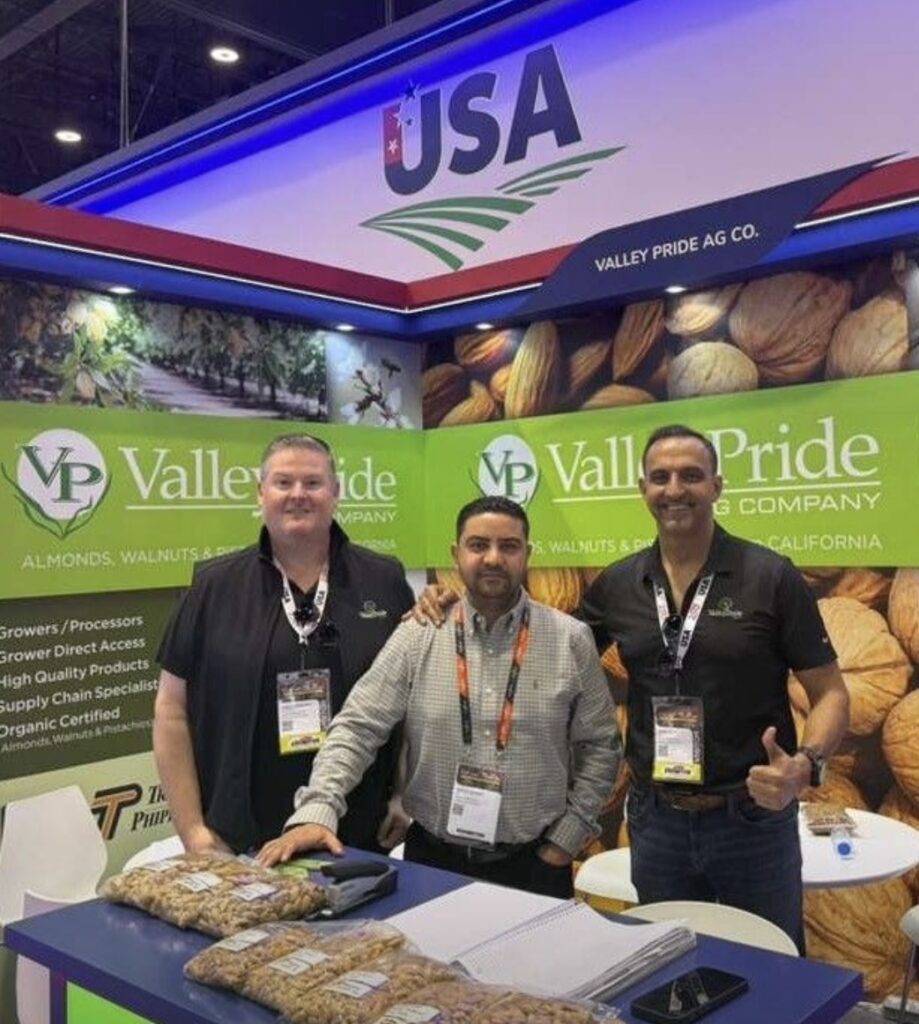
From crop projections and export opportunities to tariffs, politics, and the future of California agriculture, Toor provided valuable insight into the forces shaping one of the state’s most important agricultural industries.
Strong Finish to the 2025 Crop
One of the biggest positives heading into harvest is how successfully California moved last year’s crop.
According to Toor, the industry is expected to ship approximately 2.6 billion pounds from a 2.7-billion-pound 2025 crop, leaving only limited specialty inventory remaining. He credited growers, processors, packers, exporters, and buyers alike for working together to create one of the strongest shipping seasons in recent years.
Clean inventories heading into harvest are welcome news for growers after several difficult seasons of lower prices and financial strain.
Slightly Smaller Crop Expected in 2026
While early industry estimates suggested another 2.7-billion-pound crop, Toor believes production will likely finish between 2.6 and 2.65 billion pounds.
He attributes the slightly smaller crop to several factors, including a warmer spring that accelerated crop maturity and reduced kernel moisture, resulting in lighter almond weights. Earlier harvest timing—roughly one-and-a-half to two weeks ahead of normal—is also contributing to those projections.
Despite the modest reduction in production, Toor remains optimistic because today’s almond prices are considerably healthier than they were during the previous four years.
“For the first time in several years,” he explained, “many growers should finally be able to pay down principal on their loans while covering at least part of their accumulated interest.”
Global Markets Continue Driving California Almonds
International demand remains the backbone of California’s almond industry.
Toor traveled to India specifically to help growers market in-shell almonds ahead of Diwali, one of India’s largest gift-giving holidays. Because Diwali arrives earlier this year, buyers are seeking August shipments, making California’s early harvest especially important.
He estimates that 70 to 74 percent of California almonds will be exported, while only 25 to 28 percent will remain in the domestic market.
California continues supplying roughly 75 to 80 percent of the world’s almonds, making global relationships essential to grower success.
Quality and Market Stability Inspire Confidence
Unlike last year’s market, which experienced volatility after inflated crop estimates pushed prices downward before recovering, Toor says this season feels much more balanced.
Current almond prices remain firm but stable—something both growers and international buyers appreciate.
Early observations also suggest another high-quality crop.
Aside from periods of extreme heat, growers have avoided major weather-related surprises, and no widespread pest issues have emerged. Toor encouraged growers to continue working closely with their Pest Control Advisers (PCAs) while maintaining orchard quality through harvest.
He emphasized that exceptional almond quality begins in the orchard, giving California growers full credit for producing the premium product buyers seek worldwide.
Export Markets Continue Expanding
While established markets remain strong, Toor believes significant opportunities still exist.
Countries throughout India, Pakistan, and Bangladesh continue increasing almond consumption as their economies grow and consumer awareness expands.
Meanwhile, North African countries including Morocco and Algeria are emerging as promising markets despite logistical challenges involving ports and customs operations.
Historically, many of these countries imported almonds from Afghanistan and Iran, but over the past two decades California has become the preferred supplier because of its consistent quality and reliable production.
Toor noted that if every consumer in India ate just one additional almond, California would struggle to produce enough supply to satisfy demand.
Trade Environment Improving
Trade policy also appears more favorable than many feared earlier in the year.
According to Toor, Europe continues importing California almonds tariff-free, while many anticipated retaliatory tariffs never materialized.
China remains the primary exception, although he expressed optimism that future negotiations could eventually reduce trade barriers there as well.
He also noted that discussions between the United States and India could eventually lower tariffs on almonds and walnuts, creating additional opportunities for California growers.
Although a strong U.S. dollar generally makes exports more expensive, Toor said global demand has remained remarkably resilient despite currency fluctuations and ongoing geopolitical uncertainty.
Regional Differences Shape This Year’s Crop
Harvest conditions vary considerably throughout California.
Toor expects Fresno and Madera County orchards to rebound after yields were down significantly last season.
Meanwhile, Manteca continues producing exceptionally large almonds thanks to its rich soils, excellent water quality, and cooler nighttime temperatures influenced by Delta breezes. Those conditions allow almonds to mature longer, resulting in fuller kernels.
Growers Still Face Major Challenges
Despite improved pricing, Toor emphasized that California farmers continue battling numerous obstacles beyond the orchard.
Labor shortages, rising fertilizer costs, transportation expenses, water availability, and increasing regulations all place additional pressure on growers’ profitability.
He believes California agriculture does not necessarily require additional government assistance but instead needs fewer regulatory burdens and policies that allow farmers to remain competitive.
Toor also observed that while international buyers sympathize with California growers, many do not fully understand the enormous costs associated with producing almonds in one of the world’s most highly regulated agricultural environments.
Valley Pride Ag Expanding Into Pistachios
Although almonds remain Valley Pride Ag’s primary focus, Toor revealed the company plans to expand its pistachio marketing efforts.
The growing popularity of pistachio-based products—including the widely discussed “Dubai chocolate”—has significantly increased international demand, particularly throughout Europe and the Middle East.
Valley Pride Ag already grows almonds, walnuts, and pistachios, positioning the company to broaden its tree nut marketing portfolio while serving both growers and international buyers.
Industry Built on Relationships
One theme surfaced repeatedly throughout the conversation: success in agriculture comes through cooperation.
Rather than viewing competitors as adversaries, Toor emphasized that California’s tree nut industry succeeds when growers, processors, exporters, and marketers all work together to provide consistent quality and dependable supply to customers around the world.
That collaborative philosophy has helped Valley Pride Ag establish long-term relationships throughout the global marketplace.
Contact Valley Pride Ag
Sunny Toor
📞 (559) 709-2402
James Blocker
📞 (559) 676-9146
Listen to the Full Interview
This conversation between Nick Papagni, “The Ag Meter,” and Sunny Toor offers far more than a crop update. Listeners will hear firsthand insight into California’s almond outlook, international marketing strategies, export demand, tariffs, global trade, harvest expectations, grower profitability, and the challenges facing one of California’s signature agricultural industries.
Whether you’re an almond grower, processor, exporter, or simply interested in the future of California agriculture, this interview delivers valuable perspective from one of the industry’s most respected marketers. Be sure to listen to the full conversation to hear Sunny Toor’s complete outlook for the 2026 almond season.