









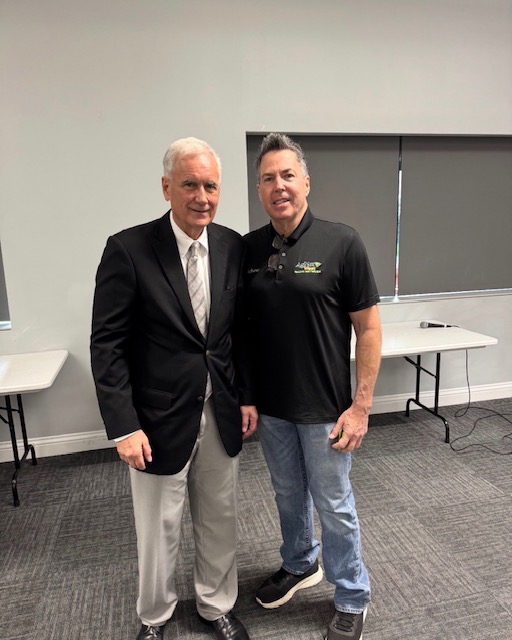
California agriculture sits at the center of a growing policy debate—and in a recent interview with “The Ag Meter” Nick Papagni, Congressman Tom McClintock lays out a sweeping case for why the Golden State is at a turning point.
Representing a vast district that stretches across the Central Valley, Sierra Nevada, and iconic regions like Yosemite, McClintock brings a front-row perspective on the challenges facing farmers, businesses, and families. His message is clear: California’s struggles are not inevitable—they are the result of policy choices.
A State of Opportunity—At Risk
McClintock reflects on California’s past as a place of unmatched opportunity—where affordable housing, strong infrastructure, and abundant resources fueled growth. Today, he argues, that foundation has eroded.
He points to rising costs, population loss, and business flight as signs of deeper systemic issues. According to McClintock, more than a million residents have left California in recent years, creating economic strain and shrinking the state’s tax base.
Water: The Heart of California Agriculture
For farmers, water remains the most urgent concern—and McClintock makes a critical distinction:
“Droughts are natural. Water shortages are a policy failure.”
Despite being one of the most water-rich regions in the country, California faces ongoing shortages. McClintock attributes this to decades of halted infrastructure development, noting that the state has not built a major reservoir since 1979—even as its population has more than doubled.
He argues that solutions are straightforward:
- Build new reservoirs
- Maintain and expand aqueduct systems
- Store water during wet years for dry periods
Without these steps, agriculture—and the communities that depend on it—will continue to struggle.
Why Water Impacts Everyone
One of the most compelling moments in the interview highlights how agriculture connects directly to everyday life.
McClintock shares an example often used by Central Valley advocates:
- A cheeseburger requires about 350 gallons of water
- A pair of jeans requires roughly 1,500 gallons
The takeaway? There is no such thing as “agricultural water”—it is essential to the food, clothing, and lifestyle consumers rely on daily.
Energy, Infrastructure, and Rising Costs
Beyond water, McClintock raises concerns about California’s broader infrastructure challenges. He notes a dramatic decline in in-state energy production and refinery capacity, leading to increased reliance on imports and higher fuel costs.
He also criticizes large-scale spending decisions—such as high-speed rail—arguing that funds could have been better used to expand highways, improve transportation, and support economic growth in rural and urban areas alike.
Housing and the Cost of Living
Housing affordability is another major issue discussed. McClintock contrasts the California of the 1960s—where middle-class families could easily purchase homes—with today’s market, where median home prices exceed $900,000.
He attributes this to regulatory constraints that limit housing supply, driving up costs and pushing families to relocate to more affordable states like Texas, Arizona, and Nevada.
Labor, Immigration, and Agriculture’s Future
The conversation also explores labor challenges in agriculture. McClintock supports stronger immigration enforcement while acknowledging the need for a reliable farm workforce.
He points to a modernized version of the historic Bracero program as a potential solution—allowing legal, seasonal labor with clear accountability for entry and return.
At the same time, he emphasizes policies that encourage workforce participation domestically, suggesting that labor markets are already beginning to adjust.
A Call to Action for Farmers
Perhaps most importantly, McClintock urges farmers and agricultural leaders to engage more actively with the public.
He believes that many policy challenges stem from a lack of understanding about agriculture’s role in daily life—and that meaningful change begins with education:
- Conversations with neighbors
- Community outreach
- Clear communication about how agriculture impacts everyone
Can California Turn It Around?
Despite the challenges, McClintock remains optimistic. He argues that California still has every advantage—natural resources, climate, and global positioning—but must return to policies that prioritize growth, infrastructure, and opportunity.
For those in agriculture and beyond, this interview offers a candid look at the decisions shaping California’s future.
👉 Don’t miss the full conversation with “the Ag Meter” Nick Papagni and Tom McClintock—packed with insights on water, farming, and the policies that could reshape California.