









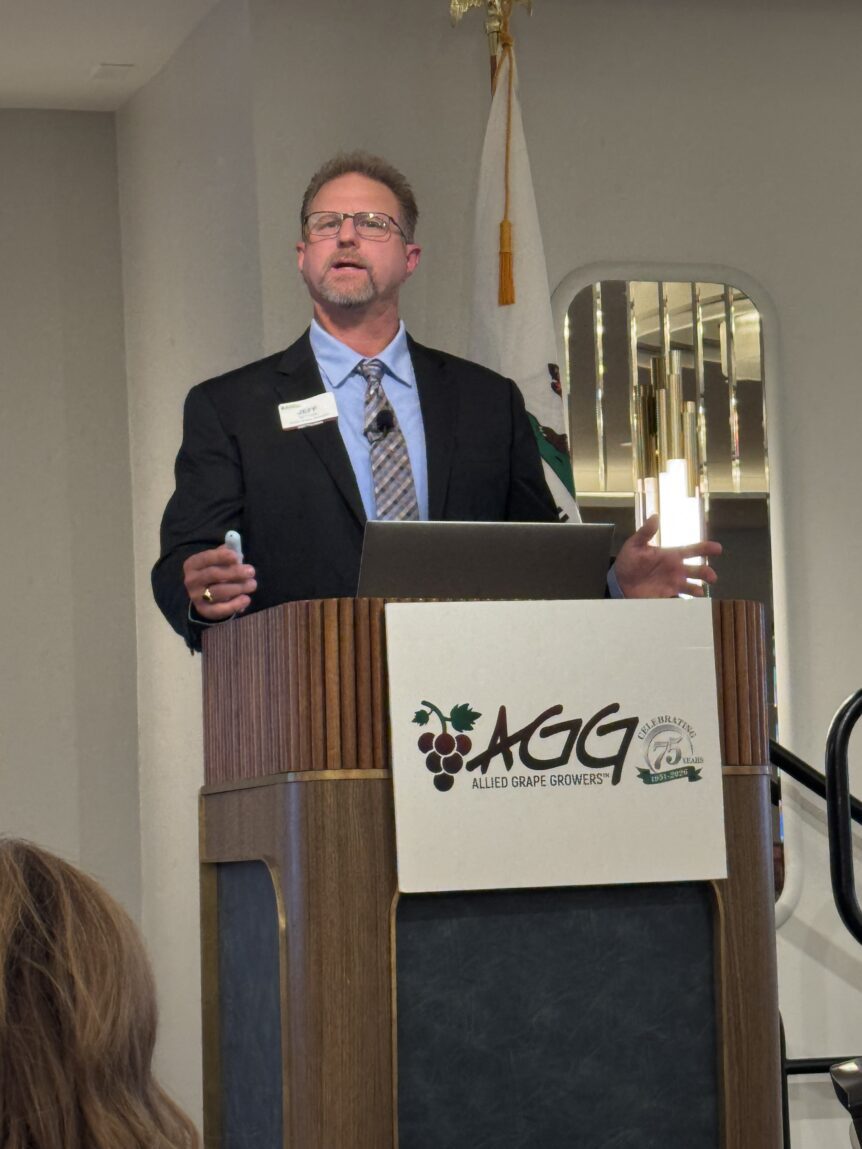
California Wine Industry Faces Challenges, But Allied Grape Growers Looks Ahead with Confidence
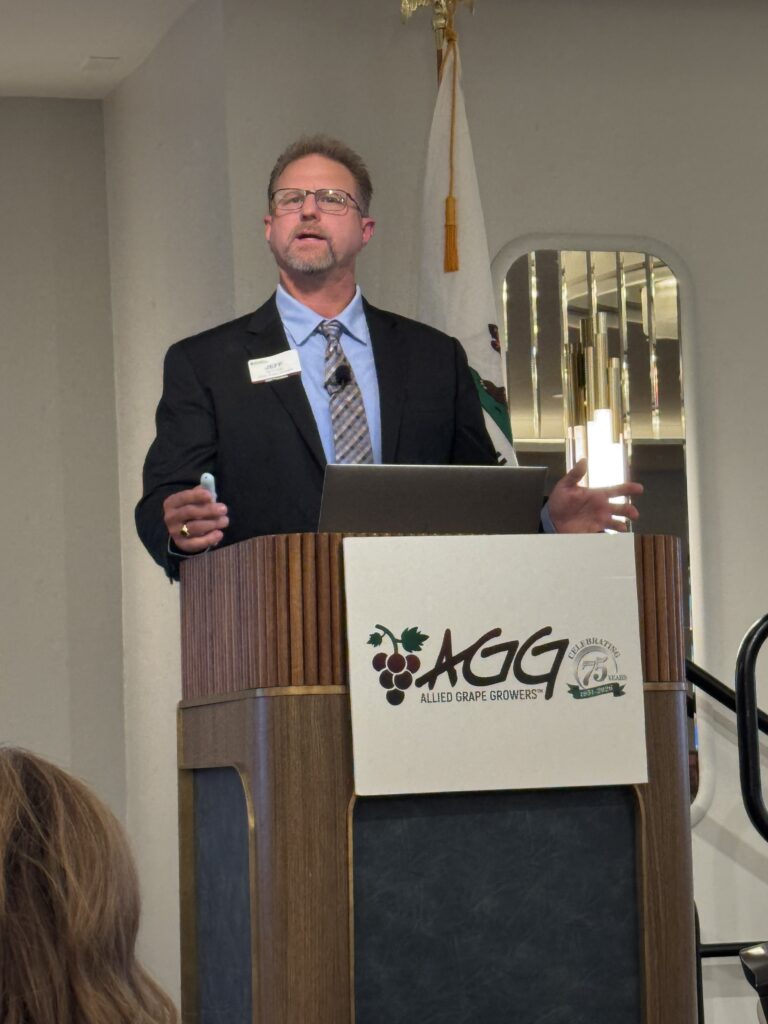
California’s wine grape industry is navigating one of the most difficult periods in decades, but according to Allied Grape Growers President Jeff Bitter, the future still holds tremendous opportunity for growers willing to adapt.
Speaking with “The Ag Meter” Nick Papagni during the 75th Anniversary Allied Grape Growers Luncheon at Pardini’s in Fresno, Bitter discussed everything from declining wine consumption and changing consumer habits to government regulations, water policy, artificial intelligence, and what growers must do to remain competitive in today’s marketplace.
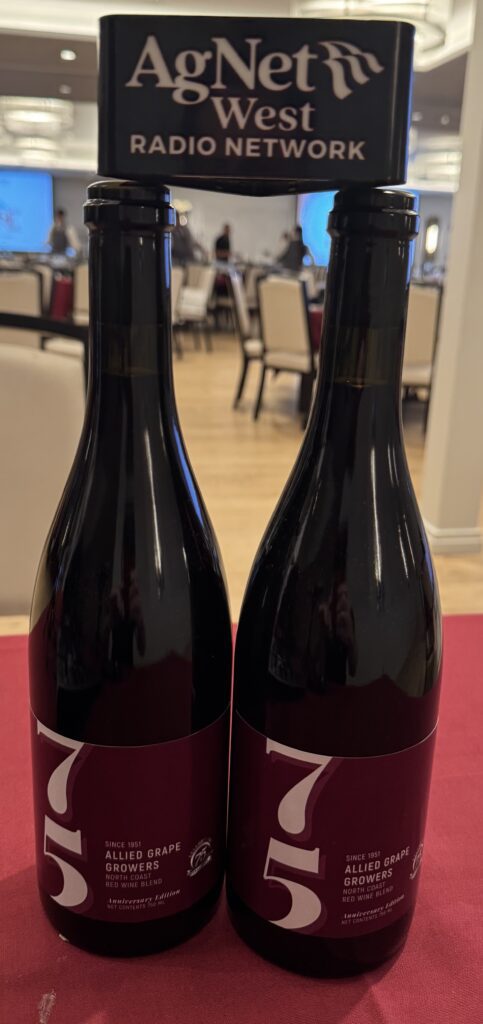
The candid conversation offered an inside look at the challenges facing California’s wine grape growers while highlighting why Bitter believes the industry will emerge stronger in the years ahead.
Celebrating 75 Years of Serving California Grape Growers
The luncheon marked a significant milestone for Allied Grape Growers, one of California’s longest-standing agricultural marketing organizations.
“We’ve been around for 75 years,” Bitter said. “There aren’t many companies in agriculture—or anywhere—that can say that.”
The event celebrated not only the organization’s longevity but also its commitment to helping growers market their grapes through some of the industry’s most difficult economic cycles.
Bitter also recognized former Allied Grape Growers President Nat DiBuduo, whom he worked alongside for 18 years. He described DiBuduo as both a trusted mentor and close friend who continues to offer valuable guidance.
A Difficult Market Requires Honest Conversations
Bitter didn’t sugarcoat the current state of the wine industry.
Wine sales and shipments have been declining since 2021, creating significant financial pressure throughout California’s grape-growing regions.
Rather than offering false optimism, Bitter said growers deserve honest assessments of today’s marketplace.
“There will be attrition. There will be changes. This business will be smaller over the next few years,” he explained.
However, he emphasized that vineyards producing premium-quality grapes in desirable growing regions remain positioned to survive and eventually thrive as supply and demand rebalance.
Recognizing changing market conditions early allows growers to make informed business decisions and prepare for long-term success.
Why Younger Consumers Aren’t Drinking Wine
One of the industry’s biggest concerns is attracting younger consumers.
According to Bitter, one of wine’s greatest challenges is affordability.
On a per-serving basis, wine generally costs about twice as much as beer or spirits, creating an economic barrier for many young adults.
Still, he remains optimistic.
Historically, consumers often begin drinking more wine as they enter their 30s and 40s, and Bitter believes today’s younger generation will likely follow a similar path.
More Competition Than Ever Before
Today’s wine industry isn’t just competing against beer and liquor.
Bitter pointed to several factors contributing to declining alcohol consumption, including:
- Cannabis legalization
- GLP-1 weight-loss medications
- Changing lifestyles
- More entertainment options for younger consumers
He noted that many popular weight-loss medications reduce alcohol cravings, creating an entirely new challenge for wineries nationwide.
Marketing Is Evolving
Instead of focusing solely on traditional wine education, wineries are shifting toward creating memorable experiences.
Direct-to-consumer (DTC) events, concerts, food pairings, and social gatherings are helping introduce younger audiences to wine in a relaxed, welcoming environment.
Rather than intimidating new consumers with technical wine terminology, wineries are working to “meet consumers where they are” by making wine part of their everyday lifestyle.
Bitter believes these efforts are already showing positive results.
Social Media Is the New Wine Guide
Today’s wine buyers begin their search online.
Bitter encouraged younger consumers to research wine varieties, wineries, and popular brands through platforms like Instagram, TikTok, and other social media channels.
He also reminded consumers that excellent wines don’t have to be expensive.
“There are a lot of outstanding wines under $10 a bottle,” Bitter noted, encouraging people to explore affordable California wines.
Smaller Packaging Continues to Grow
Consumer buying habits are changing.
Bitter said the traditional 750-milliliter bottle no longer fits every lifestyle.
Instead, wineries are seeing increased demand for:
- Single-serving wine containers
- Premium bag-in-box wines
- Convenient packaging designed for everyday use
These alternative formats make wine more accessible while reducing waste for consumers who don’t want to open a full bottle.
Regulations Continue to Pressure Growers
Beyond weak market conditions, California growers continue to face increasing regulations, labor costs, and water challenges.
Bitter stressed the importance of remaining engaged with state policy discussions and monitoring legislation that affects agriculture.
He said Allied Grape Growers regularly works with the California Association of Winegrape Growers (CAWG), which serves as the industry’s primary advocacy organization.
According to Bitter, growers must remain proactive in shaping agricultural policy rather than simply reacting to new regulations.
Preparing for Harvest
With harvest approaching nearly two weeks earlier than normal, Allied Grape Growers is working aggressively to market grapes throughout California.
Bitter expects harvest to begin roughly a month after the interview and continue through mid-October.
His advice to growers was simple:
Treat today’s marketplace like a beauty contest.
Well-maintained vineyards attract buyers first.
Even though difficult financial conditions have forced some growers to reduce spending, Bitter encouraged producers to present their vineyards in the best possible condition to maximize marketing opportunities.
A Fourth-Generation California Farmer
Agriculture has always been part of Bitter’s life.
A fourth-generation wine grape grower, he grew up on his family’s ranch in Madera after earlier generations farmed near Kerman in Fresno County.
After attending Madera schools and earning an MBA from Fresno State, Bitter completed the California Agricultural Leadership Program before joining Allied Grape Growers at age 24 under then-President Barry Bedwell.
Nearly 30 years later, he continues leading the organization through one of the industry’s most difficult market cycles.
Opportunity Still Exists for Young Farmers
Despite today’s challenges, Bitter believes agriculture offers tremendous opportunities for young people willing to commit to the profession.
With many experienced growers approaching retirement, he expects significant openings for the next generation of agricultural leaders.
“The older generation is going to respect those young men and women who stay with agriculture,” he said.
AI Will Transform Agriculture
Artificial intelligence is already beginning to reshape farming.
While Bitter believes AI’s long-term impact remains uncertain, he sees enormous potential.
He also cautioned that today’s AI technology still produces inaccurate information and will require additional oversight and safeguards.
Nevertheless, he believes AI is here to stay and will become another valuable tool for agriculture.
Sustainability and Water Remain Top Priorities
Bitter strongly defended California farmers as some of the nation’s best environmental stewards.
Multi-generational farming families depend on healthy land and sustainable practices to remain successful for decades to come.
Water management also remains a major concern.
He cited challenges involving water storage, groundwater recharge, allocation, and even the future water demands of large artificial intelligence data centers.
California Wine Still Has a Bright Future
Although Bitter called the current downturn the toughest he has experienced in nearly three decades, he remains optimistic.
He believes Allied Grape Growers’ long-term planning and strong business strategy have positioned the organization to survive the current cycle.
Bitter also encouraged consumers to support local growers by purchasing wines labeled “California.”
He explained that wines carrying the California designation are made from 100 percent California grapes, while bottles labeled simply “American” may include imported wine blended with domestic product.
His message was simple:
Support California wine.
Support California farmers.
Contact Allied Grape Growers
Growers interested in learning more or becoming members can contact Allied Grape Growers through:
Website: www.alliedgrapegrowers.org
Email: jeff@alliedgrapegrowers.org
Office: (559) 276-7021
Facebook and Instagram: Allied Grape Growers
Listen to the Full Interview
This article highlights only a portion of Nick Papagni’s wide-ranging conversation with Jeff Bitter.
To hear the complete interview—including additional insights on California agriculture, wine marketing, regulations, water policy, artificial intelligence, and the future of the wine industry—be sure to listen to the full episode of “The Ag Meter.” The discussion offers valuable perspective for growers, vintners, agricultural professionals, and anyone interested in the future of California agriculture.