









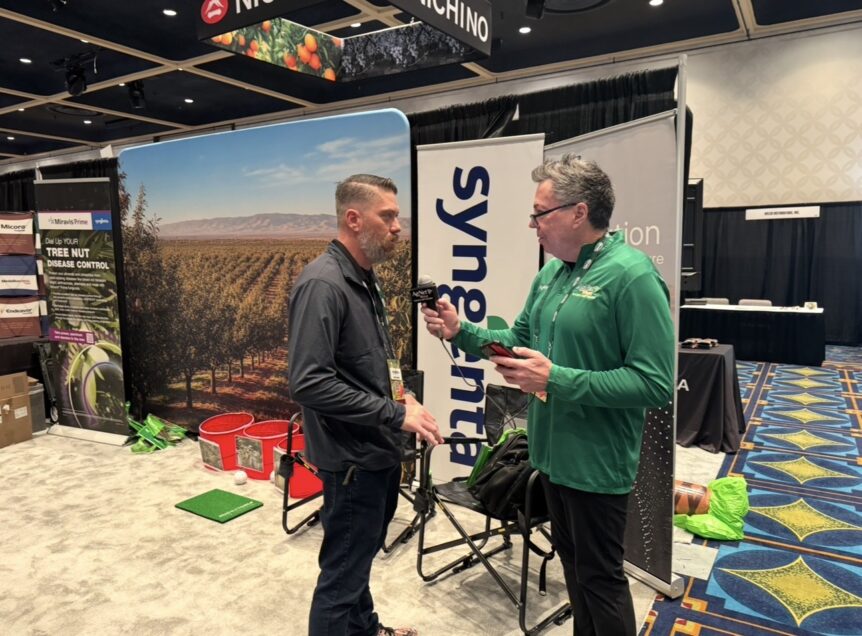
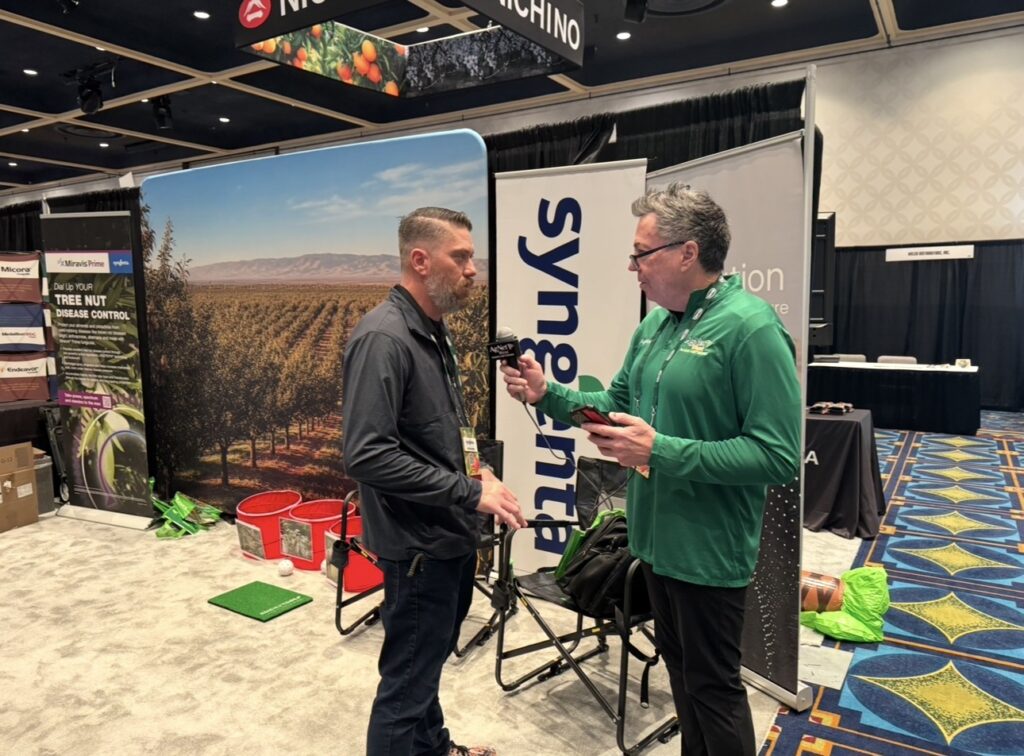
Syngenta is preparing for California’s upcoming winter produce season while anticipating the potential introduction of new crop protection technology in 2027. During an interview with “The Ag Meter” host Nick Papagni at the California Association of Pest Control Advisers (CAPCA) convention in Anaheim, Syngenta Agri-Edge representative Kyle Kuechel discussed the outlook for desert vegetable production, market conditions, weather concerns and the company’s anticipated PLINAZOLIN® technology registration in California.
Kuechel, who is based in Yuma, Arizona, covers Arizona, Southern California and Hawaii. As the winter leafy greens season approaches, he said growers are preparing for harvests that typically begin in November and continue through May.
Strong Attendance at CAPCA Convention
Kuechel described the CAPCA convention as a successful event, noting that attendance was among the strongest the show had experienced since the COVID-19 pandemic.
Booth traffic was strong, providing opportunities for Syngenta to connect with longtime industry contacts and meet new faces across the agricultural community.
The convention also provided an opportunity to discuss the challenges facing California growers and the crop protection tools they may need as the industry moves into the winter production season.
Yuma Produce Season Shows Encouraging Signs
With the winter vegetable season approaching, Yuma is once again a major focus for growers, crop protection companies and the fresh produce industry.
Kuechel reported that crops in the ground were looking good as the region prepared for the start of harvest in November. Although temperatures remained unusually high, with readings still in the triple digits, recent rain offered hope for cooler conditions as the season progressed.
He said the region was positioned to have plenty of product available once harvest begins.
Market conditions were also showing signs of improvement. Kuechel acknowledged that the cyclospora outbreak had temporarily affected the market, contributing to a period of weaker conditions. However, he said that situation appeared to have passed, consumer confidence had improved and market prices were looking reasonable.
Based on those indicators, Kuechel expressed optimism about the season ahead.
“Yuma looks good,” he said, adding that the crop currently in the ground was showing encouraging potential.
The outlook is important for California agriculture because Yuma’s winter vegetable production is closely connected to the broader western produce industry. As the season progresses, production and market developments in Arizona can help inform expectations for growers and marketers preparing for subsequent harvests in California.
However, Kuechel cautioned against assuming that a strong Yuma season automatically guarantees similar results in California. The produce industry encompasses numerous microclimates and distinct growing conditions, making it difficult to predict how conditions in one production region will translate to another.
Weather Outlook Raises Questions for Winter Crop Protection
Looking toward the winter season and 2027, Kuechel discussed the possibility of warmer and wetter conditions associated with the developing El Niño pattern and rising ocean temperatures.
He said the weather outlook was creating expectations for a warm, wet winter across the West Coast. Such conditions can increase the importance of disease management and make fungicide programs an important part of crop protection planning.
Syngenta is preparing to deploy its fungicide portfolio to support growers as they respond to seasonal disease pressure.
Weather conditions will remain an important factor in determining how the winter season develops, particularly as growers balance crop health, pest management and harvest schedules.
Kuechel also reported that 2026 had brought considerable pest and disease pressure. He credited Syngenta’s broad crop protection portfolio with helping the company support growers through those challenges.
Despite the pressure, he expressed optimism that growers would finish the year in a relatively strong position.
PLINAZOLIN® Technology Could Bring a New Tool to California
One of the most significant developments discussed during the interview was Syngenta’s anticipated registration of PLINAZOLIN® technology in California.
Kuechel said the company was looking toward the California Department of Pesticide Regulation (DPR) for registration, with the goal of introducing the technology in the first quarter of 2027. He identified the anticipated launch as one of Syngenta’s most exciting product developments for the coming year.
The technology is intended to help growers address diamondback moth and other pest management challenges affecting production across the region.
Diamondback moth is a particularly important pest for growers producing brassica crops, including several vegetables commonly included in winter leafy greens and cole crop production. Populations that have developed resistance to existing insecticide chemistries can make effective control increasingly difficult.
Kuechel said Syngenta had conducted research authorization trials in California, allowing the company to demonstrate the product to some growers.
He also pointed to the company’s experience in Arizona, where the technology received registration in 2025. After approximately 10 months of use in the desert production region, he said the product had performed successfully.
The experience in Arizona has helped build anticipation for the potential California introduction, although California registration remains an important step before the technology can be deployed there.
A New Mode of Action for Diamondback Moth Management
Kuechel emphasized that PLINAZOLIN® technology could provide growers with a valuable addition to their insecticide rotation programs.
He explained that repeated use of older-generation diamide insecticides has become increasingly challenging in areas where diamondback moth populations have developed resistance to Group 28 products.
The anticipated introduction of a Group 30 insecticide would give growers another chemistry option to incorporate into their pest management programs.
Having additional modes of action available can help growers diversify their control strategies rather than relying too heavily on a limited number of insecticide groups. Effective resistance management also depends on following product labels, rotating modes of action appropriately and integrating other suitable pest management practices.
For growers facing persistent diamondback moth pressure, an additional tool could provide greater flexibility in designing crop protection programs.
Kuechel described the technology as an impressive material and said the company was looking forward to making it available to California growers if registration proceeds as anticipated.
The expected timing remains dependent on the state’s regulatory process, making DPR registration a key development to watch as the industry prepares for 2027.
California and Arizona Growers Prepare for the Next Season
As 2026 draws to a close, Syngenta is focused on supporting growers through the remainder of the current season while preparing for new opportunities in the year ahead.
Kuechel said the company’s broad product portfolio had helped it respond to the heavy pest pressure experienced during 2026. He also expressed optimism about the incoming Yuma season, where crops were looking promising despite continued heat and recent rain.
For California growers, the anticipated PLINAZOLIN® registration is a major point of interest. If approved on the expected timeline, the technology could give growers another option for managing diamondback moth and addressing resistance concerns.
At the same time, winter weather, crop development, consumer confidence and market prices will help determine how the upcoming produce season unfolds.
Listen to the Full Interview With Kyle Kuechel
In his conversation with “The Ag Meter” host Nick Papagni at the CAPCA convention in Anaheim, Kuechel shared his outlook for Yuma’s winter vegetable season, discussed the challenges associated with pest pressure and resistance, and explained why Syngenta is looking forward to the potential California registration of PLINAZOLIN® technology.
Growers and agricultural professionals can listen to the full interview for additional insight into Syngenta’s plans for 2027 and the crop protection developments that could affect California agriculture.
Kuechel said growers and industry members with questions can contact him through LinkedIn or Instagram by searching for his name, Kyle Kuechel (last name spelled K-U-E-C-H-E-L).
As the winter season gets underway, growers will be watching Yuma’s harvest, changing weather conditions and developments in California’s pesticide registration process to see how these factors shape the year ahead.