









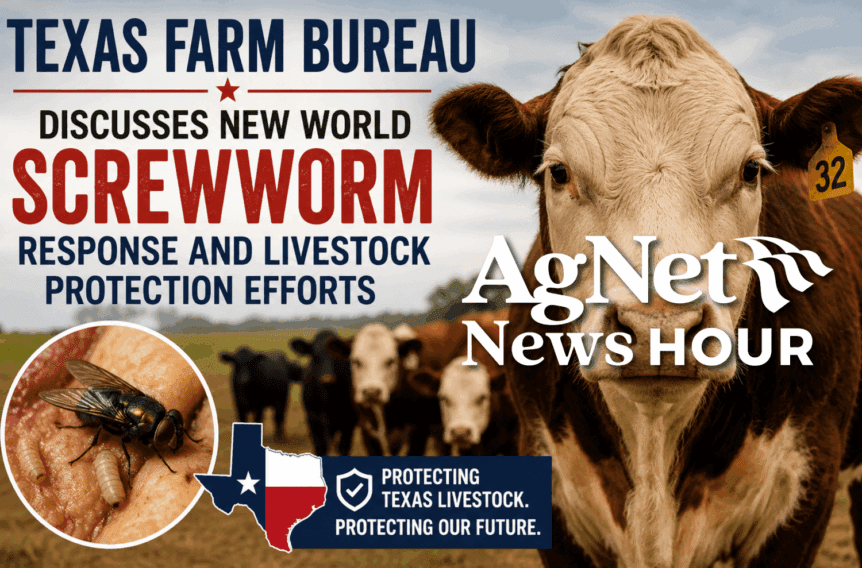
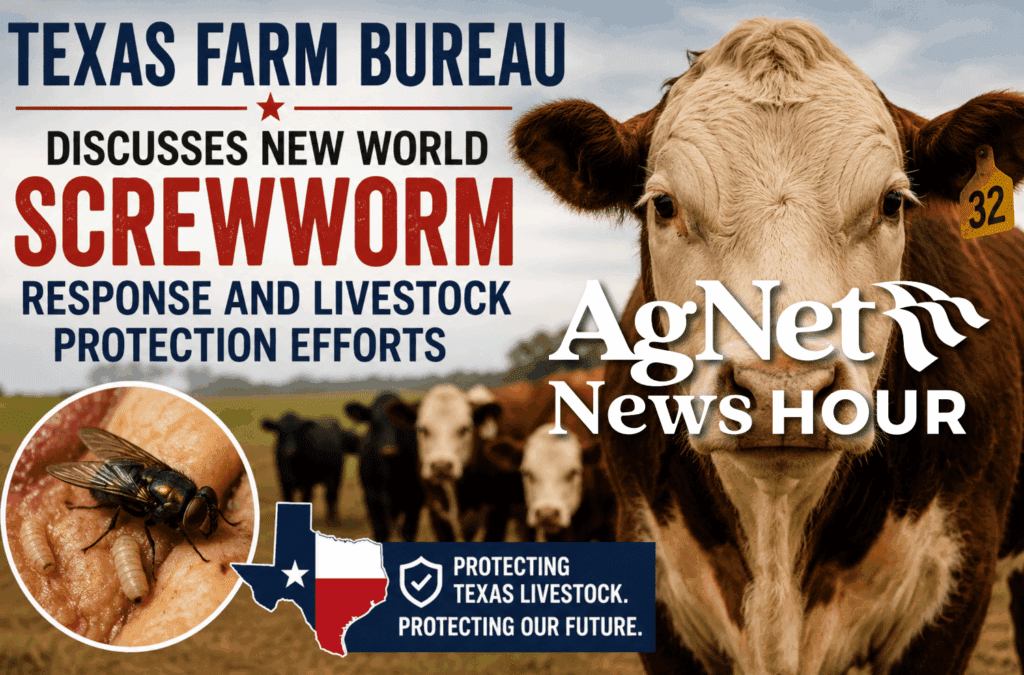
The New World screwworm continues to be a major concern for livestock producers across the southern United States, but Texas agricultural leaders say coordinated efforts between state and federal agencies are helping contain the threat and protect animal health.
On today’s episode of AgNet News Hour, Texas Farm Bureau Director of Communications Gary Joiner provided an update on the latest developments surrounding New World screwworm detections in Texas and the ongoing response efforts.
According to Joiner, the primary focus remains surveillance, rapid reporting, and immediate intervention whenever a case is identified. He noted that the pest was successfully eradicated in the United States decades ago and expressed confidence that modern technology and improved preparedness can help prevent widespread impacts today.
“We beat this screwworm back in the 1970s,” Joiner said. “We can do it again. We’ve got better technology, better tools, and I think our farm and ranch community is better prepared.”
Federal involvement has played a significant role in the response. Joiner highlighted the efforts of U.S. Agriculture Secretary Brooke Rollins and USDA officials, who have dedicated additional personnel and resources toward monitoring and controlling the pest. State animal health officials, wildlife agencies, and livestock producers are also working together under a coordinated response plan.
One important measure has been the temporary closure of live animal imports from Mexico. While the move has created challenges for some cattle feeders who rely on imported livestock, officials say it is necessary to reduce the risk of additional infestations entering the country.
Joiner emphasized that New World screwworm is an animal health issue rather than a food safety issue.
“This is not a food safety concern,” Joiner explained. “There is no impact on the meat of the animal or on any other food products consumers enjoy.”
Current detections have involved livestock as well as a canine case, underscoring the importance of vigilance among ranchers, veterinarians, and pet owners. Officials recommend promptly treating wounds, monitoring animals for unusual symptoms, and maintaining close communication with veterinarians regarding prevention and treatment options.
The response strategy also includes the release of sterile screwworm flies, a proven method that disrupts the insect’s reproductive cycle and helps reduce wild populations. Combined with trapping, surveillance, and rapid treatment protocols, officials believe the approach can effectively contain outbreaks before they spread further.
While livestock producers remain concerned about the potential economic impacts of New World screwworm, Joiner said the industry is taking the threat seriously and working collaboratively to prevent a larger outbreak.
As monitoring continues throughout Texas and other border states, agricultural leaders say awareness and early detection remain the most important tools in protecting the nation’s livestock industry.
Stay informed by visiting the USDA New World Screwworm Information Page
Listen to previous AgNet News Hour episodes…