









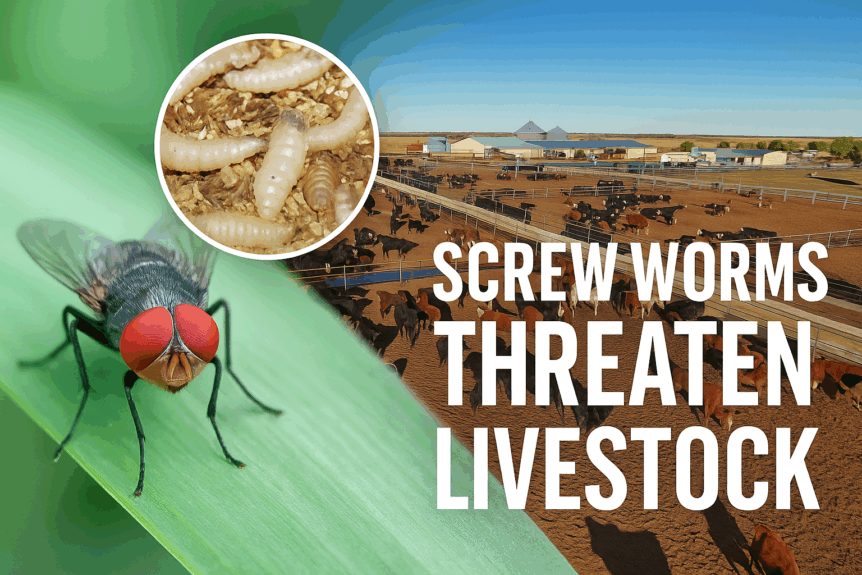
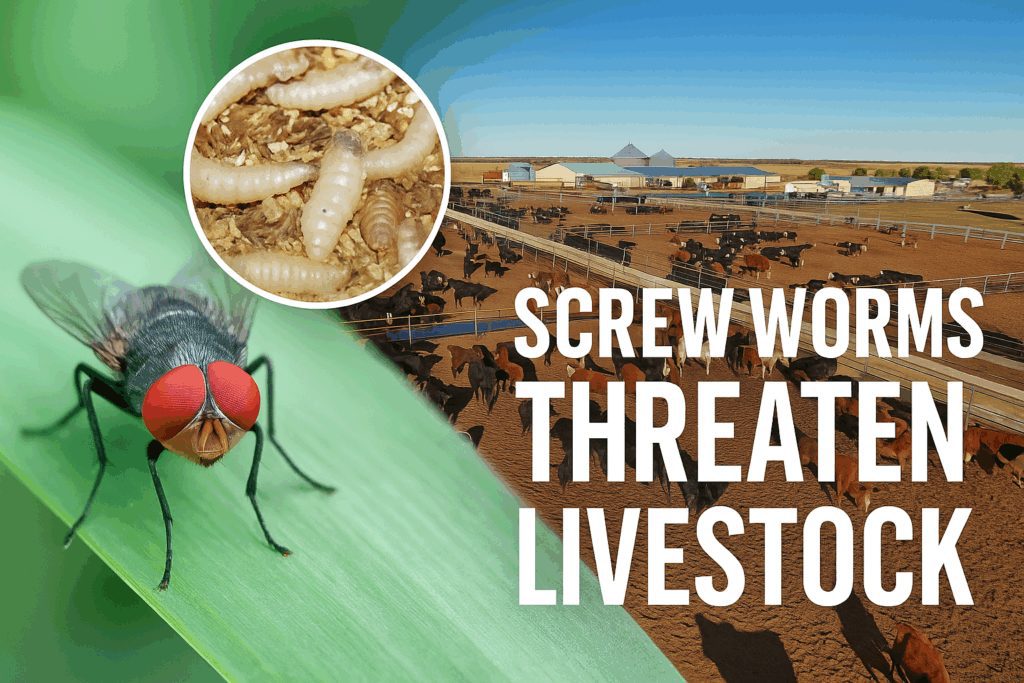
A confirmed New World Screwworm detection in a Texas calf is drawing attention to the potential economic consequences facing the state’s livestock industry. Industry experts warn that if the parasite continues to spread, the financial impact on cattle producers and ranching operations could be significant.
According to reports, analysts estimate Texas could face as much as $1.8 billion in economic losses if New World Screwworm becomes more widespread. Such an outbreak would threaten decades of successful eradication efforts that required substantial investments from federal agencies, state governments and the livestock industry.
The concern follows months of warnings from federal and state officials as the pest steadily advanced northward through Mexico toward the U.S. border. New World Screwworm larvae feed on the living tissue of warm-blooded animals, creating serious animal health concerns and increasing management costs for producers.
New World Screwworm Threat Raises Industry Concerns
Experts say a widespread outbreak could affect ranching operations in several ways. Livestock deaths, increased labor demands, veterinary expenses and treatment costs could place significant financial strain on producers. In addition to direct animal health impacts, producers could face disruptions related to movement restrictions and intensified surveillance efforts.
The detection has also sparked debate regarding the response strategy. Texas Agriculture Commissioner Sid Miller has publicly criticized USDA’s handling of the threat, arguing that federal efforts moved too slowly and relied on long-term solutions that may take years to fully implement.
At the same time, industry organizations say preparations have been underway for more than a year as the pest moved closer to the United States.
NCBA Highlights Ongoing Prevention Efforts
National Cattlemen’s Beef Association CEO Colin Woodall said the organization and its state partners have been actively working to slow the pest’s advance and protect U.S. cattle producers.
According to Woodall, NCBA appreciates USDA’s efforts to expand critical resources aimed at combating the threat. Those efforts include development of a domestic sterile fly production facility, expanded surveillance programs and accelerated access to medications and treatments that may be needed if additional cases are detected.
The sterile fly strategy has a proven history in the United States. Industry leaders note that New World Screwworm was successfully eradicated from the country during the 1960s through large-scale sterile fly dispersal programs and coordinated eradication efforts.
As federal agencies, state officials and livestock organizations continue monitoring the situation, preventing further spread remains the top priority. Industry leaders say maintaining vigilance now could help avoid far greater economic and animal health consequences in the future.
Hear more about the New World Screwworm threat, industry concerns and ongoing prevention efforts by listening to the report below.