









From California Berry Fields to Global Leadership
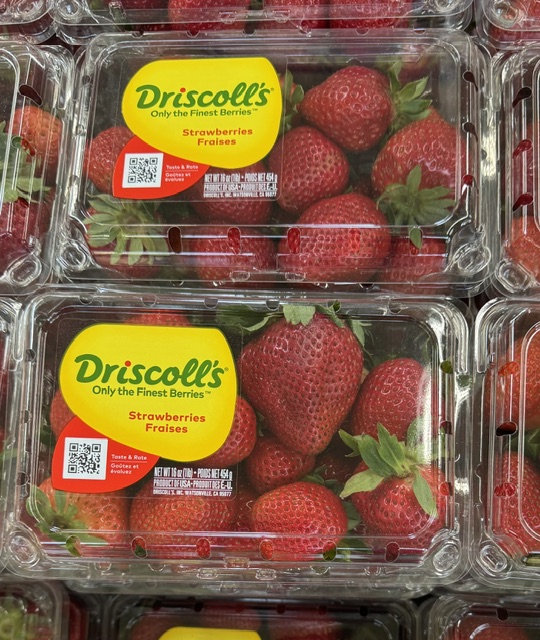
If you’ve ever purchased strawberries, blueberries, raspberries, or blackberries at your local grocery store, chances are you’ve seen the iconic Driscoll’s label. What many consumers don’t realize is the enormous network of family farmers, innovation, and agricultural expertise behind every package of berries.
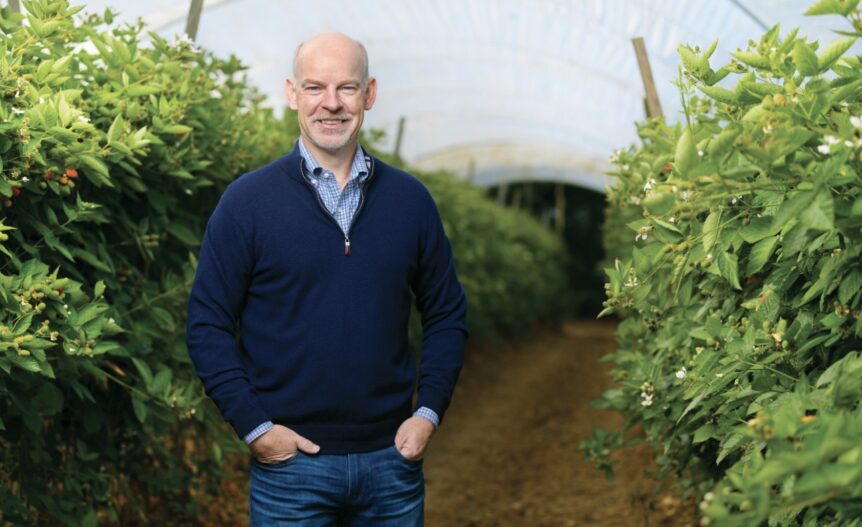
“The Ag Meter” Nick Papagni sat down with Driscoll’s CEO Soren Bjorn for a fascinating conversation to discuss California’s strawberry season, global berry production, labor challenges, water issues, consumer trends, agriculture policy, and the future of farming in America.
The interview provided a rare behind-the-scenes look at one of the world’s most recognizable produce brands and the challenges facing the specialty crop industry today.
An Unpredictable California Strawberry Season
According to Bjorn, California’s strawberry season has been anything but typical.
A significant heat wave in late February accelerated crop development throughout the state, only to be followed by cooler temperatures and rain. The unusual weather pattern created a supply imbalance that impacted growers differently depending on their location.
Many growers experienced an abundance of strawberries during March and April, followed by tighter supplies heading into May and June—normally one of the strongest demand periods for fresh strawberries.
Southern California growers, particularly in Ventura County, faced challenges as production windows shifted and overlapped with northern growing regions such as Santa Maria and Watsonville-Salinas. Meanwhile, growers in northern coastal regions may ultimately benefit from stronger pricing later in the season.
As Bjorn explained, farming often comes down to timing, and this year California growers saw production windows move dramatically because of weather.
How Driscoll’s Became the World’s Berry Leader
Driscoll’s remains a family-owned company controlled by the Ryder family and is approaching its 75th anniversary.
What began as a California strawberry company has evolved into a global berry powerhouse.
Today, Driscoll’s growers produce berries in 26 countries and the company sells berries in approximately 65 countries around the world.
While consumers often think of Driscoll’s as a farming company, Bjorn explained that the business operates differently than many people realize.
Rather than owning and farming all production acreage themselves, Driscoll’s partners with roughly 1,000 independent growers worldwide. Many of those operations are small family farms ranging from 20 to 80 acres, while some are even smaller.
Driscoll’s focuses on:
- Developing proprietary berry genetics
- Producing nursery plants
- Supporting growers
- Marketing and branding
- Managing sales and distribution
- Operating a global supply chain
This partnership model allows family farmers to focus on production while benefiting from Driscoll’s genetics, research, marketing, and worldwide distribution network.
The Strategy: A Year-Round Berry Patch
One of Driscoll’s primary goals is what Bjorn calls a “year-round berry patch.”
The company aims to provide strawberries, blueberries, raspberries, and blackberries twelve months a year while offering both conventional and organic options.
Driscoll’s has also introduced its premium “Sweetest Batch” line, giving consumers access to exceptionally flavorful berries.
The strategy has largely succeeded throughout North America and continues expanding internationally, including rapidly growing markets such as China.
Why Berry Consumption Continues to Grow
One of the most encouraging trends for agriculture is the growing demand for berries.
While blueberries have long been considered one of the fastest-growing produce categories, Bjorn noted that all berry categories are experiencing strong growth.
Recent retail data shows:
- Blueberries growing approximately 9%
- Strong growth in strawberries
- Increased demand for raspberries
- Continued expansion in blackberries
Consumers increasingly view berries as healthy, convenient, nutritious, and enjoyable.
Bjorn believes changing dietary habits, increased health awareness, and the growing popularity of GLP-1 medications are helping drive demand for fresh fruits and vegetables.
Perhaps the most striking statistic discussed during the interview was that only one in ten Americans currently consumes the recommended daily servings of fruits and vegetables.
For agriculture, that represents enormous growth potential.
California Regulations Continue to Challenge Agriculture
Despite strong consumer demand, California agriculture continues facing mounting regulatory pressures.
California remains Driscoll’s largest growing region and accounts for roughly 60% of the company’s revenue in the Americas.
Bjorn expressed concern that regulations continue to accumulate while very few are ever removed, even when they fail to achieve their intended purpose.
He emphasized that California’s specialty crop industry occupies a unique position because crops such as strawberries cannot simply be moved elsewhere.
California’s climate remains unmatched for berry production.
“The best place in the world to grow strawberries is California,” Bjorn explained.
Because roughly 70% of America’s fresh fruits, vegetables, and nuts are grown in California, maintaining a viable agricultural industry is critical for the nation’s food supply.
Labor, Immigration, and Farmworker Housing
Labor remains one of agriculture’s most important issues.
Bjorn praised improvements to the H-2A guest worker program that have made participation more practical for growers. However, he identified affordable farmworker housing as one of the industry’s greatest challenges.
For many coastal farming communities, obtaining approvals for farmworker housing projects can be difficult, time-consuming, and expensive.
Bjorn also advocated for broader immigration reform that would provide long-term solutions for experienced agricultural workers who have helped grow America’s food supply for years.
He further highlighted the need for labor solutions for year-round agricultural sectors such as dairies, ranches, and greenhouse operations that currently do not fit neatly into seasonal guest-worker programs.
Water Challenges Depend on Geography
Water remains a major issue throughout California agriculture, but Bjorn emphasized that solutions vary significantly by region.
Watsonville and the Pajaro Valley rely heavily on groundwater resources.
Santa Maria operates under a different water management structure.
Ventura County utilizes a combination of groundwater and reservoirs while also possessing opportunities to expand recycled water use.
While local efforts have improved groundwater management in the Pajaro Valley, broader concerns remain throughout California, particularly regarding long-term Colorado River supplies.
Organic Production Continues to Expand
Driscoll’s currently sells more than half of all organic berries purchased in North America.
Organic demand continues growing faster than conventional berry demand, although organic production costs remain significantly higher.
Bjorn estimated that organic strawberries cost approximately 30% to 35% more to produce than conventional strawberries.
Even with the higher costs, consumers continue seeking organic options, making organic production an increasingly important part of Driscoll’s long-term strategy.
Making America Healthy Again and the Future of Produce
Bjorn sees significant opportunity in America’s growing focus on nutrition and healthier eating.
However, he cautioned that efforts to reduce pesticide use must be paired with faster approval of biological alternatives and innovative crop protection tools.
Without practical alternatives, growers could face challenges similar to those experienced in parts of Europe, where restrictions sometimes outpaced available technology.
Bjorn stressed that innovation must stay ahead of regulation to ensure farmers remain productive and profitable.
Fighting Misconceptions About Farming
One of the most passionate parts of the interview centered on public perception of agriculture.
Bjorn acknowledged that activist campaigns often target recognizable agricultural brands. While criticism can be difficult, he believes the best response is transparency and education.
Driscoll’s has increasingly opened its farms to community leaders, educators, elected officials, and business leaders.
Many visitors have never stepped foot on a farm before.
Those experiences often create a better understanding of modern agriculture and help bridge the gap between consumers and food production.
Bjorn believes agriculture must become more comfortable telling its story and explaining how food is grown.
From Denmark to the American Dream
Bjorn’s personal story is equally compelling.
Originally from Denmark, he arrived in the United States in 1989 on a golf scholarship to Baylor University in Texas.
After entering the food industry through a mentor’s business, he eventually worked for Del Monte Foods before joining Driscoll’s roughly twenty years ago.
Today, he leads one of America’s most successful produce companies.
Bjorn described his journey as his version of the American dream—a Danish student arriving in America and eventually becoming CEO of a major U.S. company.
The Power of the Driscoll’s Brand
One of the most remarkable revelations from the interview involved Driscoll’s brand strength.
According to Bjorn, Driscoll’s ranked as the second-largest food and beverage brand in U.S. grocery sales during 2025, behind only Coca-Cola.
That achievement demonstrates the power of consistency, quality, innovation, and consumer trust.
Rather than remaining a commodity producer, Driscoll’s has successfully transformed berries into a recognizable consumer brand.
Bjorn believes many other agricultural sectors could benefit from adopting similar approaches.
Looking Ahead to Summer
As summer progresses, consumers can expect strong supplies of raspberries, blackberries, and blueberries.
Strawberries may remain somewhat tighter and more expensive than usual early in the season, but production should improve as summer advances.
Most importantly, Bjorn emphasized that consumers can continue to enjoy berries with confidence, knowing they are nutritious, safe, and produced by dedicated farming families.
Listen to the Full Interview
This conversation between The Ag Meter’s Nick Papagni and Driscoll’s CEO Soren Bjorn goes far beyond berries.
It explores food security, farm policy, labor, immigration, water, innovation, branding, nutrition, regulation, and the future of California agriculture.
Whether you’re a farmer, consumer, policymaker, or simply someone who enjoys fresh berries, this interview provides valuable insight into one of agriculture’s most important industries.Be sure to listen to the full interview to hear directly from Soren Bjorn as he shares his vision for the future of farming, the challenges facing growers, and why supporting American agriculture matters now more than ever.