









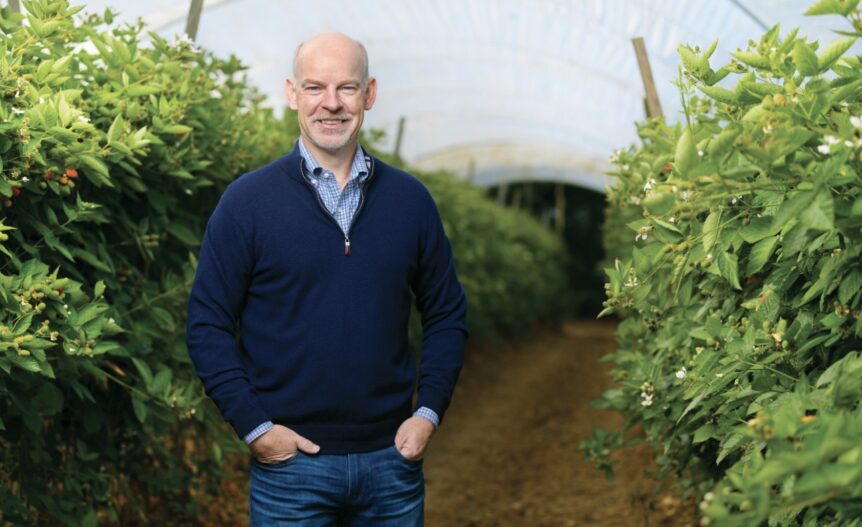
The California strawberry season has taken an unusual turn in 2026 as shifting weather patterns disrupted normal production timelines across the state. During a recent appearance on AgNet News Hour, Driscoll’s CEO Soren Bjorn discussed how an early heat wave followed by cooler, wetter conditions created unexpected challenges for growers and altered the typical supply pattern for strawberries.
According to Bjorn, a significant heat wave in late February was followed by cooler temperatures and rain, creating conditions that disrupted normal production patterns.
“Right, we had this big heat wave in late February and then it kind of got cold and a little rainy after that and certainly in the berry business that has created a little bit of chaos,” Bjorn said.
The result has been a strawberry season that looks much different than growers and buyers are accustomed to seeing.
California Strawberry Season Produces Unexpected Supply Shifts
Bjorn explained that the industry experienced an oversupply of strawberries earlier in the season, followed by tighter supplies as demand typically begins to increase.
“You know, we had way too many strawberries in March and April and now we don’t have enough,” he said. “That’s a little bit backwards.”
Under normal conditions, strawberry demand ramps up during May and June as consumers increase purchases and retailers expand promotional programs. This year, however, reduced supplies have led to stronger prices at a time when many customers would prefer more abundant availability.
“Typically, by the time you get into May and June is when all our customers are thinking about strawberries and they don’t quite like where the price is at at the moment,” Bjorn said.
The unusual production pattern has created varying outcomes depending on where growers are located within California.
Regional Differences Define the California Strawberry Season
Bjorn noted that growers in Southern California have faced different challenges than those farther north.
“I think depending on where you are in the state,” he said. “If you’re in Southern California, Ventura County, this would be a tough season because your peak came when the volume in the north got moved forward.”
Meanwhile, growers in the Watsonville and Salinas regions may benefit from the timing shift.
“If you’re in Northern California, Watsonville Salinas, you’re probably going to have a really good year this year,” Bjorn said.
The situation highlights one of the realities of farming: success often depends on timing, weather and location.
“A lot of times in farming, it depends a little bit on where you are at and did you hit the window this year,” Bjorn explained. “This year, the window really shifted around quite a bit.”
Beyond seasonal conditions, Bjorn also highlighted Driscoll’s long history as a family-owned company. Founded in California, the company has remained family-owned and operated since the 1950s and today grows strawberries in 26 countries while selling products in 65 countries worldwide.
Hear more from Driscoll’s CEO Soren Bjorn on the California strawberry season and the company’s global operations by listening to the interview below.