








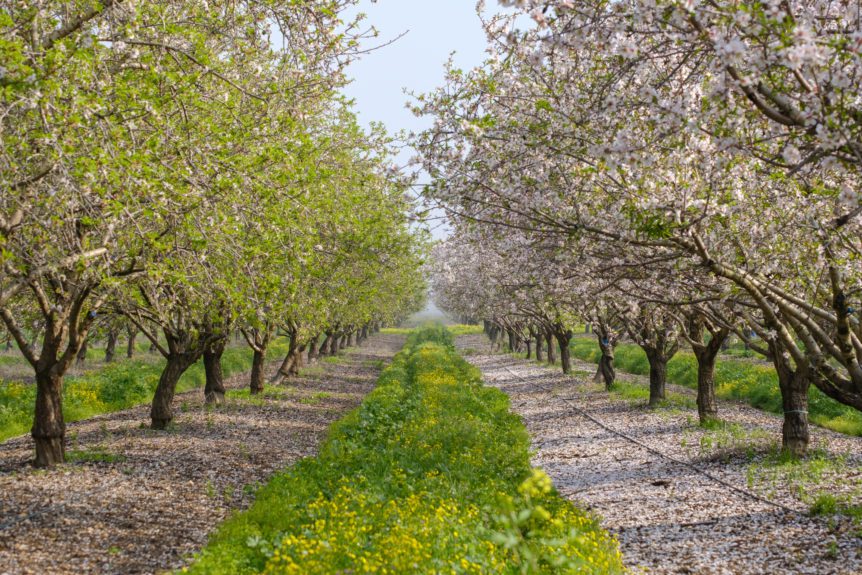
California’s almond industry is looking at another solid harvest in 2026, though growers are unlikely to see a record-breaking crop. During a recent appearance on AgNet News Hour, Steve Malanca, field representative for West Valley Hulling in Firebaugh, California, shared his outlook for this year’s almond crop and discussed the ongoing challenges facing producers.
According to Malanca, early indications suggest the crop will be comparable to last year’s production rather than reaching the larger estimates some had hoped for.
“It’s just a pretty good crop this year,” Malanca said. “It’s not a barn burner. It’s not a three billion pound crop, that’s for sure.”
While final production figures remain uncertain, he believes the crop will likely finish close to last year’s total.
“It looks like it’s going to be coming in close to last year as a preliminary,” he said. “In some circles, the 2.5 has been brought up, definitely 2.6.”
Almond Forecast Suggests Steady Production
Although growers are not anticipating a record crop, Malanca said current conditions point toward a healthy harvest that should provide a stable supply of almonds.
Crop size estimates will continue to evolve as the growing season progresses, but early observations indicate production should remain within the range many industry observers have expected.
For growers, attention is now shifting beyond crop size and toward the factors that could influence final yields and long-term profitability.
Almond Forecast Highlights Ongoing Water Challenges
When asked about the biggest issue facing almond growers, Malanca did not hesitate.
“Water, again, is at the top of the list, Nick,” he said. “We’ve been barking about water for 40 years out here, and it continues to be the biggest challenge we got going right now.”
He explained that access to reliable water supplies remains especially difficult for orchards that rely primarily on groundwater rather than surface water deliveries.
“I think it’s going to affect the final number this year,” Malanca said, referring to acreage dependent on subsurface water. “Those guys, they’re going to start paying for water and being allocated so much, and so those dynamics are changing.”
As California growers continue adapting to changing water policies and allocation limits, water availability is expected to remain one of the most significant factors shaping almond production in the years ahead.
Hear more from Steve Malanca about his almond forecast and the water challenges facing California growers by listening to the interview below.