









Shorthorn Cattle: The Versatile Breed That Supported America’s Westward Expansion
As pioneers pushed westward and established farms across the expanding United States, one breed of cattle became an essential part of everyday agricultural life: the Shorthorn. Known for its remarkable versatility, the breed provided milk, meat, and dependable draft power, making it one of the most valuable livestock breeds in early American agriculture.
Originally known as the Durham, the Shorthorn was the first improved breed of cattle imported into the United States, arriving in 1783. Its introduction marked an important milestone in the development of American livestock production, as farmers sought animals that could perform multiple roles on family farms.
A True Multi-Purpose Farm Animal
Unlike many modern cattle breeds that are bred for a single purpose, early Shorthorns excelled in several areas that were critical for frontier families.
They were highly regarded as:
- Excellent milk producers for supplying dairy products to farm families.
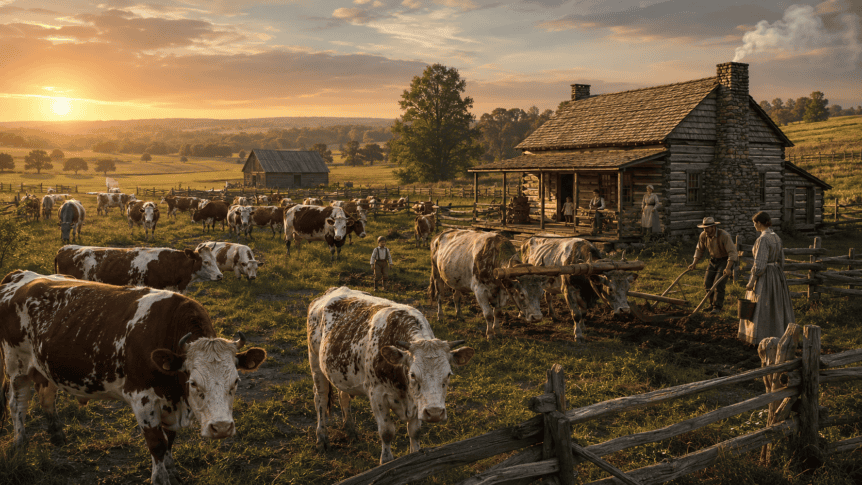
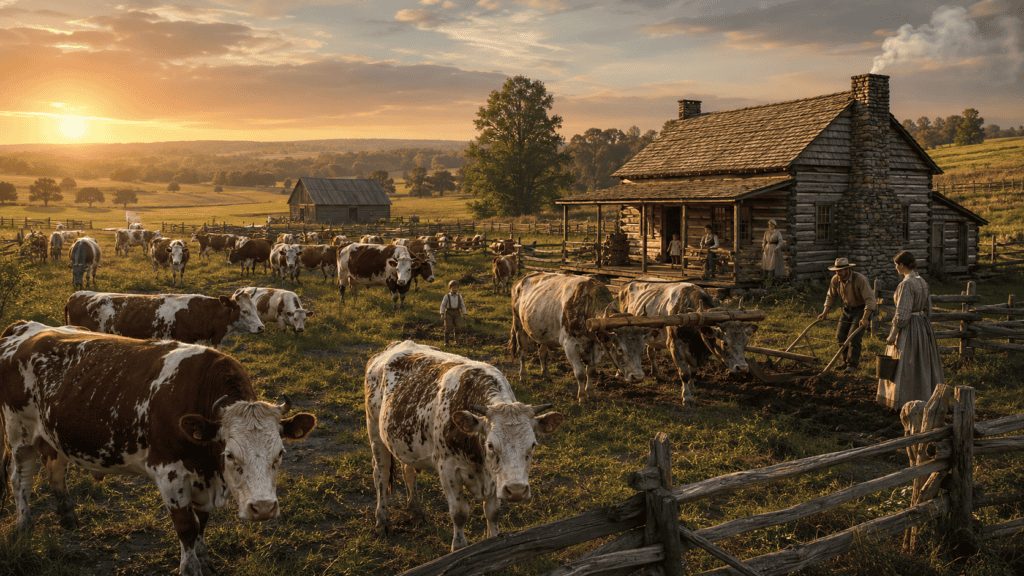
- Strong draft animals capable of pulling wagons, carts, and plows before widespread mechanization.
- Reliable beef producers, providing an important source of meat, especially when families prepared food supplies for the winter months.
Because one animal could perform several essential tasks, the Shorthorn became the most common breed found on many farms and ranches during America’s westward expansion.
Supporting Pioneer Life
Life on the frontier demanded efficiency and self-sufficiency. Farmers often relied on a limited number of livestock to meet nearly every household need. The Shorthorn’s combination of strength, productivity, and adaptability made it an ideal choice for settlers establishing new homesteads.
Whether working fields, supplying fresh milk, or providing beef for winter storage, the breed played a significant role in helping pioneer families survive and thrive as agriculture expanded across the country.
An Important Chapter in Agricultural History
The arrival of the Shorthorn in America helped shape the nation’s livestock industry. Its influence extended well beyond the frontier years, contributing to the development of cattle breeding programs and improved agricultural productivity throughout the United States.
Today, the Shorthorn remains an important breed and serves as a reminder of the animals that helped build American agriculture during one of the nation’s most significant periods of expansion.