









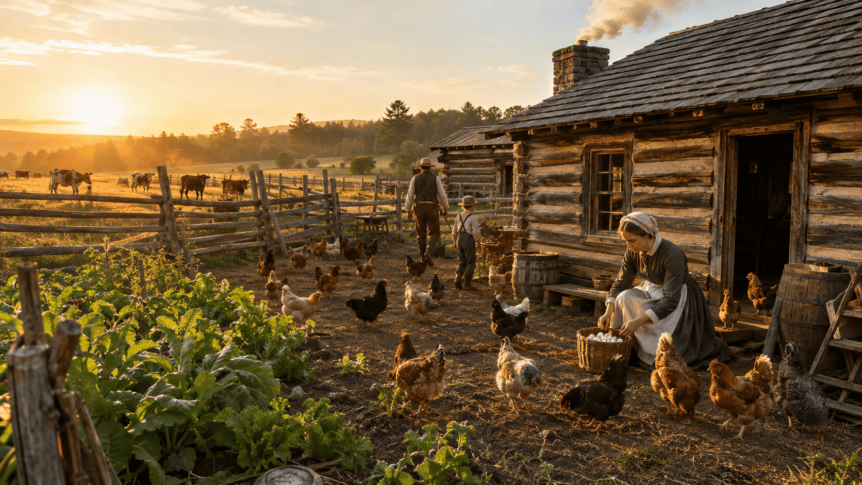
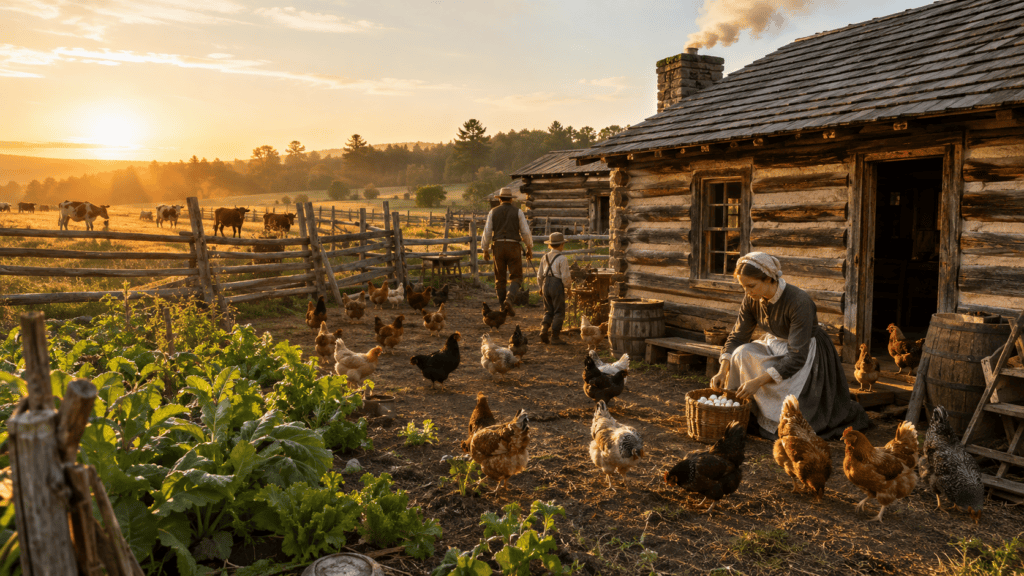
Chickens Were the First Livestock of the American Frontier
When many people think about American agriculture in the 1800s, they often picture vast cattle ranches or large hog operations. However, during the mid-19th century, chickens were actually among the most valuable livestock on many pioneer farms. Their versatility, ease of care, and ability to provide a steady source of food made them indispensable to families settling the American frontier.
As settlers moved west in search of new opportunities, every item they transported had to justify its place in a wagon. Chickens proved to be one of the most practical animals pioneers could bring with them. Unlike cattle or hogs, poultry required very little space, consumed fewer resources, and could easily adapt to new environments once families established their homesteads.
A Reliable Source of Food and Income
After pioneer families built their farms, chickens quickly became essential to daily life. They supplied a dependable source of fresh eggs, an important source of protein that could be collected almost every day. When additional food was needed, chickens also provided meat for family meals.
Beyond feeding the household, poultry also played an important economic role. Eggs and chickens could be traded with neighbors or local merchants for goods and supplies that families could not produce themselves. In many frontier communities, chickens became a form of practical currency, helping families acquire necessities while building their new lives.
Easier Than Raising Larger Livestock
Compared to cattle and hogs, chickens required significantly less labor and investment. They needed less feed, occupied minimal space, and demanded far less daily attention. This made them an ideal choice for pioneer families already working long hours clearing land, planting crops, constructing homes, and establishing productive farms.
Their low maintenance requirements allowed settlers to focus on the many other challenges of frontier life while still benefiting from a dependable source of food and income.
Backyard Chickens Make a Modern Comeback
Although commercial poultry production has transformed the industry over the past century, backyard chickens have experienced a remarkable resurgence in recent years. Many homeowners now raise small flocks for fresh eggs, sustainable food production, and a stronger connection to agriculture.
This modern trend echoes the important role chickens played on America’s earliest farms, demonstrating that these adaptable birds continue to provide practical benefits nearly two centuries later.
Looking Back at an Agricultural Legacy
The story of America’s pioneer chickens highlights how small, resilient livestock helped shape the nation’s agricultural history. While cattle and hogs would eventually become dominant livestock industries, chickens were among the first animals to support westward expansion and the success of countless family farms. Their contribution to feeding families, supporting local trade, and helping settlers establish productive homesteads remains an important chapter in the history of American agriculture.