









The Humble Beginnings of Midwest Farm Life
As settlers pushed westward during the 1840s, the American Midwest became a center of agricultural expansion. Most pioneer families established farms of approximately 100 acres, creating the foundation for what would become one of the world’s most productive farming regions.
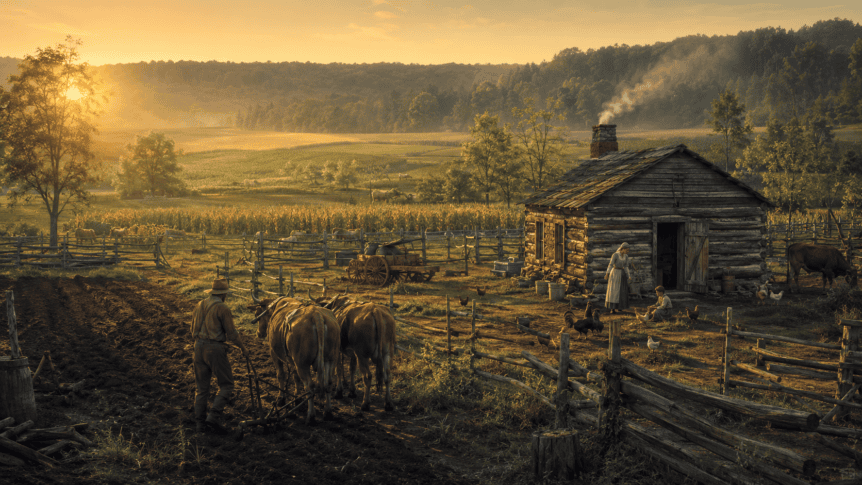
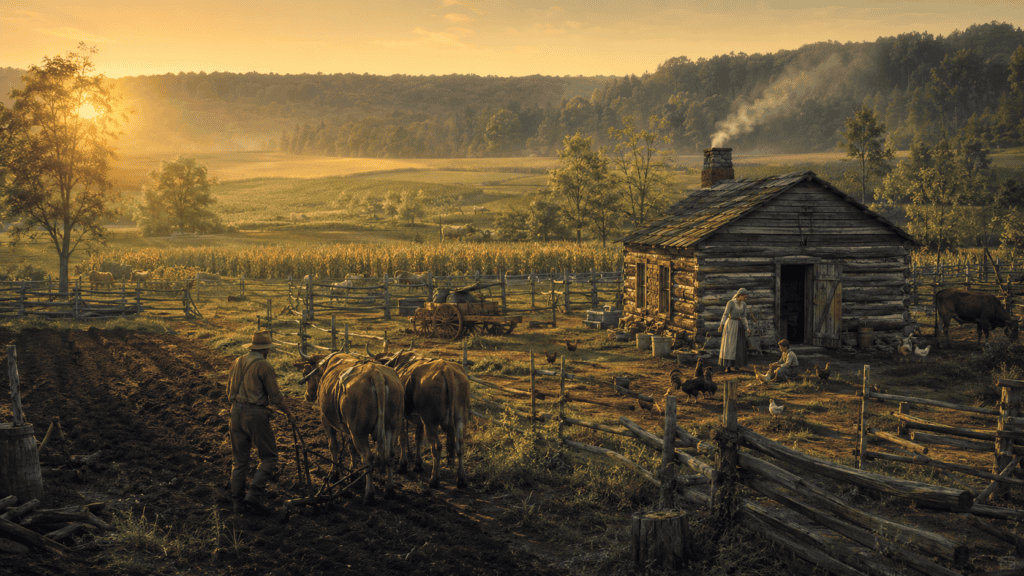
Life on these early farms was simple and demanding. The typical family lived in a handmade one-room log cabin, often constructed using timber harvested directly from the surrounding land. These modest homes were designed to provide immediate shelter while families focused on clearing fields, planting crops, and building a livelihood from the frontier.
Many cabins also included a small loft, providing additional sleeping space as families grew. While these structures were basic, they represented determination, self-reliance, and the pioneering spirit that defined early Midwestern agriculture.
Eastern Traditions Shaped Western Homes
A large percentage of settlers who moved into the Midwest had previously lived in the eastern United States. Although they accepted the hardships of frontier life, many hoped to recreate the comforts they had left behind.
As farms became more established and financially stable, these pioneers replaced their simple log cabins with larger, multi-room homes similar to those they had occupied before moving west. These improved houses reflected not only greater prosperity but also the permanence of their new communities.
The transition from one-room cabins to spacious farmhouses marked an important milestone in the development of Midwestern agriculture. Families were no longer simply surviving—they were building lasting homesteads intended to be passed down through future generations.
Historic Farmhouses Still Stand Today
Many of these carefully constructed homes proved remarkably durable. Across the Midwest, visitors can still find century farms and 150-year-old family farms featuring original farmhouses built during this period.
These historic homes serve as living reminders of the resilience, craftsmanship, and long-term vision of America’s early farm families. They continue to tell the story of how pioneers transformed the frontier into thriving agricultural communities that remain productive today.
Preserving America’s Agricultural Heritage
The evolution of Midwestern farmhouses illustrates more than changes in architecture—it reflects the growth of American agriculture itself. From modest log cabins built for necessity to substantial family homes built for permanence, these structures symbolize the determination of settlers who laid the foundation for modern farming across the Midwest.
Their legacy continues to inspire today’s farmers and reminds us of the enduring connection between family, land, and agriculture.