









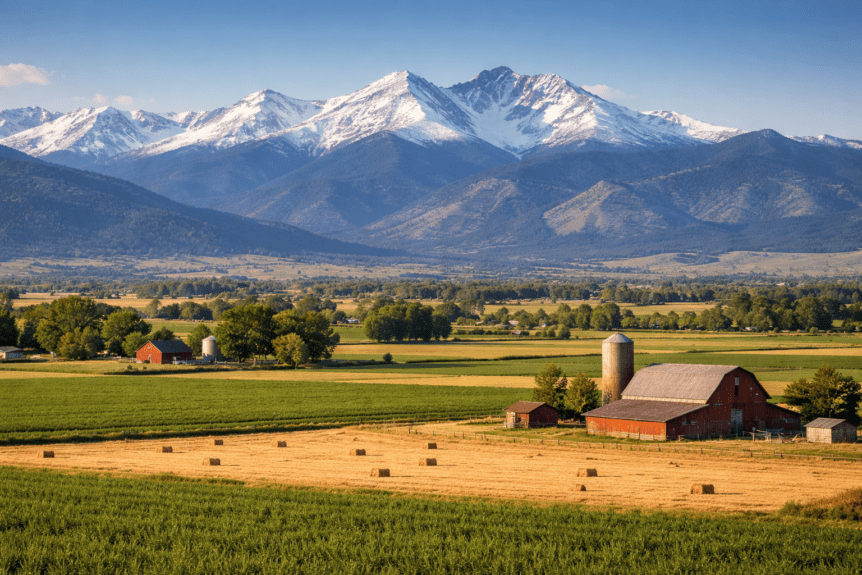
As settlers moved westward across the Appalachian Mountains, many found fertile land and favorable farming conditions in states such as Ohio, Illinois, Indiana, and Iowa. These regions quickly became agricultural strongholds, offering opportunities that attracted families eager to build productive farms and stable communities.
Colorado, however, did not share the same early appeal. Historians note that when the first settlers arrived, the region offered far fewer advantages for agriculture. Difficult terrain, limited water availability, and a harsh climate made farming a challenge. In fact, many pioneers believed continuing through the Rocky Mountains toward Oregon was a better option than attempting to settle in Colorado.
Mining and Transportation Change Colorado’s Future
Colorado’s fortunes began to shift in the mid-to-late 19th century. The discovery of gold and silver during the 1860s and 1870s brought new settlers, capital, and economic momentum into the region. Mining towns sprang up quickly, creating demand for food, livestock, and local agricultural production.
The arrival of railroads in Denver in the late 1870s proved to be a turning point. Rail connections linked Colorado to national markets, making it easier to transport crops, livestock, and supplies. Improved transportation helped agriculture gain a foothold and encouraged long-term settlement.
Building Agricultural Institutions
With new growth came investment in agriculture’s future. Colorado held its first state fair in 1879, providing a platform to showcase crops, livestock, and innovation. Around a year later, Colorado Agricultural College opened its doors. Today, that institution is known as Colorado State University and remains a leader in agricultural education and research.
A Lasting Agricultural Legacy
Though Colorado faced early challenges, the combination of mining wealth, transportation infrastructure, and education transformed the state’s agricultural landscape. These developments laid the groundwork for a resilient farming and ranching industry that continues to shape Colorado today.
I’m Mark Oppold with an American Agriculture History Minute.