









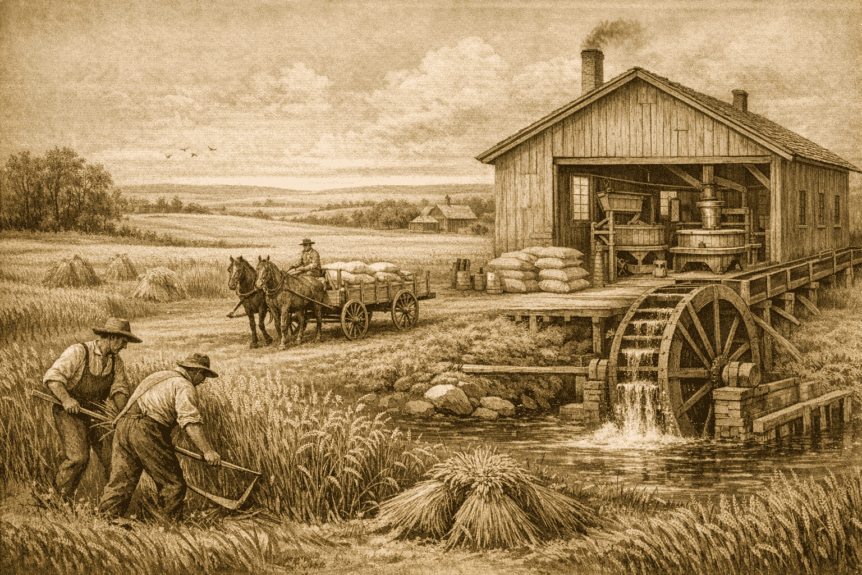
How Minnesota Found Its Perfect Wheat
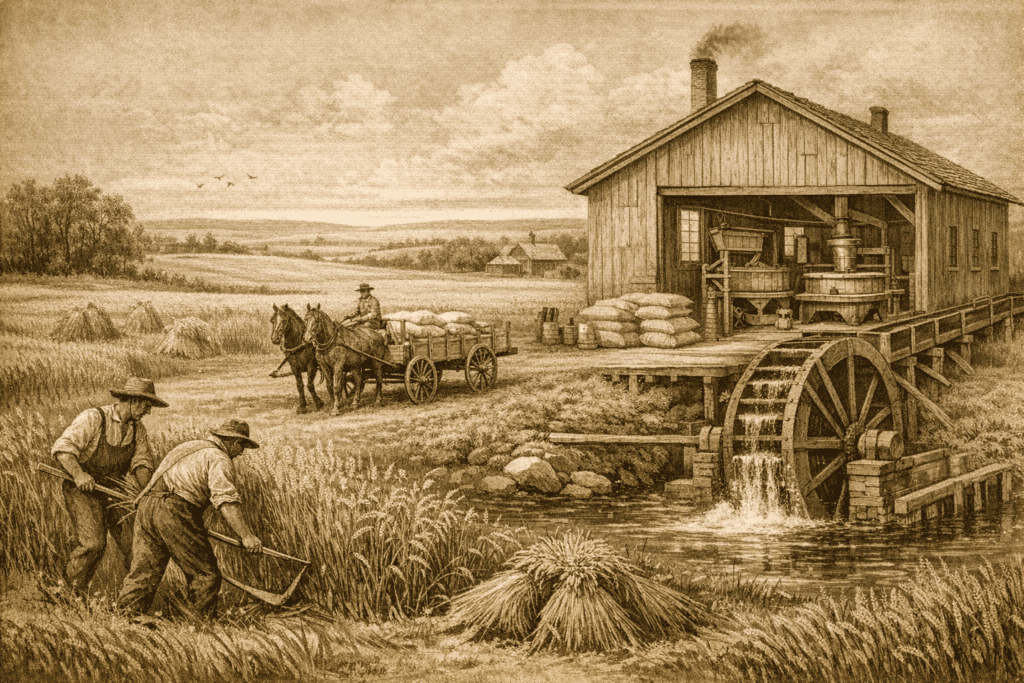
Early Challenges for Minnesota Settlers
When early settlers arrived in Minnesota, they quickly realized that wheat varieties successful in Nebraska and Kansas failed in the northern climate. The region’s colder temperatures, shorter growing season, and unique soil conditions required experimentation and adaptability from farmers striving to establish sustainable crops.
Discovering Spring Wheat
After much trial and error, settlers identified a spring wheat variety better suited to Minnesota’s conditions. While this represented a significant step forward, a challenge remained: the wheat’s dark bran made it difficult to produce the pure white flour consumers preferred, limiting its market potential.
The Mid-Length Purifier Revolution
The breakthrough came in 1865 with the installation of a mid-length purifier, a milling innovation capable of removing the dark bran and producing high-quality white flour. This technological advancement revolutionized Minnesota’s wheat industry, enabling farmers to meet consumer demands and compete with other wheat-producing states.
Alexander Faribault’s Leadership
Driving this transformation was Alexander Faribault, the town’s namesake. His leadership and vision ensured the adoption of modern milling techniques, positioning Minnesota as a key player in American agriculture and setting the stage for long-term success in wheat production.
Conclusion
Minnesota’s journey from struggling wheat fields to producing premium white flour highlights the resilience and ingenuity of early settlers. Innovations like the mid-length purifier, combined with visionary leaders such as Alexander Faribault, solidified the state’s place in the history of American agriculture.