









The Ohio and Erie Canal: A Turning Point in Ohio’s History
In the early 19th century, Ohio leaders recognized the need for better transportation to support agriculture, commerce, and settlement. One of the most ambitious projects of the era was the Ohio and Erie Canal, a waterway designed to connect Lake Erie with the Ohio River and open new economic opportunities for the growing state.
Governor Ethan Brown’s Vision
In 1820, Ohio Governor Ethan Brown established the Ohio Canal Commission with a clear objective: survey a canal route that would link Lake Erie in the north to the Ohio River in the south. This connection promised to give Ohio farmers and businesses access to broader markets while strengthening trade routes across the region.
Federal Resistance and Early Challenges
Despite strong state support, the project quickly ran into trouble. The U.S. government refused to sell the land needed for construction, creating a major obstacle for the commission. Without access to the necessary land, the original Ohio Canal Commission was eventually dissolved, putting the project on hold.
Renewed Efforts Bring the Canal to Life
Ohio leaders did not abandon the idea. Two years later, a new canal commission was formed, reigniting momentum behind the project. After additional planning and persistence, construction officially began on July 4, 1825, a symbolic date underscoring the importance of the canal to Ohio’s future.
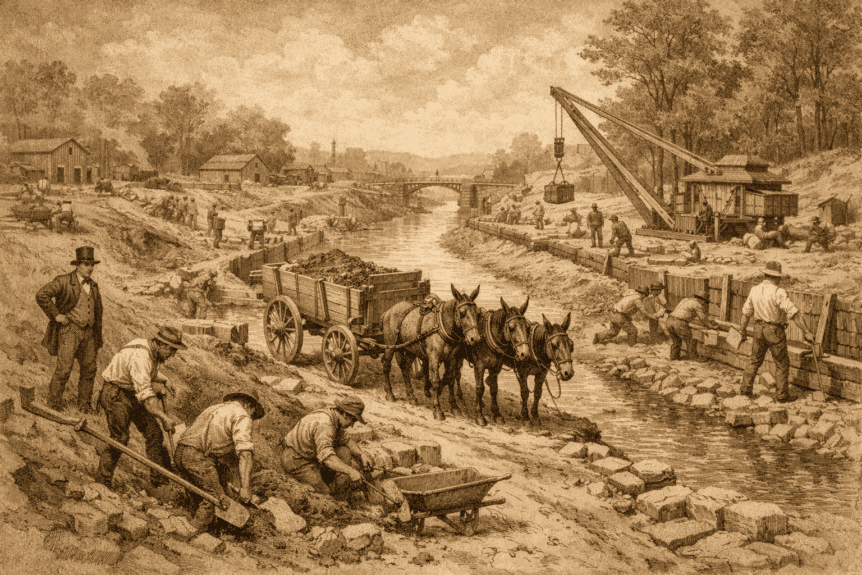
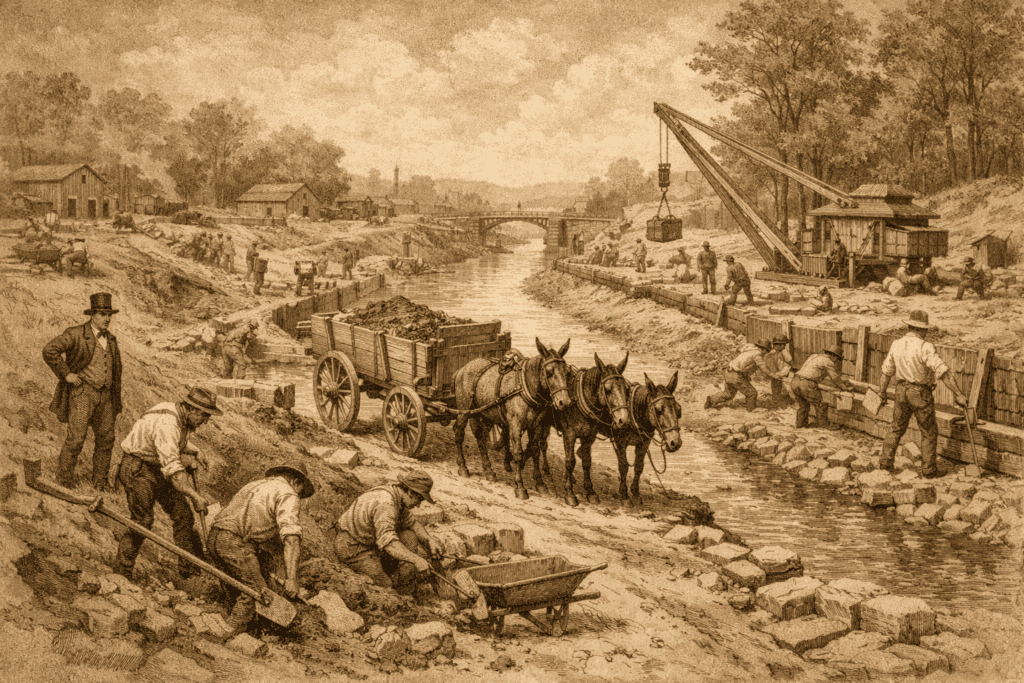
At the height of construction, more than 4,000 workers were employed at one time. Building the canal was a massive undertaking that required seven years of continuous labor.
Completion and Lasting Impact
By 1833, the Ohio and Erie Canal was fully operational. The canal became a vital transportation corridor, allowing agricultural goods to move more efficiently and helping fuel Ohio’s economic growth. It played a key role in connecting rural communities to major markets and remains a defining achievement in American agriculture and transportation history.