









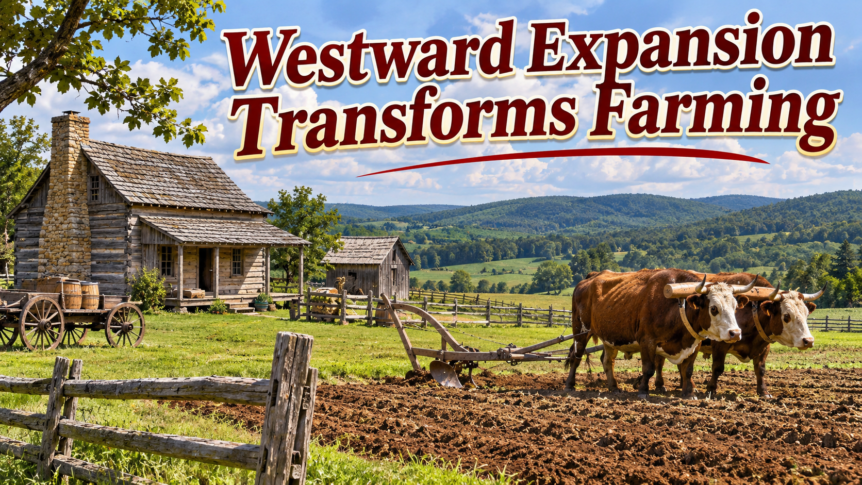
America’s agricultural economy was already taking shape in the early 19th century, as westward expansion, transportation improvements, and economic growth created new opportunities for farmers across the growing nation. During this period, agriculture remained the foundation of the U.S. economy, with farming practices and access to new markets helping shape the country’s economic development.
In this edition of the American Agriculture History Minute, Mark Oppold looks back at how territorial expansion and transportation advancements helped transform American agriculture and provided farmers with opportunities to build wealth through the development of farmland.
Agriculture Drives the Early American Economy
In the early 1800s, the United States was primarily an agriculturally based economy. Most Americans lived in rural communities, and farming was central to everyday life and economic activity.
For many farmers, agricultural production was focused on feeding their families, with any additional crops or products sold into small, local markets. Farming was largely centered on meeting immediate household needs rather than producing on the large commercial scale that would become increasingly important as the nation developed.
However, changing economic conditions and the expansion of the United States began creating new opportunities for agricultural producers.
Westward Expansion Creates New Farming Opportunities
Several major developments helped open additional territory for American agriculture. The Louisiana Purchase in 1803 dramatically expanded the nation’s land holdings, providing access to vast areas west of the Mississippi River.
The American victory in the War of 1812 also helped establish greater security and confidence in the country’s continued westward development.
As settlers moved into new territories, agricultural opportunities expanded. Farmers could acquire land, establish operations, cultivate crops, and take advantage of the growing demand for agricultural products.
Transportation improvements further accelerated this development. The construction of canals and the introduction of steamboats made it easier to move people and agricultural goods. These advancements connected previously isolated communities and helped farmers reach markets beyond their immediate surroundings.
Together, territorial expansion and improved transportation laid important groundwork for the growth of American commercial agriculture.
Improving Farmland Became a Path to Economic Growth
One of the interesting economic dynamics of the early 19th century was the opportunity available to farmers willing to move west and develop new land.
As Mark Oppold explains, during periods of rapid economic growth, a farmer could purchase land, improve its productivity and value, and potentially sell it for more than the original investment.
That farmer could then move farther west, acquire additional land, and repeat the process.
This approach provided an opportunity to build wealth through land development while contributing to the expansion of agricultural production across the country.
The availability of new farmland, combined with growing economic activity and improved transportation, helped establish a pattern of agricultural expansion that would influence American farming for generations.
The Foundations of a Growing Agricultural Nation
The early 19th century was an important transitional period for American agriculture. Farming remained primarily focused on family food production and local markets, but the country’s westward growth and expanding transportation networks were beginning to change what was possible.
The Louisiana Purchase, the War of 1812, canal construction, and steamboat transportation all contributed to an environment in which farmers could explore new opportunities, develop additional farmland, and participate in a growing economy.
These developments helped lay the foundation for the United States to become one of the world’s leading agricultural producers.
The American Agriculture History Minute is presented by Mark Oppold, highlighting the historical developments, people, and innovations that helped shape American agriculture.