









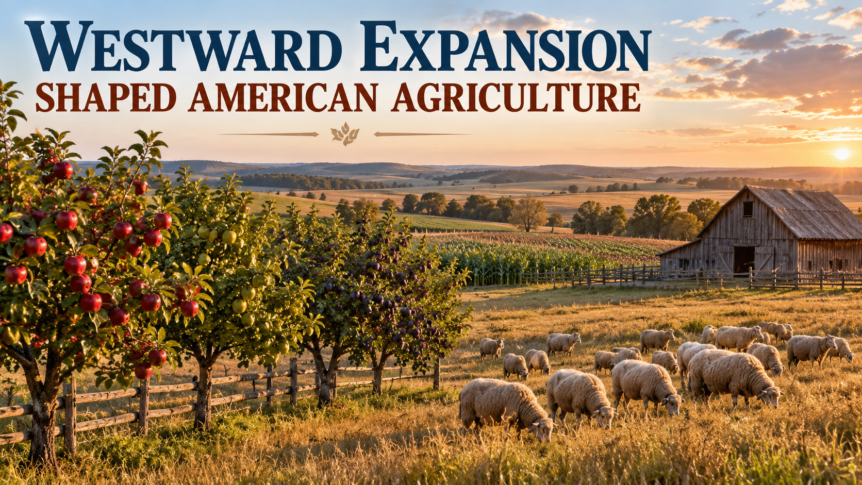
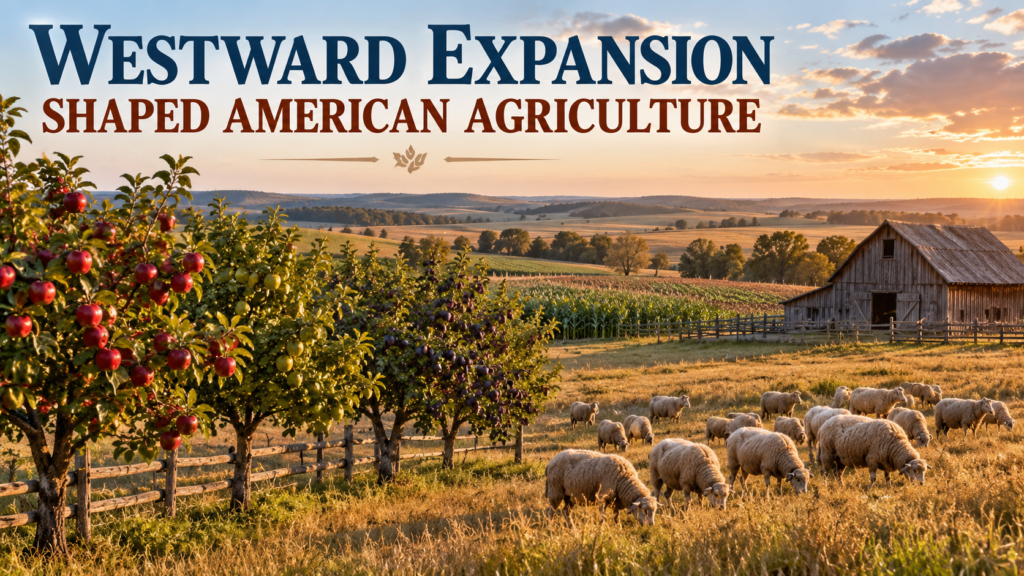
During the 1850s, westward migration helped transform American agriculture as settlers crossed the Mississippi River and established farms in Iowa, Kansas, Missouri and Nebraska. These pioneers brought more than the supplies needed to build new homes and communities. They also carried agricultural knowledge, improved seeds, fruit-tree varieties and livestock that helped shape the developing farming economy of the American Midwest.
In this edition of American Agriculture History Minute, Mark Oppold explores how settlers from different regions of the United States contributed their agricultural expertise to the expanding western frontier.
Westward Migration Expanded American Agriculture
The 1850s marked an important period of westward migration in American history. Settlers moved beyond the Mississippi River, seeking opportunities to establish farms and build new communities in what are now Iowa, Kansas, Missouri and Nebraska.
As these families moved west, they brought the farming traditions and practical experience they had developed in their home regions. Their agricultural knowledge helped shape the crops they planted, the livestock they raised and the farming practices they introduced to their new surroundings.
The movement of settlers also encouraged the exchange of agricultural ideas across the country. Farmers adapted familiar practices to the conditions of the Midwest, contributing to the growth and diversification of agriculture across the region.
New England and New York Settlers Established Orchards
Farmers arriving from New England and New York brought seeds for plum, apple and pear trees. These varieties helped expand fruit production as settlers established new farms and planted orchards throughout the developing agricultural region.
Orchards represented an important addition to the farming landscape. Unlike annual crops, fruit trees required time to mature, making their establishment a long-term investment in a farm’s productive capacity.
By bringing familiar fruit-tree varieties west, these settlers helped introduce established horticultural traditions to new communities. Their efforts contributed to the diversification of farm production and demonstrated how agricultural resources moved alongside the people settling the frontier.
The planting of additional orchards was one example of how settlers used their previous agricultural experience to shape the character of farming in the Midwest.
Kentuckians Contributed Improved Seeds and Livestock Breeding Knowledge
Settlers from Kentucky brought expertise in improved seed and livestock breeding. These areas of agricultural knowledge were important to farmers seeking to develop productive operations in their new homes.
Improved seed offered opportunities to enhance crop production, while livestock breeding knowledge helped farmers develop and maintain their animal herds.
These practices reflected the importance of agricultural experience in establishing successful farms. Rather than beginning without a foundation, settlers could draw on methods and knowledge developed in other parts of the country and apply them to the conditions they encountered in the Midwest.
Kentucky’s contribution illustrates how the westward movement transferred practical farming skills across regional boundaries, helping establish agricultural traditions in newly settled areas.
Sheep From Pennsylvania and Ohio Reached the Western Prairies
Pennsylvania and Ohio also contributed to the agricultural development of the Midwest. According to Oppold, settlers from these states brought fine flocks of sheep to graze in the dry pastures of southern Iowa, Nebraska and Kansas.
The arrival of these sheep introduced livestock and sheep-raising experience from the eastern states into the expanding agricultural communities of the western frontier.
Grazing sheep became part of the diverse mix of farming activities developing across the region. Their presence also reflected the importance of matching livestock production to available pasture and local conditions.
The movement of sheep from Pennsylvania and Ohio demonstrates that westward migration involved more than the relocation of individual families. It also carried livestock resources and established agricultural practices into new areas.
Regional Expertise Helped Shape Midwestern Farming
The agricultural development of the American Midwest during the 1850s was influenced by contributions from settlers with different backgrounds and areas of expertise.
New England and New York farmers brought plum, apple and pear tree seeds and helped establish additional orchards. Kentuckians contributed knowledge of improved seed and livestock breeding. Settlers from Pennsylvania and Ohio brought sheep flocks to graze in the dry pastures of southern Iowa, Nebraska and Kansas.
Together, these contributions helped diversify farming as settlement expanded westward.
This period in American agricultural history highlights how migration influenced the development of regional farming systems. Settlers carried seeds, livestock and practical knowledge with them, introducing agricultural traditions that helped shape the communities they established.
The story also illustrates an enduring characteristic of American agriculture: farming develops through the movement of people, the exchange of knowledge and the adaptation of established practices to new environments.
About American Agriculture History Minute
American Agriculture History Minute, featuring Mark Oppold, explores the people, developments and innovations that have influenced American agricultural history.