








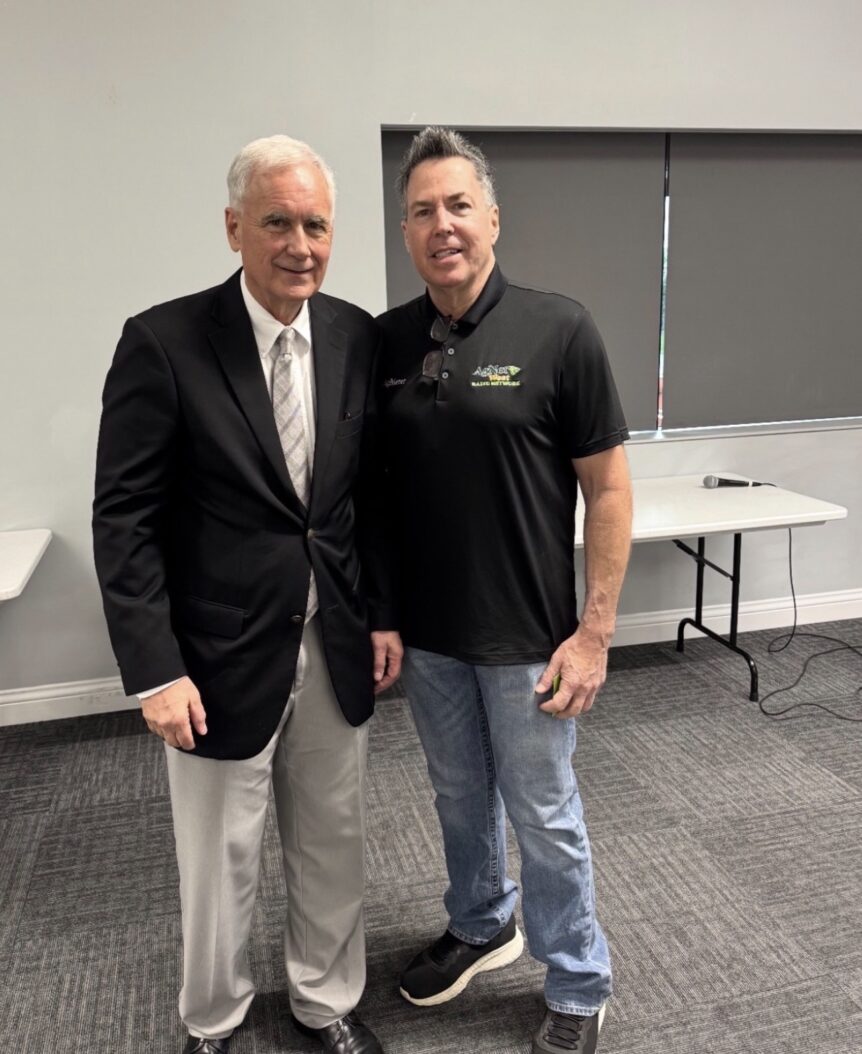
U.S. Representative Tom McClintock joined Nick Papagni, “The Ag Meter”, for a wide-ranging discussion about California agriculture, water shortages, wildfire prevention, energy costs, and the future of federal farm policy. The interview explored McClintock’s concerns about state regulations, rural communities, and the challenges facing California farmers as Congress considers the Farm Bill and other legislation.
McClintock, who represents California’s 5th Congressional District, argued that government policy plays a significant role in the state’s affordability challenges and agricultural water crisis. He also discussed efforts to accelerate forest management projects and outlined his legislative priorities for the remainder of the congressional session.
McClintock Criticizes California’s Rising Costs
McClintock recalled a California with affordable housing, relatively inexpensive electricity, abundant water, and extensive transportation infrastructure. He argued that taxes, regulations, and restrictions have contributed to a substantial change in the state’s economic conditions.
He cited gasoline and electricity prices as examples, claiming California motorists pay substantially more for fuel than the national average and that electricity costs are approximately twice the national average. He also contrasted California housing costs with those in Texas, arguing that regulatory barriers and construction delays have made homes increasingly unaffordable.
McClintock said voters should compare California’s policies and economic outcomes with those of other states. He also discussed population migration, congressional redistricting, and the importance of political accountability.
Forest Management and Wildfire Prevention
Wildfire prevention was a major focus of the interview. McClintock described legislation he helped advance in 2016 to streamline qualifying forest-thinning projects in the Lake Tahoe Basin.
He said environmental reviews that once took approximately five and a half years and required more than 800 pages of documentation were reduced to a process taking a few months, with reports shortened to a few dozen pages.
According to McClintock, the changes tripled treated acreage in the Tahoe Basin and increased annual timber production from approximately one million board feet to nine million board feet. He argued that active forest management has helped improve forest health and resilience to wildfire.
McClintock also pointed to the Caldor Fire, saying previously treated forestland helped slow the fire and enabled firefighters to extinguish it in that area.
He wants similar policies extended across the national forest system. During the interview, he said his forestry proposals had been included in the Farm Bill and the Fix Our Forests Act, both of which had passed the House and were awaiting further action in the Senate.
Farm Bill Delays and Agricultural Priorities
Papagni asked why Congress had not completed the Farm Bill, including whether disagreements over the Supplemental Nutrition Assistance Program (SNAP) or political divisions were contributing to the delay.
McClintock said the bill had passed the House with bipartisan support but remained stalled in the Senate. He identified it as an important legislative priority, particularly because it included forestry provisions he wanted to advance.
For farmers, the broader policy debate involves water availability, operating costs, forest management, and the federal programs that support agricultural production and rural communities.
McClintock argued that California’s agricultural challenges are not simply the result of natural conditions. He said policies affecting water access and farm operations can be changed through legislation and elections.
Water Shortages and California Agriculture
McClintock challenged the idea that agricultural water benefits farmers alone. He argued that the water used to grow crops supports the food and clothing consumers depend on every day.
During the interview, he cited estimates of approximately 350 gallons of water to produce the ingredients in a cheeseburger and 1,500 gallons to grow the raw materials used in a pair of jeans.
He also distinguished between drought, which is a natural phenomenon, and water shortages, which he believes are influenced by infrastructure and policy decisions.
McClintock argued that California needs additional water storage and conveyance infrastructure, including dams and aqueducts, and said regulatory changes would be necessary to facilitate construction.
His comments highlighted the importance of water policy to California growers, who depend on reliable supplies to produce crops, maintain operations, and support agricultural communities.
Immigration Enforcement and Other Legislative Priorities
Beyond agriculture, McClintock discussed proposed legislation concerning sanctuary jurisdictions. He said his bill would allow local sheriffs to establish cooperative agreements with federal immigration authorities and would provide a legal avenue for families who lose loved ones to individuals allegedly released from local custody.
He also discussed border enforcement and the role of federal immigration law, presenting these issues as part of his broader legislative agenda.
McClintock said the post-election congressional session would provide an opportunity to address unfinished business, including the Farm Bill and forestry legislation.
What the Interview Means for California Farmers
Looking toward 2026 and 2027, McClintock told Papagni that many of the pressures confronting California agriculture stem from policy decisions that can be changed. He argued that water availability, regulatory requirements, and access to infrastructure will remain important issues for farmers and rural communities.
The interview also examined California’s rising energy costs, housing affordability, population migration, and political representation. McClintock encouraged voters to evaluate how government decisions affect their communities and livelihoods.
For a deeper look at these issues, listen to the full interview with “the Ag Meter” Nick Papagni and U.S. Representative Tom McClintock. The conversation offers McClintock’s perspective on the Farm Bill, forest management, agricultural water supplies, and the policies he believes will shape California agriculture’s future.
Learn more about McClintock’s work at TomMcClintock.com.