









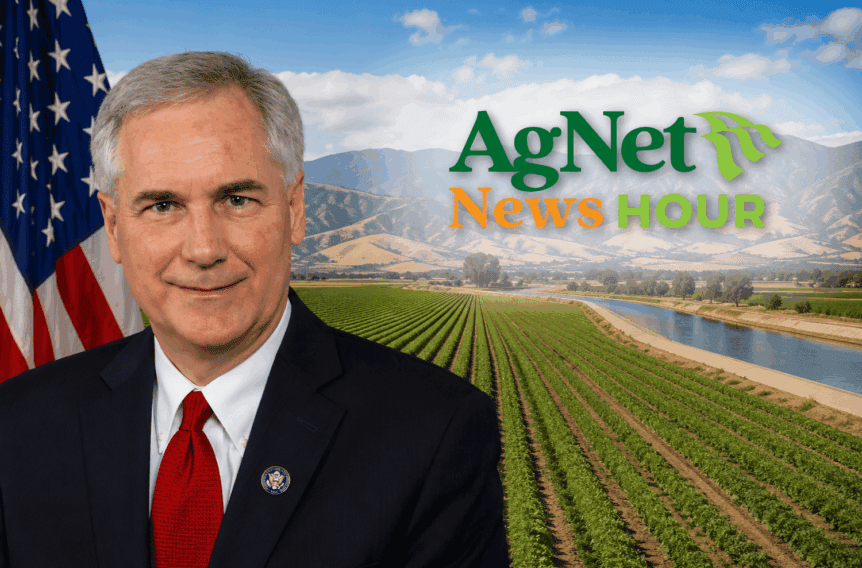
On today’s episode of the AgNet News Hour, U.S. Representative Tom McClintock, who represents California’s 5th Congressional District, joined Nick Papagni for Part 1 of a two-part interview examining California’s rising cost of living, energy policies and regulatory environment. The program also featured Patrick Williams of SkySense, discussing how remotely operated drones are helping farmers protect their crops and equipment.
McClintock reflected on California’s economic transformation over several decades, arguing that state policies have contributed to higher costs for residents and businesses.
He pointed to gasoline and electricity prices as examples, criticizing regulations and taxes that he believes have discouraged domestic energy production and increased California’s dependence on imported fuel.
McClintock also discussed housing affordability, comparing California’s home prices and construction activity with those of other states. He argued that lengthy permitting processes and development restrictions have made it increasingly difficult to build affordable housing.
Transportation infrastructure was another concern. McClintock questioned whether California’s highway capacity has kept pace with population growth and vehicle traffic, despite the taxes residents pay to maintain the state’s roads.
The conversation also turned to the upcoming elections and California’s political direction. McClintock encouraged voters to examine the consequences of state policies and consider how decisions made in Sacramento affect their everyday expenses.
Earlier in the program, Williams explained how SkySense uses remotely operated drones to help agricultural producers address two persistent problems: wildlife damage and farm theft.
The drones operate from docking stations installed on agricultural properties and can use lights, speakers and remote monitoring to discourage unwanted activity.
Williams said a single drone can typically protect approximately 100 to 150 acres against bird and wildlife pressure, depending on the operation.
He also described the company’s ongoing work with artificial intelligence to improve wildlife identification and automated response capabilities.
With growers facing rising labor expenses and concerns about crop losses, Williams said the technology offers another option for protecting agricultural investments without requiring farmers to maintain around-the-clock security personnel.
Together, the interviews explore the economic pressures facing California agriculture and the technologies producers are adopting to remain competitive.
Hear Part 1 of the conversation with Congressman Tom McClintock and the full interview with Patrick Williams in the player above or on your favorite podcast app.
Listen to previous AgNet News Hour episodes…