









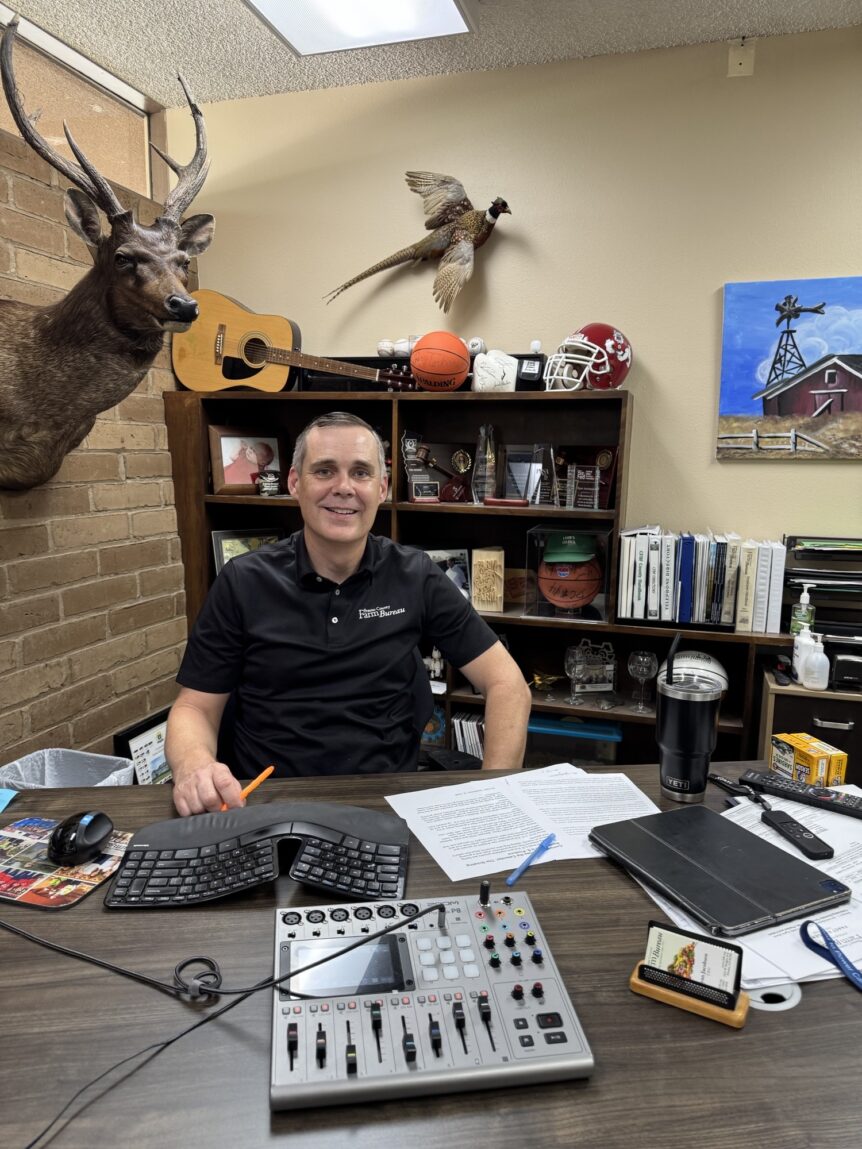
California agriculture faces enormous challenges, but Fresno County Farm Bureau CEO Ryan Jacobsen remains bullish on the future.
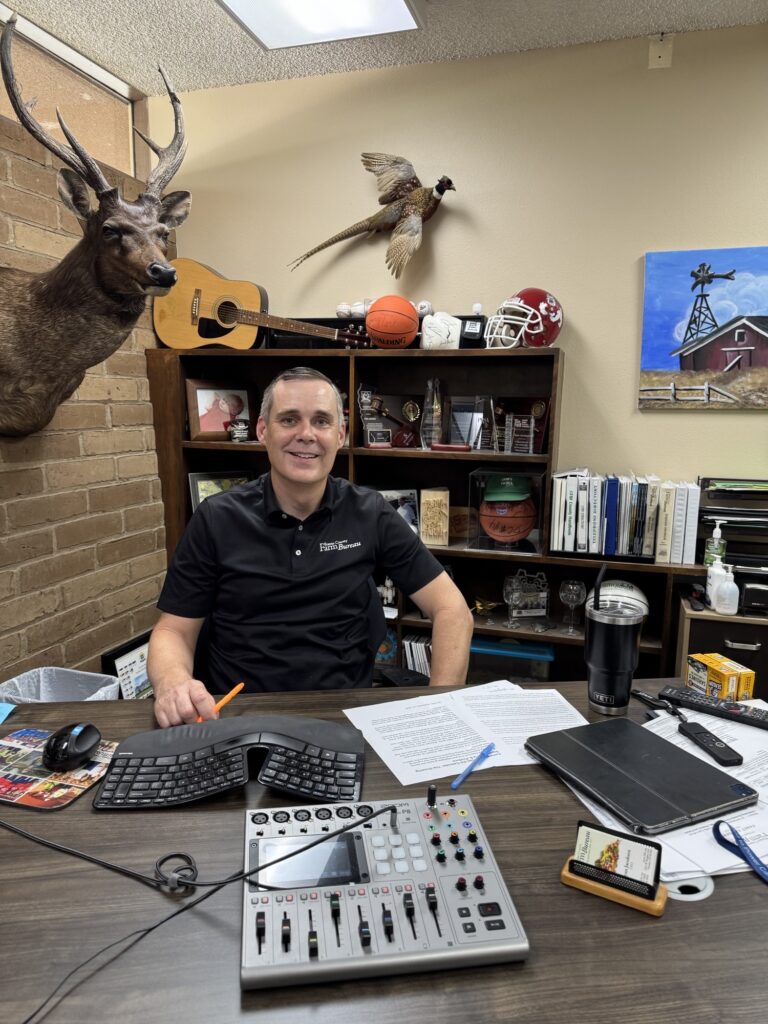
In a wide-ranging conversation with “The Ag Meter” Nick Papagni, Jacobsen discussed California water, regulation, labor, technology, wildlife management, rising production costs, healthy eating, FFA and the future of the family farm.
The conversation also offered a personal look at a fourth-generation farmer whose life has been deeply connected to agriculture and Farm Bureau.
A Lifetime of Farm Bureau and Agriculture
Jacobsen has been with the Fresno County Farm Bureau for 22 years and has served as its CEO for 20 years. He became CEO at age 26 after graduating from Fresno State and completing his MBA.
His connection to Farm Bureau, however, began generations earlier.
His grandfather was active in the organization, his mother served as president from 2002 to 2004 and was the first and only woman to hold that position, and his father served 24 years on the board.
“Farm Bureau has been synonymous with my life,” Jacobsen said, explaining that family life often revolved around Farm Bureau events and activities.
That background has helped shape his perspective as one of California agriculture’s prominent advocates.
From Basketball to Agricultural Advocacy
Jacobsen also credits athletics with helping prepare him for his career.
He was part of Washington Union’s 1998 Valley Championship basketball team, which climbed as high as the top 10 nationally. Two teammates eventually reached the NBA, while others played college basketball at Division I, II and III levels.
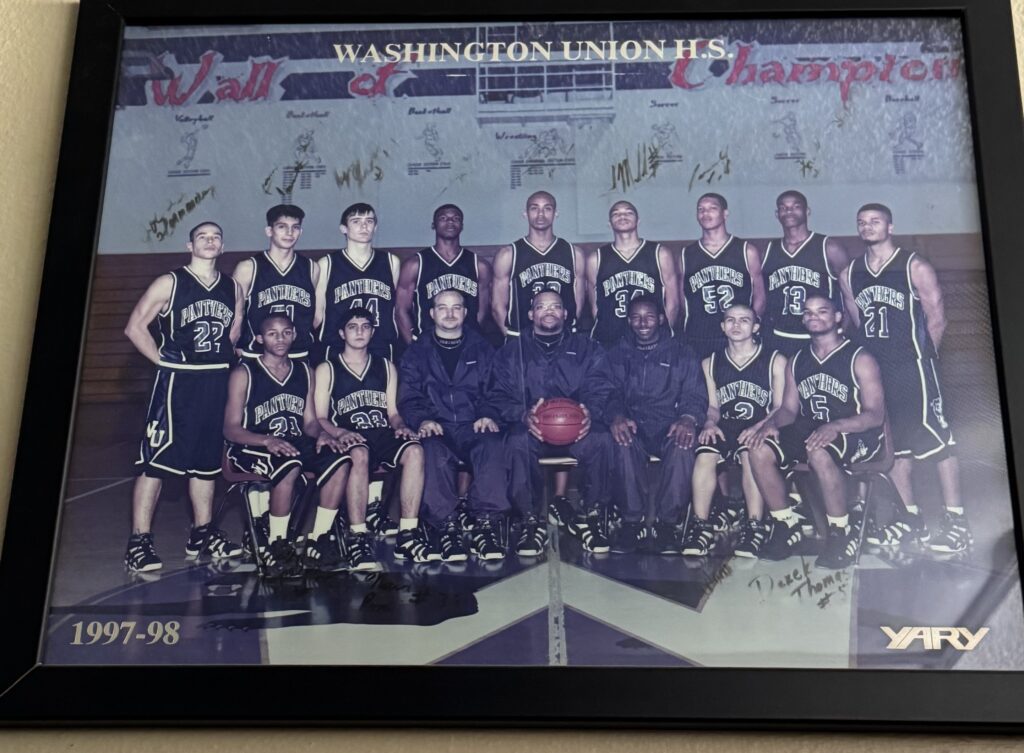
Ryan Jacobsen top row 3rd from left
Jacobsen said teamwork, coaching, discipline and work ethic became lessons he carried into his professional life.
Today, he sees those same lessons benefiting his three sons as they participate in sports and other activities.
Regulation and Water Top the List
While farming technology has become more precise and efficient, Jacobsen said the biggest change during his Farm Bureau career has been California’s regulatory and legislative environment.
He pointed to the importance of gubernatorial appointments to agencies including the California Air Resources Board, State Water Resources Control Board, Department of Pesticide Regulation and California Department of Food and Agriculture.
For farmers, the cumulative effect can feel like “death by a thousand cuts.”
Water remains the industry’s No. 1 issue, followed by labor and immigration, metal and pesticide theft, water quality and food safety.
Jacobsen also said the federal and state governments need to work together more effectively on water policy.
His goal is a win-win approach that benefits agriculture, communities and the environment.
Rising Costs and Growing Imports
The economic pressure on growers is another major concern.
Jacobsen cited American Farm Bureau figures showing that since 2010, U.S. fruit production has declined 32% and vegetable production 10%, while fruit and vegetable imports increased 70%.
At the same time, production costs have surged. From 2020 to 2025, Jacobsen cited fertilizer costs rising 37%, fuel 31% and labor 50%. Specialty-crop costs increased about 47% over just two years.
Those higher costs have collided with weak commodity prices, putting significant pressure on the returns farmers receive.
Finding More Water for California
Jacobsen, who also serves as an elected member and president of the Fresno Irrigation District, said the local water year turned out better than initially expected.
He believes California needs more surface water while continuing to expand groundwater recharge.
Over the past five to ten years, significant recharge projects have been developed throughout the Valley. Jacobsen pointed to wet years such as 2017, 2019 and 2023 as examples of how important it is to capture more water when it is available.
The goal, he said, should be to improve environmental outcomes while making water available for people and agriculture.
Jacobsen also discussed the challenges surrounding SGMA and California’s water conveyance system, arguing that better water storage, recharge and surface supplies are essential to maintaining a productive agricultural industry.
Rodents and Wildlife Create New Challenges
California farmers are also battling serious wildlife-management issues.
Jacobsen said ground squirrels, tree squirrels and rats remain a significant problem. Restrictions on some rodenticides have left growers searching for alternatives.
In almond orchards, he has personally seen rats chew tree bark and kill trees rather than simply consume nuts. Tree squirrels can also destroy drip irrigation lines.
He expressed similar concerns about California’s growing predator populations.
Jacobsen supports having wolves, mountain lions and bears in the state, but believes they must be properly managed. He pointed to declining deer populations and warned that predators with fewer natural food sources can increasingly come into contact with livestock, pets and people.
His position is that coexistence requires effective wildlife management, something he believes other states have handled more successfully.
Technology Can Help Agriculture’s Labor Needs
Labor remains a continuing concern, although Jacobsen said Fresno County growers appeared to be in relatively good shape during the harvest discussed in the interview.
The season was running approximately two to three weeks early following an unusually warm March, including several days in the mid-90s.
An earlier crop season can create a longer picking window, helping spread labor demand.
Jacobsen also sees technology and mechanization as part of the solution. Automation isn’t always about replacing workers, he said. It can make workers more efficient and productive.
Looking ahead, he believes artificial intelligence, sensors and robotics could eventually help growers determine crop maturity and characteristics such as sugar content while reducing some of the repetitive work involved in farming.
FFA, Sports and the Next Generation
Jacobsen strongly supports FFA and 4-H, with his own children participating. His oldest son is involved in FFA at San Joaquin Memorial, and the family is currently involved in showing rabbits.
For Jacobsen, those experiences provide something increasingly valuable: hands-on learning, public speaking, responsibility and face-to-face interaction.
He also worries about declining participation in high school sports because of the work ethic and discipline athletics can teach.
At the same time, he recognizes that not every student is an athlete.
Jacobsen believes schools need more technical education opportunities, including welding, mechanics, drafting and agricultural programs. He took many of those classes himself and said the hands-on education helped make him a better agricultural advocate.
From Animal Science to Farm Bureau
Jacobsen originally planned to become a large-animal veterinarian.
He studied animal science at Fresno State and was already involved in cattle breeding, treatment and minor surgeries. But he eventually realized he could make a broader contribution to agriculture.
Then-Fresno State President John Welty encouraged him to pursue an MBA, combining his animal-science background with business training.
That combination ultimately helped prepare Jacobsen for agricultural advocacy.
He now approaches issues from multiple perspectives — legislation, regulation, government policy and the farm itself.
Raisins, Healthy Eating and California-Grown Food
As a raisin farmer himself, Jacobsen remains optimistic about California raisins.
He believes the renewed national focus on healthier eating could create opportunities for raisins and other California-grown fruits and vegetables.
He also stressed the importance of consumers knowing where their food comes from.
Following discussion of a Cyclospora outbreak in the eastern and northeastern United States that was not linked to California lettuce, Jacobsen expressed concern about California growers losing markets and urged greater support for California-grown products.
He believes better diets, more fresh fruits and vegetables and healthier school meals are especially important for children.
California Is Home
Despite the challenges, Jacobsen doesn’t want to leave California.
As a fourth-generation farmer, he said both sides of his family came to California because of its fertile soil and opportunity.
His message is not to expect an overnight turnaround.
California agriculture took decades to reach its current position, he said, and changing direction will require patience and persistence.
His approach is to take “slow baby steps,” continue fighting and refuse to give up.
Jacobsen believes agriculture has an enormous opportunity ahead because people are increasingly concerned about food, health and food security.
He remains bullish on California agriculture and the American farmer, saying farmers have the opportunity to become the “rock stars of the future.”
Listen to the Full Ag Meter Interview
From water and SGMA to labor, regulation, wildlife, technology, raisins, FFA and the future of California farming, Ryan Jacobsen’s conversation with “The Ag Meter” Nick Papagni covers the issues affecting farmers today — and the opportunities ahead.
Listen to the full interview for Jacobsen’s complete thoughts, personal stories and firsthand perspective on California agriculture.
Fresno County Farm Bureau
To learn more about the Fresno County Farm Bureau or become a member, visit FCFB.org or call 559-237-0263.