









Early Settlers Found a Home in Ohio
As American settlers moved westward across the Appalachian Mountains, many continued their journey toward the Great Plains, California, and Oregon. However, not everyone traveled farther west. Many settlers found a home in what is now the state of Ohio, helping establish the agricultural communities that would become an important part of the nation’s farming history.
Ohio’s location and agricultural potential made it an attractive destination for early settlers. As communities developed, farming quickly became an essential part of the state’s economy and way of life.
Native American Agriculture Predated European Settlement
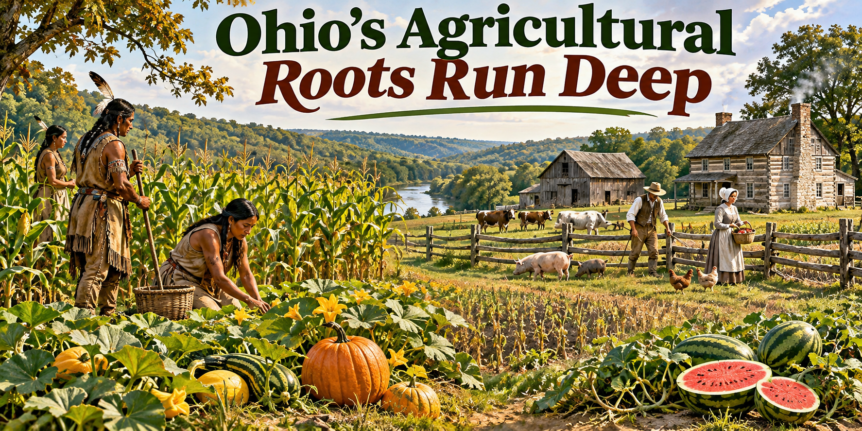
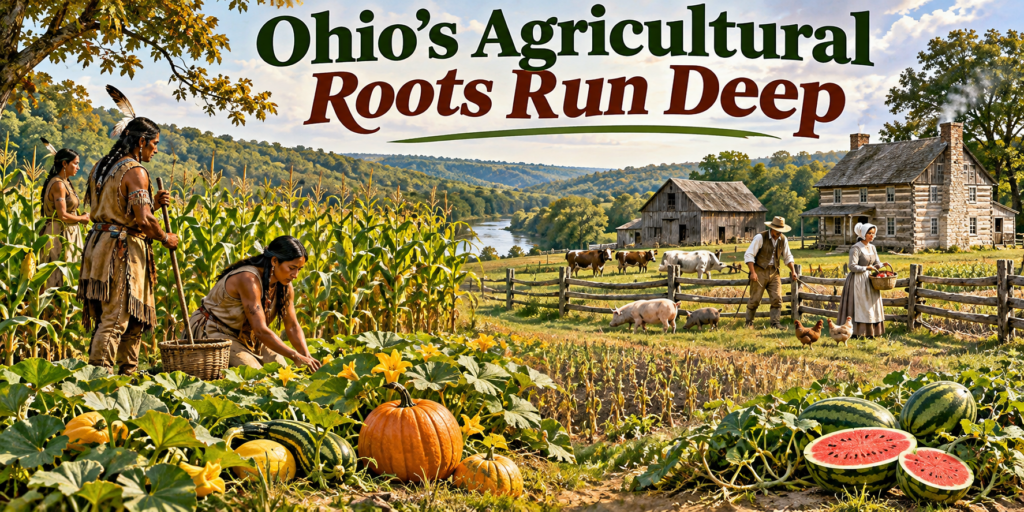
Agriculture was already well established in Ohio long before European settlers arrived. American Indian tribes cultivated a variety of crops, including corn, soybeans, squash, and pumpkins.
These established farming practices provided an important agricultural foundation in the region. European settlers also introduced additional crops, including watermelon, expanding the variety of agricultural products grown in Ohio.
The interaction of established Native American agricultural traditions and crops introduced by European settlers helped shape the state’s developing farming landscape.
Ohio Becomes a Leading Agricultural State
By the early 19th century, Ohio had established itself as one of the nation’s leading states in crop production. Its agricultural industry continued to develop as more settlers established farms and communities throughout the state.
Crop production was not the only important part of Ohio agriculture. Farmers also raised livestock, which served multiple purposes in the state’s early economy.
Livestock Supported Food and Textile Production
Livestock provided an important source of food for Ohio’s growing population. However, animals also played a significant role in supporting the textile industry.
Products derived from livestock helped supply materials needed for textile manufacturing, making animal agriculture an important contributor to the broader economy.
Ohio’s early agricultural development was therefore built on both crop production and livestock farming, establishing a diverse agricultural foundation that helped shape the state’s economic growth.
A Lasting Agricultural Legacy
Ohio’s agricultural history reflects the contributions of Native American farmers, European settlers, crop producers, and livestock farmers. From the cultivation of corn, soybeans, squash, and pumpkins to the expansion of livestock production, agriculture became central to the state’s development.
By the early 1800s, Ohio had already earned recognition as one of the country’s leading agricultural states, setting the stage for its continued role in American agriculture.
This American Agriculture History Minute was presented by Mark Oppold.