









What Iowa Farms Looked Like in the Mid-1840s
American agriculture has undergone remarkable changes over the past two centuries, but the foundations of modern farming can be traced back to the simple family farms that dotted the Midwest during the 1840s.
In this edition of the American Agriculture History Minute, Mark Oppold highlights what a typical Iowa farm looked like around the time Iowa officially became a state in 1846. Drawing on historical information from Living History Farms in Des Moines, Iowa, the snapshot provides a fascinating glimpse into the daily life of early Midwestern farmers.
A Typical Iowa Farm in 1846
When Iowa achieved statehood in 1846, the average farm covered approximately 100 acres. However, only 25 to 40 acres were actively cultivated, with the remainder consisting of pasture, woodland, or undeveloped land.
These early farms were practical, self-sufficient operations that typically included:
- A sturdy split-rail fence surrounding the property
- A small wheat field serving as a primary crop
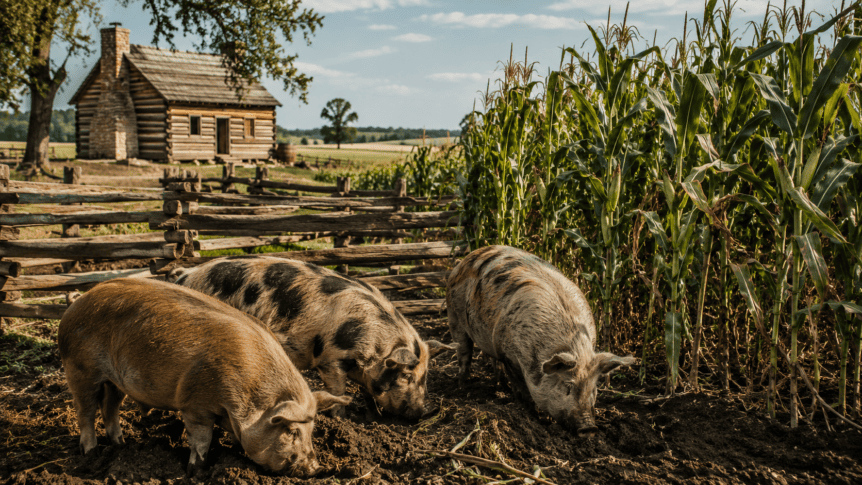
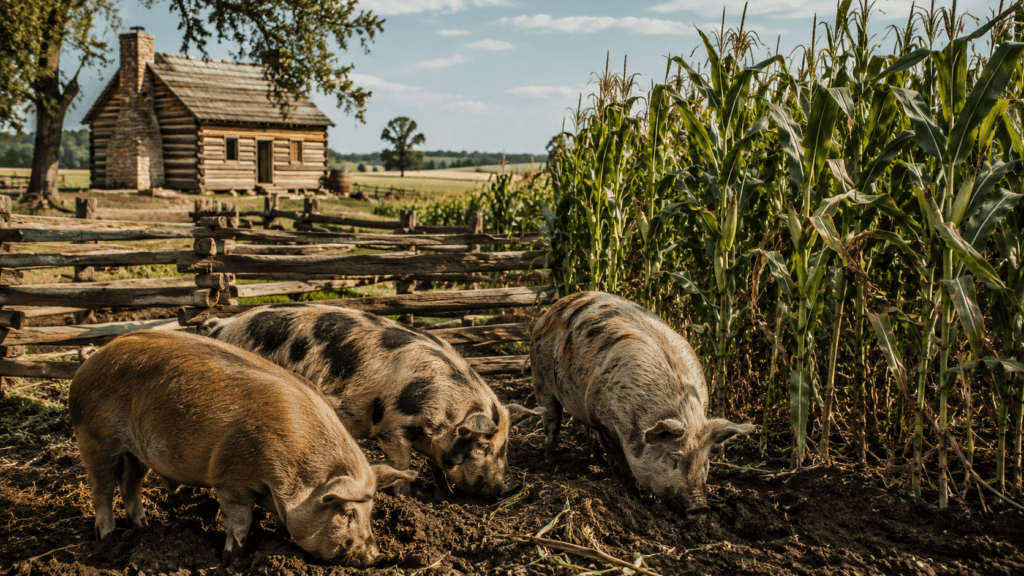
- Rooting hogs roaming the farm
- A handful of chickens for eggs and meat
- A modest log house where the farm family lived
The landscape reflected the realities of frontier agriculture, where farmers relied on hard work, livestock, and diversified production to support their households.
The Rise of Corn Farming
Only a few years later, Iowa agriculture began to change dramatically.
By 1850, many farmers started replacing portions of their wheat acreage with corn. The transition proved to be a significant turning point for the state’s agricultural future.
According to Oppold, hogs thrived on corn-based diets, performing better than they had on previous feed sources. As livestock production improved, corn became increasingly valuable both as a cash crop and as livestock feed.
This successful combination of corn production and hog farming helped establish Iowa’s agricultural identity and eventually earned the state its enduring nickname as the “Tall Corn State.”
A Lasting Agricultural Legacy
The evolution from wheat fields to expansive corn production marked one of the earliest major shifts in Midwestern agriculture. Today, Iowa remains one of the nation’s leading corn-producing states, and the farming practices that began taking shape in the mid-19th century continue to influence American agriculture.
Looking back at these early farms offers valuable perspective on how innovation, adaptation, and practical decision-making helped transform Iowa into one of the world’s most productive agricultural regions.