









The Farmers Who Helped Build America
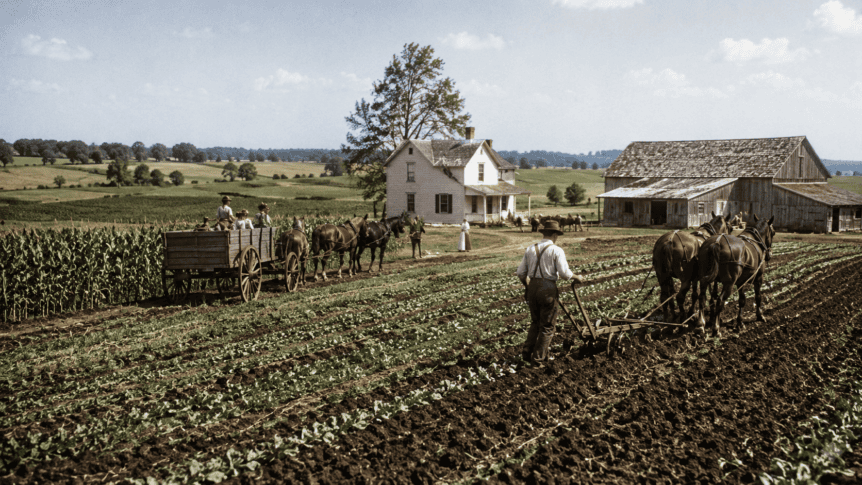
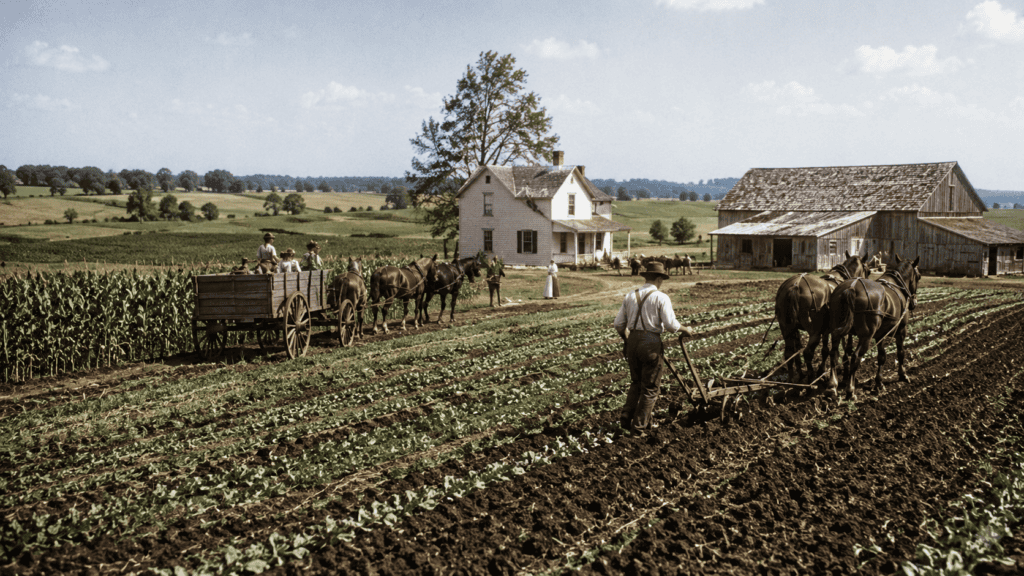
As American farm families moved westward and settled the nation’s heartland, they were doing more than establishing farms and communities. Their experiences were becoming an important part of the nation’s history—and eventually, agricultural historians argued, an important source of knowledge for policymakers.
For much of American history, however, traditional historical study placed far greater emphasis on political leaders, wars and military events than on the farmers, families and rural communities that helped build the country’s economy.
Louis B. Schmidt was among the early scholars who believed that needed to change.
Louis B. Schmidt and the Rise of Agricultural History
Schmidt became a pioneer in the study and teaching of American agricultural history. While associated with Iowa State College, now Iowa State University, he helped establish agricultural history as a legitimate field of academic study.
Historical sources identify Schmidt as an important early teacher and scholar of agricultural history in the United States. His work helped encourage historians to give greater attention to agriculture and its role in the nation’s economic development. One historical review notes that Schmidt urged historians in 1915 to pay more attention to American agriculture and its contribution to national economic development.
Schmidt’s philosophy was straightforward but significant: understanding the history of agriculture could help explain the economic and social development of the United States.
Agriculture was not simply another part of American history. It was fundamental to the development of communities, markets, transportation systems and the nation’s broader economy.
Teaching Agriculture’s History
The early 20th century marked an important period in the development of agricultural history as an academic discipline.
Schmidt was associated with the introduction of agricultural history courses at Iowa’s agricultural college. Historical scholarship places the development of formal agricultural-history instruction at Iowa in the years around the mid-1910s to late 1910s, with sources identifying Schmidt as a pioneer in teaching the subject.
His efforts reflected a larger idea: farmers and rural communities had created a history that deserved to be studied, preserved and taught.
By giving agriculture a larger place in historical education, scholars such as Schmidt helped establish a foundation for agricultural history programs that later appeared at colleges and universities throughout the country. Historical research indicates that by the 1950s, dozens of institutions were offering agricultural-history courses through history, economics, agricultural economics or sociology departments.
Why Agricultural History Matters
The study of agricultural history provides more than a record of farming methods. It helps explain how Americans responded to changing land, labor, markets, technology and government policy.
For policymakers, agricultural history can provide valuable perspective on how earlier decisions affected farmers and rural communities. For students and researchers, it offers a way to understand the forces that shaped American agriculture over generations.
That was the larger lesson Schmidt wanted historians and educators to recognize: the story of America could not be fully understood without the story of American agriculture.
Farm families were continually making history as they moved west, established communities and developed the nation’s agricultural economy. Schmidt helped ensure that those stories became part of the academic record.
Preserving the Story of American Agriculture
Today, agricultural history encompasses everything from farm families and land settlement to agricultural economics, technology, rural communities and government policy.
The work of early agricultural historians helped establish the field and encouraged later generations to examine farming not simply as an occupation, but as a central force in American economic and social development.
More than a century after Schmidt’s pioneering work, the importance of that perspective remains clear. Agriculture has always been connected to the broader American story—and understanding its past can provide valuable context for understanding its future.
This has been an American Agriculture History Minute with Mark Oppold.