








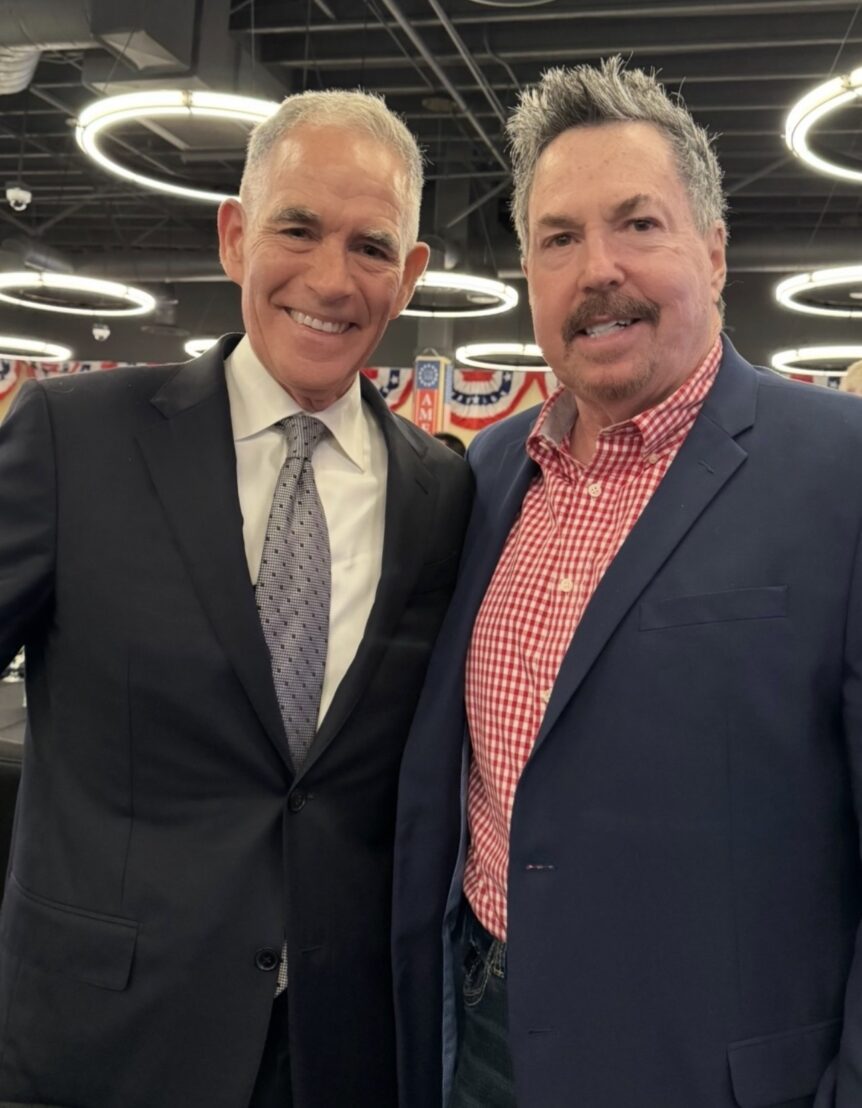
Kyle Kirkland, a Central Valley businessman running for California’s 21st Congressional District, is making water management, agricultural competitiveness and the rising cost of living central themes of his campaign. In an interview with “The Ag Meter” host Nick Papagni, Kirkland discussed the challenges facing California farmers, the state’s regulatory environment, government spending and his plans to bring a business-oriented approach to Congress.
Kirkland argued that the Central Valley, one of the nation’s most important agricultural regions, deserves stronger representation in Sacramento and Washington. Drawing on decades of experience in finance, corporate leadership and business ownership, he said California needs practical solutions that deliver measurable results.
California Agriculture Needs Stronger Representation
Kirkland believes the Central Valley’s agricultural importance is not adequately reflected in its political representation. California’s food production supports the state’s economy and contributes to the nation’s food supply, making agricultural policy an economic and national security concern.
He described the 21st Congressional District as covering much of southern Fresno County, including communities such as Kingsburg, Selma, Reedley and Parlier, along with the northern portion of Visalia.
Kirkland said residents should evaluate elected officials based on whether their communities are making progress. Rather than focusing on reelection, he wants to be recognized as someone who understands the district’s challenges and works to address them.
Water Management Remains a Critical Issue
Water was a major focus of the interview. Kirkland argued that California’s challenge involves not only water availability but also the management, storage and distribution of supplies.
“I think we don’t have a water problem. We have a water management problem,” Kirkland said.
He emphasized the need for consistent water policy and greater attention to groundwater, storage and distribution infrastructure. He believes inadequate investment in these areas makes it more difficult for farmers to plan production, manage expenses and maintain viable operations.
Kirkland said water policy should move beyond political discussion toward practical solutions that support agricultural production and regional economic stability.
Rising Costs Affect Farmers and Families
Kirkland identified the cost of living as the leading concern he hears from voters. Housing, gasoline, food and electricity affect households across political lines, while agricultural producers face many of the same expenses alongside labor, fertilizer and freight costs.
During the interview, Kirkland cited declines in California oil production, gasoline refining, housing construction, farm numbers and dairy production as evidence of what he considers a broader decline in the state’s productive capacity. He argued that reduced in-state production increases reliance on outside suppliers and puts upward pressure on costs.
He also questioned California’s approach to energy production, arguing that restricting domestic oil production and refining while importing refined gasoline can increase costs. Kirkland said policymakers should evaluate environmental policies according to their actual results rather than assuming they automatically deliver economic or environmental benefits.
These concerns, he said, demonstrate why California needs to reconsider policies that make it harder to produce essential goods and services.
Kirkland Questions High-Speed Rail Spending
California’s high-speed rail project was another major topic. Kirkland said he initially supported the concept but changed his position after examining its development and escalating costs.
He contrasted an initial cost range of approximately $20 billion to $30 billion with a figure of $230 billion discussed during the interview. He argued that California should reassess the project and consider whether infrastructure funding could better serve other priorities.
Kirkland identified water storage, road improvements, electrical grid upgrades, energy production and infrastructure supporting housing as potential alternatives.
He also criticized what he considers excessive regulatory barriers and litigation that delay major infrastructure projects. While emphasizing that he supports environmental conservation, he argued that environmental protections should mitigate the effects of development rather than unnecessarily prevent progress.
His position is that government should be willing to reconsider projects that fail to meet their original objectives instead of continuing to commit taxpayer money without sufficient results.
Regulations and Labor Costs Challenge Farmers
Kirkland described California’s regulatory environment as a significant burden on businesses and agricultural producers. He argued that farmers must navigate extensive requirements while managing rising labor, fertilizer, freight and water costs.
Papagni raised concerns about California growers competing with imported commodities, including avocados from Mexico, when local producers face substantial expenses and regulatory obligations.
Kirkland said lawmakers should consult farmers and industry experts before introducing policies that affect their operations. He believes smaller farms are particularly vulnerable because they may lack the resources to absorb rising compliance costs.
The discussion also addressed minimum wage increases and automation. Kirkland argued that higher labor costs can encourage employers to reduce hours or invest in technology. He cited automated ordering kiosks in fast-food restaurants as an example of how businesses may adapt to increased labor expenses.
He proposed regular reviews of legislation, including sunset clauses or similar mechanisms, to determine whether laws are achieving their intended objectives or creating unintended consequences.
Kirkland Calls for Taxpayer Accountability
Kirkland said California should address government spending and inefficiency before imposing additional taxes. He argued that the state needs better financial management rather than continually seeking new revenue.
He discussed Proposition 43, which he described during the interview as a measure intended to restore a two-thirds majority requirement for new taxes. He urged voters to support the proposal, arguing that stronger safeguards could help limit additional tax burdens.
Kirkland also criticized the state’s handling of federal unemployment funds and argued that policymakers should address waste and fraud rather than shifting additional costs onto employers.
Drawing on his experience operating Club One Casino and leading businesses, he said private companies must maintain accurate financial records and comply with accounting and regulatory requirements. He believes government should be held to comparable standards of transparency and accountability.
Small Farms and Economic Opportunity Matter
Kirkland emphasized that small farmers are entrepreneurs whose innovation contributes to the agricultural industry. He warned that excessive regulation and rising costs could force smaller producers to sell their land or leave farming.
When that happens, he argued, communities lose not only farms but also valuable sources of innovation and competition.
Kirkland said his business background has taught him to learn from experts, negotiate across differences and focus on solutions. Although he acknowledged that he is not yet an agricultural or water policy expert, he said he intends to develop that knowledge by listening to industry professionals and constituents.
He encouraged Central Valley voters to participate in the election and evaluate candidates based on their records, priorities and ability to deliver results.
Listen to the full interview with “The Ag Meter” Nick Papagni and Kyle Kirkland to hear more about Kirkland’s campaign and his views on water management, California agriculture, taxes and the state’s economic future.
For more information about his campaign, visit Kirkland2026.com.