









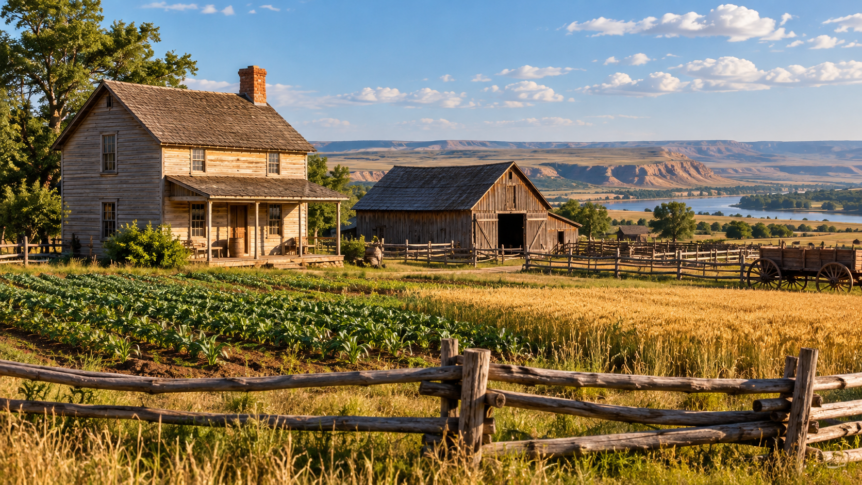
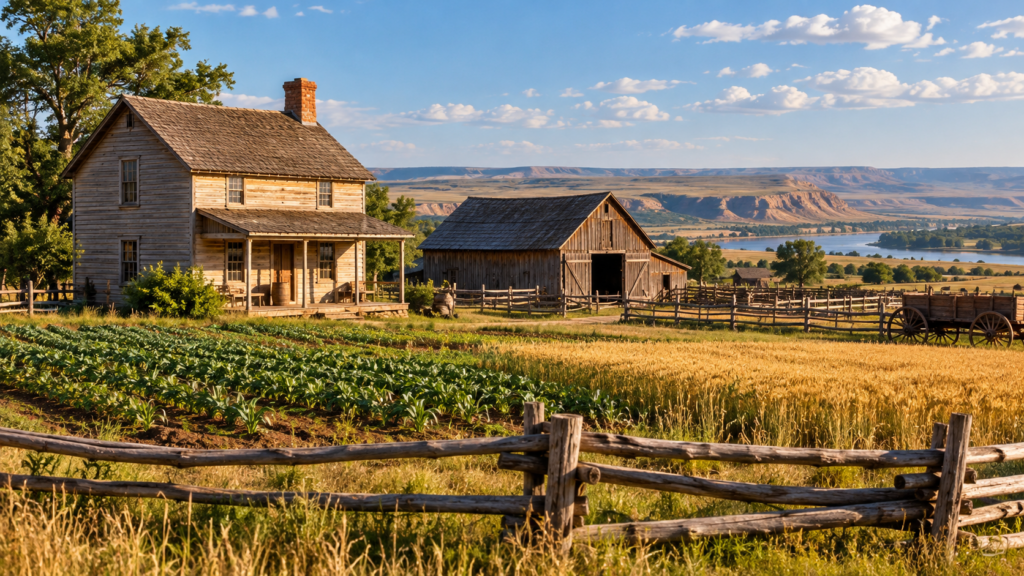
The expansion of America’s western frontier helped shape the nation’s agricultural history, influencing settlement patterns, land ownership, and the development of farming across the country. One of the most significant milestones in that process was the Homestead Act of 1862, which established a path for settlers to acquire land by living on it and improving it.
In this edition of the American Agriculture History Minute, Mark Oppold looks back at the early western frontier, the importance of St. Louis, and the debate over how the federal government should make western lands available to settlers.
St. Louis Becomes the Gateway to the West
By 1813, America’s western frontier had reached the Mississippi River. St. Louis had emerged as the largest town on the frontier and was already known as the gateway to westward travel.
Its location along the Mississippi River made it an important point of connection between established communities in the eastern United States and the vast territories farther west. As the nation expanded, the lands beyond the Mississippi represented new opportunities for settlement, farming, and economic development.
The question was how quickly those territories should be settled and what conditions the federal government should establish for people seeking land.
The Debate Over Western Land Settlement
There was broad agreement that the newly accessible territories should be settled, but disagreement emerged over the price the government should charge for land.
The debate reflected a fundamental question about America’s future: How could the government encourage westward expansion while determining who could obtain land and under what terms?
For prospective farmers and other settlers, access to land offered the possibility of establishing homes, cultivating crops, and building independent livelihoods. However, the cost of acquiring property could be a significant barrier.
The eventual solution would establish a framework that linked land ownership to settlement and productive use rather than requiring settlers to purchase all the land outright.
The Homestead Act of 1862 Changes American Agriculture
The debate over land access eventually led to the Homestead Act, signed into law by President Abraham Lincoln on May 20, 1862. The legislation created a system allowing eligible settlers to claim up to 160 acres of surveyed federal public land, provided they met specific requirements.
Under the law, settlers generally had to live on the land continuously for five years and demonstrate improvements, including building a dwelling and cultivating the property. After fulfilling the requirements and paying the necessary filing fees, they could obtain legal ownership of the land.
The program offered an alternative to purchasing land outright and was intended to encourage settlement across the western territories. It gave many aspiring farmers an opportunity to establish farms and build new lives in the West.
Although the Homestead Act was passed in 1862, it took effect on January 1, 1863. Its influence on settlement and agricultural development would extend for generations.
A Lasting Legacy in American Farming
The Homestead Act became an important chapter in the history of American agriculture. By connecting land ownership to residence and cultivation, it helped establish a framework for transferring large areas of federal public land into private ownership.
However, acquiring a homestead did not guarantee success. Settlers still faced the challenges of establishing a farm, obtaining equipment and livestock, cultivating crops, and enduring difficult frontier conditions.
The policy also formed part of a broader westward expansion that profoundly affected Indigenous communities and their lands. The history of homesteading therefore includes both opportunities for settlers and significant consequences for Native peoples.
The story of the Homestead Act illustrates how government land policy helped shape the development of American agriculture and the settlement of the West.