









An Iowa Cattle Feeder Looks for a Better Way
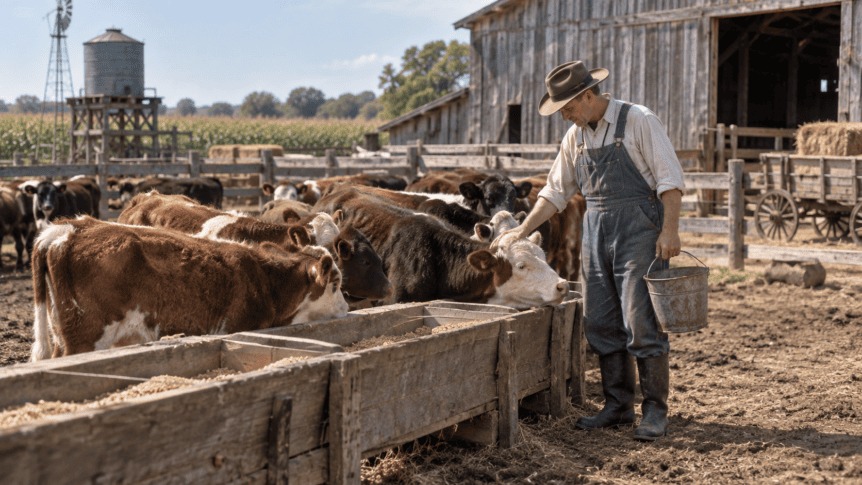
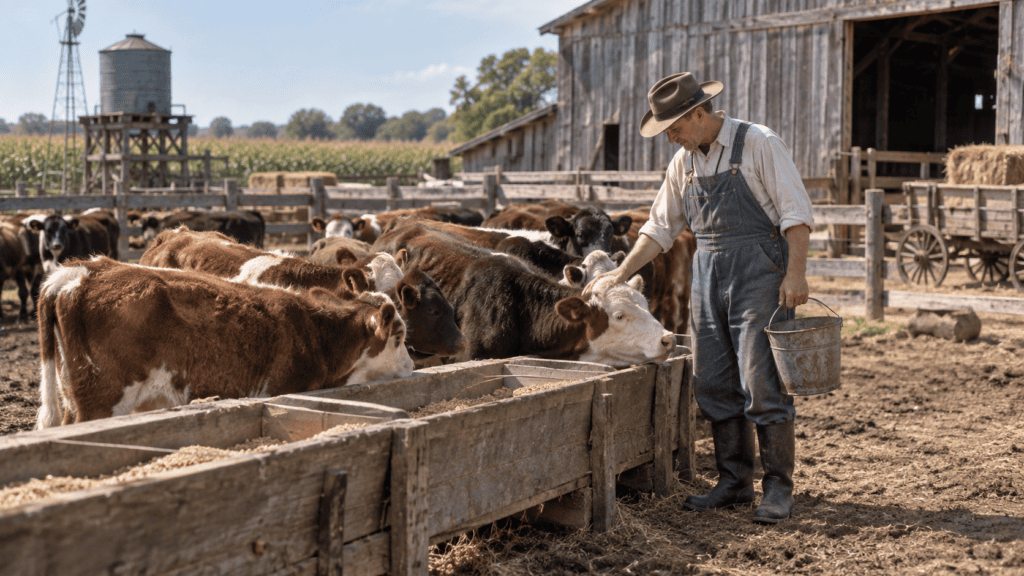
In the mid-1920s, a central Iowa cattle feeder began thinking differently about how cattle should be fed. Gage A. Kent believed that producing better cattle required more than simply providing animals with large quantities of feed. He believed careful attention to nutrition—and especially the quality of that nutrition—could make a meaningful difference in cattle performance.
Kent’s approach began with young calves. Rather than relying on feed products that contained what he considered unnecessary fillers, he wanted to provide calves with quality feed and nutritional supplements designed specifically to support their development.
It was a straightforward idea, but it reflected an important shift in agricultural thinking: better livestock production could begin with better nutrition.
Kent Baby Beef and “Feed Without a Filler”
Kent put his ideas into practice by developing his own feed product. He called it Kent Baby Beef, and its motto captured the philosophy behind the product: “Feed Without a Filler.”
The concept focused on providing young cattle with useful nutritional ingredients rather than filling a ration with materials that offered little value to the animal. For Kent, the goal was to develop feed around the needs of the livestock and ultimately produce healthier, better-performing cattle.
His efforts came at a time when American agriculture was becoming increasingly interested in scientific approaches to livestock production. Farmers and feeders were looking for ways to improve efficiency, animal growth and the quality of the products they produced. Nutrition was becoming an increasingly important part of that equation.
The Beginning of Kent Feeds
Kent’s experimentation eventually led to a larger agricultural enterprise. In 1927, Gage A. Kent founded Kent Feeds, establishing a company built around the idea that livestock producers could benefit from carefully formulated feed products.
What began with one Iowa cattle feeder’s effort to improve the way he fed young calves became the foundation of a feed business. Kent’s emphasis on quality nutrition and his rejection of unnecessary “fillers” helped establish the philosophy associated with his early products.
The story also illustrates an enduring characteristic of American agriculture: innovation frequently begins with farmers and livestock producers trying to solve practical problems they encounter every day. Kent was not simply developing a product for the sake of creating a business. He was attempting to answer a fundamental question facing livestock producers—how can better nutrition help produce better cattle?
A Small Idea With a Lasting Agricultural Legacy
Gage A. Kent’s work in central Iowa during the 1920s represents an early chapter in the evolution of the American livestock-feed industry. His decision to concentrate on young calves, quality feed supplements and formulations designed around livestock needs helped turn a practical feeding philosophy into a commercial enterprise.
The founding of Kent Feeds in 1927 is therefore more than a business milestone. It is an example of how agricultural innovation can grow from firsthand experience on the farm and feedlot.
From Kent Baby Beef and its memorable “Feed Without a Filler” motto came a company founded on the belief that what livestock eat matters—and that producers could improve their results by paying closer attention to nutrition.
That idea, born from the experience of a central Iowa cattle feeder, became part of the broader history of American agricultural innovation.
Listen to the American Agriculture History Minute
Gage A. Kent’s story is one of many fascinating moments in the development of American agriculture. From innovative farmers and livestock feeders to new machinery, crops and agricultural businesses, these stories help explain how American agriculture evolved over generations.
This has been Mark Oppold with an American Agriculture History Minute.