









European immigrants brought distinct farming traditions to early America, influencing everything from plowing methods and livestock management to family farm ownership. German, Scottish, and Irish settlers helped shape the agricultural practices that developed across the growing nation.
German-American Farmers Brought Old-World Traditions
Ethnicity played an important role in the development of early American agriculture. Immigrants from different parts of Europe arrived with farming techniques, cultural traditions, and approaches to managing land that reflected their experiences in their homelands.
German-American farmers, for example, brought agricultural practices that differed in several ways from those of English and Scottish farmers. As they established farms in America, they adapted familiar Old-World techniques to take advantage of the greater availability of land.
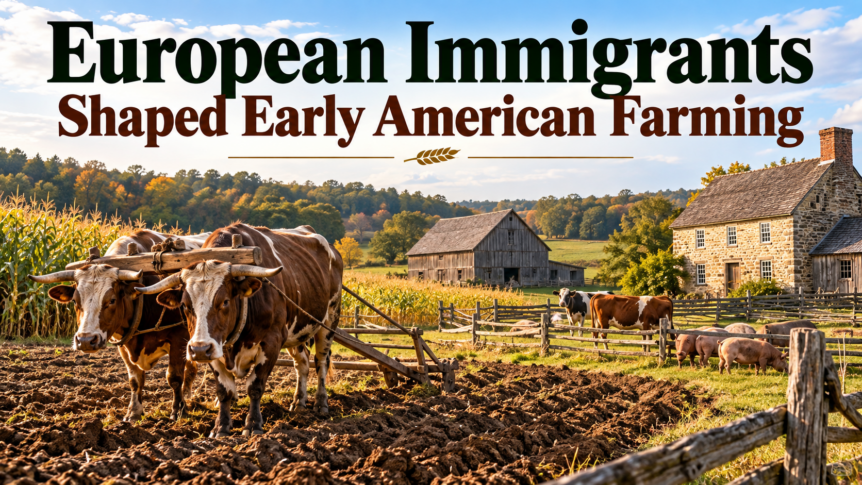
One notable difference involved draft animals. German farmers generally preferred oxen over horses for plowing. Oxen had long been used for agricultural work in Europe, and German settlers continued to rely on them as they adapted to farming conditions in America.
These choices reflected how immigrant communities carried established agricultural knowledge into a new environment while adjusting their methods to the resources available to them.
Family Ownership Was a Priority for German Settlers
German-American farmers also demonstrated a tendency to keep farms within the family over the long term. Rather than encouraging their children to leave the farm for opportunities in nearby towns, many sought to maintain family involvement in agricultural operations.
This emphasis on family continuity helped establish farming as more than an occupation. For these families, the farm represented a long-term investment, a source of livelihood, and a legacy that could be passed from one generation to the next.
The tradition of keeping farmland within the family also reflected the importance of stability and continuity in agricultural communities. Although farming practices varied among individual households, these cultural preferences helped distinguish some German-American farming communities from their neighbors.
Scottish and Irish Farmers Contributed Different Livestock Traditions
Scottish and Irish immigrants brought their own agricultural backgrounds and traditions to America. According to this installment of American Agriculture History Minute, some of these farmers established livelihoods around farm operations, while many were involved in herding hogs and cattle.
Livestock production was an important component of early American agriculture, providing food and other products while supporting local economies. Hogs and cattle were valuable farm animals, and raising them offered settlers another way to make productive use of available land.
The livestock traditions brought by Scottish and Irish immigrants contributed to the varied agricultural systems that emerged as European settlers established communities throughout America.
Immigrant Traditions Helped Shape American Farming
The development of American agriculture was influenced by more than soil, climate, and access to land. The cultural backgrounds of the people working that land also played a role in determining how farms operated.
German-American farmers adapted European techniques to American conditions, often favoring oxen for plowing and emphasizing the continuation of family farming. Scottish and Irish settlers contributed their own traditions, including livestock-related activities involving hogs and cattle.
These examples illustrate how early American agriculture developed through a combination of inherited knowledge and adaptation to a new environment. As immigrant communities established farms and built their livelihoods, they helped create the diverse agricultural traditions that became part of the nation’s farming history.
About American Agriculture History Minute
This installment of American Agriculture History Minute features Mark Oppold exploring how European ethnic traditions influenced early American farming practices.