









A Leader Who Helped Shape Modern Agriculture
American agriculture has been advanced by farmers, scientists, inventors and researchers—but some of the most influential contributors never farmed or developed an invention in a laboratory. E.T. York was one of those individuals.
Born in Alabama in 1922, York built a career around agricultural education, administration and public policy. Through his work in the university system, Cooperative Extension and government, he helped influence the direction of American agriculture from the classroom and the administrative office.
From University Administrator to Agricultural Leader
York began his professional career in higher education and eventually became an Agricultural Extension administrator. Extension programs have historically played an important role in connecting agricultural research and education with farmers and rural communities.
Rather than working directly in the field, York helped strengthen the systems that carried agricultural knowledge to the people who could put it into practice. His career demonstrated that advancing agriculture involves more than producing crops or livestock—it also requires effective education, leadership and communication.
York’s expertise eventually brought him to the national stage. He served as a U.S. Presidential Advisor on Agriculture, giving him an opportunity to contribute to agricultural discussions and policies at the highest levels of government.
A Prolific Agricultural Writer and Educator
York was also a prolific author and educator. He wrote more than 100 papers and articles, contributing ideas and information to the broader agricultural community.
His influence extended well beyond the institutions where he worked. York lectured at more than 40 universities, sharing his knowledge and perspective with students, educators and agricultural professionals across the country.
That educational reach was an important part of his legacy. By speaking to future agricultural leaders, York helped spread ideas that could influence agriculture well beyond his immediate professional responsibilities.
Advancing Agriculture Without Farming
E.T. York’s story offers an important reminder about the many ways people have contributed to American agriculture.
York was not known as a farmer, and he was not credited with creating a major agricultural invention. Instead, his contribution came through education, administration, Extension leadership, writing and agricultural policy.
His career illustrates how agriculture depends on a broad network of people working together. Farmers and ranchers remain at the center of food production, but educators, administrators, policymakers and communicators also play critical roles in helping the industry adapt and advance.
From Alabama to universities across the country and eventually into presidential agricultural policy discussions, York demonstrated how knowledge and leadership can have an impact on agriculture even when the individual is not working directly in a field or laboratory.
E.T. York’s Place in American Agriculture History
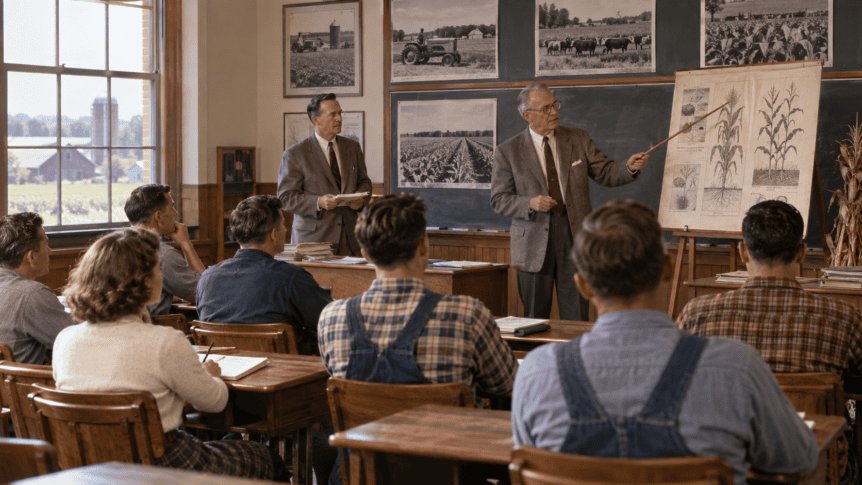
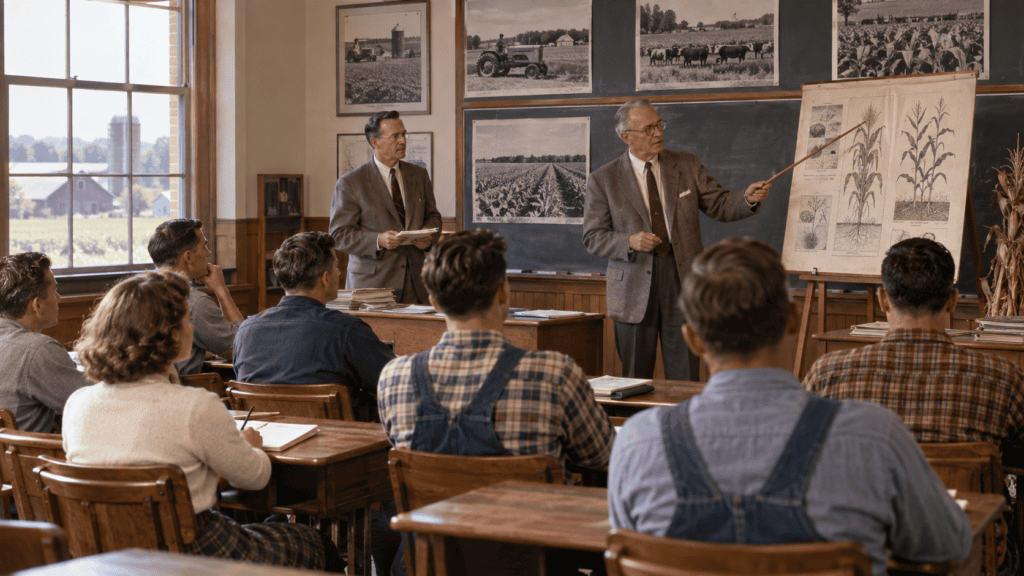
E.T. York became part of American agriculture history by helping move agricultural knowledge and ideas forward. His career serves as an example of how education can be an agricultural tool, and how administrators and educators can influence an industry without personally farming or developing new technology.
His work reminds us that the history of American agriculture is not only the story of crops, livestock and inventions. It is also the story of the people who built the educational, administrative and policy systems that helped American agriculture grow.
E.T. York was part of American agriculture history—and his legacy was built from the classroom, the Extension office and the halls of agricultural leadership.
This American Agriculture History Minute was presented by Mark Oppold.