









On a recent episode of the AgNet News Hour, Edward Ring, director of Water and Energy Policy at the California Policy Center, returned for Part 1 of a two-part conversation about California water and the infrastructure he believes the state needs to better prepare for both drought and flooding.
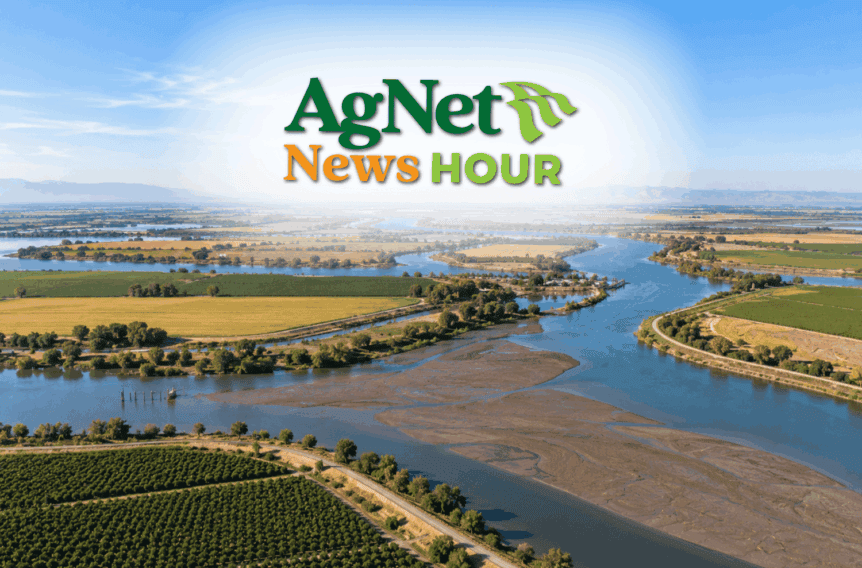
Ring focused first on sediment buildup in the San Joaquin River and South Delta, warning that a future period of heavy rain could overwhelm the system. He pointed to the major flooding of 1997 and argued conditions could be worse today because meaningful sediment removal has not occurred in decades.
His concern isn’t limited to flooded farmland. Ring said breached levees could mix contaminants with floodwater and potentially disrupt the ability to move water into California’s aqueduct system for an extended period.
“The point is, if we don’t dredge that Delta, the South Delta, we’re going to have flooding that’s going to make 1997 look like nothing,” Ring said.
The discussion then turned to California’s broader water storage system. Ring pointed to proposals including expanding Shasta Lake, constructing Auburn Dam and revisiting Temperance Flat as examples of infrastructure that could capture more water during wet years. He argued additional storage will become even more important if California faces longer stretches of dry weather interrupted by exceptionally wet winters.
Groundwater recharge is another piece of the equation. Ring acknowledged that California has made progress in allowing farmers to use floodwater to recharge aquifers, but said permitting and other barriers still make the process unnecessarily difficult.
Ring also discussed desalination, arguing that coastal production could reduce the amount of water Southern California needs to import, potentially leaving more supplies available for agriculture and the Delta. He pointed to desalination projects elsewhere in the world and blamed California’s regulatory costs for making similar projects considerably more expensive in the state.
Throughout the interview, Ring’s central argument was that California needs to focus more heavily on infrastructure capable of capturing, storing and moving water when it is available.
The conversation with Ring continues in Part 2.
Listen to Part 1 of the full interview below or on your favorite podcast app.
Listen to previous AgNet News Hour episodes…