









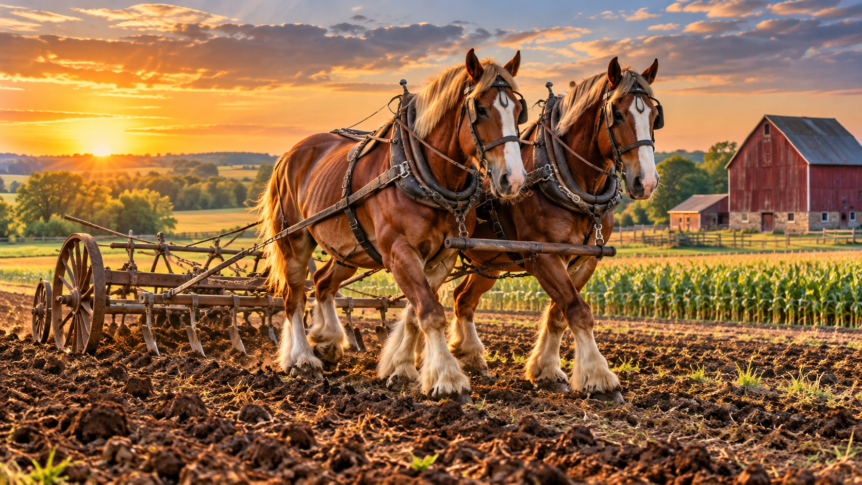
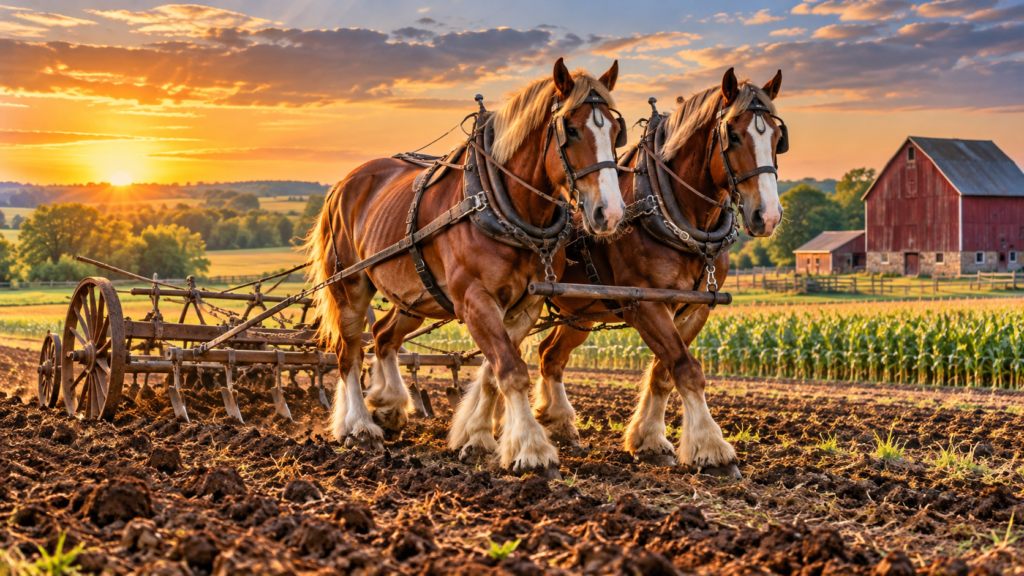
Before tractors and modern farm machinery transformed American agriculture, farmers depended on animals to provide the power needed to work their fields. During the mid-1800s, changes in agricultural equipment created a growing demand for stronger, more powerful draft horses, helping establish the Midwest as an important center for draft horse breeding.
In this edition of American Agriculture History Minute, Mark Oppold explores how the limitations of oxen and ordinary horses helped drive the adoption of powerful draft breeds, including Belgians and Clydesdales.
Oxen and Horses Powered Early American Farms
Until the mid-1800s, horses and oxen supplied much of the power used on American farms. Farmers relied on these animals to pull equipment and perform the heavy work required to plant, cultivate and harvest crops.
However, as agricultural machinery evolved during the 1850s and 1860s, the demands placed on working animals began to change.
Oxen were strong and useful for heavy labor, but they were often too slow to pull some of the newer machinery farmers were beginning to use. Horses offered greater speed, making them a practical alternative, but many lacked the endurance needed for sustained, demanding fieldwork.
These limitations created a need for animals that could combine strength, speed and stamina to meet the requirements of an increasingly mechanized agricultural industry.
European Draft Horse Breeds Meet America’s Needs
American farmers increasingly needed powerful animals capable of pulling heavier equipment and working efficiently in the field. European draft horses offered a solution.
Breeds such as the Belgian and Clydesdale were imported into the United States to help meet the growing demand for dependable farm power.
Known for their strength and ability to perform demanding work, draft horses became valuable assets as agricultural equipment grew larger and more challenging to pull. Their adoption reflected a practical response to changing farm technology: as machinery advanced, the animals powering that machinery also had to meet new demands.
The arrival of these European breeds helped expand the role of specialized draft horses in American agriculture.
Midwest States Become Draft Horse Breeding Centers
The demand for powerful working horses helped establish several Midwestern states as leaders in draft horse breeding. According to Oppold, Iowa, Ohio, Michigan and Illinois emerged as important centers for breeding draft horses.
These states became closely associated with the development of the strong horses needed to support American farming. Their role in draft horse breeding reflected the importance of livestock and animal power to the agricultural economy during the 19th century.
Before gasoline-powered tractors became widespread, draft horses remained essential to many farm operations. They helped farmers harness the capabilities of increasingly sophisticated equipment and supported the continued development of American agricultural production.
A Turning Point in American Agricultural History
The growing use of draft horses illustrates how agricultural progress often depends on more than new machinery alone. Farmers also needed reliable sources of power capable of putting that equipment to work.
The transition from relying primarily on oxen and ordinary horses to adopting specialized draft breeds marked an important development in American farming. European breeds such as Belgians and Clydesdales helped meet the need for greater pulling power, while Midwestern breeding centers helped establish draft horses as an integral part of the nation’s agricultural heritage.
Although tractors and other modern equipment would eventually replace animal power on many farms, draft horses remain a lasting symbol of the strength and labor that helped build American agriculture.
Listen to American Agriculture History Minute
Mark Oppold presents American Agriculture History Minute, a series exploring the people, innovations and historical developments that shaped American farming.
This installment examines how the changing demands of 19th-century farm machinery encouraged the adoption of European draft horse breeds and helped make Iowa, Ohio, Michigan and Illinois important centers for draft horse breeding.