









Early Settlers Overlooked the Importance of Soil Conservation
In the early years of American agriculture, settlers often gave little thought to conserving and maintaining the fertility of their soil. As Mark Oppold explains in the American Agriculture History Minute, many early farmers believed that land was plentiful and that additional acreage would always be available as new farming opportunities emerged across the country.
This mindset contributed to farming practices that could deplete soil nutrients over time. Rather than focusing on preserving the productivity of existing farmland, settlers often assumed they could move on to new land when their current fields became less productive.
However, by the 1880s, Americans were beginning to recognize that this approach was not sustainable indefinitely. As available farmland became more limited, farmers increasingly understood the importance of protecting their soil and maintaining its fertility for continued agricultural production.
Farmers Turn to Crop Rotation to Preserve Soil Health
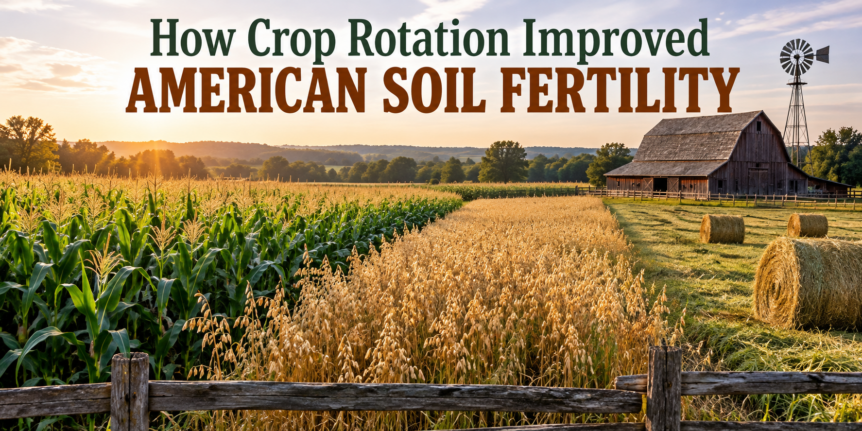
One important practice that gained attention was crop rotation. Instead of planting the same crop in the same field year after year, farmers began alternating crops such as corn, oats and hay.
This approach offered several agricultural benefits. Rotating crops helped reduce the buildup of certain crop diseases and insect pests that could become more prevalent when the same crop was repeatedly grown in one location.
Crop rotation also helped maintain soil fertility. Different crops have different nutrient requirements, and growing the same crop repeatedly can contribute to the depletion of particular nutrients. Alternating corn with oats and hay helped farmers vary how their fields used soil nutrients and supported the continued productivity of their land.
By diversifying the crops grown in their fields, farmers began moving toward a more sustainable approach to managing agricultural resources.
A Turning Point in American Agricultural History
The growing interest in soil fertility during the 1880s represented an important development in American farming. As settlers recognized the limitations of continually expanding into new farmland, they began placing greater emphasis on managing the land they already cultivated.
Practices such as crop rotation helped establish the foundation for more deliberate soil management. The lesson was becoming clear: maintaining productive farmland required more than planting and harvesting crops. It also required understanding how farming practices affected the soil over time.
The shift toward crop rotation illustrates how American farmers gradually learned that protecting soil fertility was essential to sustaining agricultural production and supporting future generations.
As Mark Oppold highlights in this American Agriculture History Minute, the recognition that farmland was a limited resource helped encourage farmers to reconsider their practices and take greater care of the soil on which their livelihoods depended.
About the American Agriculture History Minute
The American Agriculture History Minute, featuring Mark Oppold, explores the people, practices and innovations that have shaped American agriculture.