









California Assemblyman David Tangipa joins “The Ag Meter” Nick Papagni to discuss water, farming regulations, taxes, government spending, and the political decisions shaping the future of California agriculture.
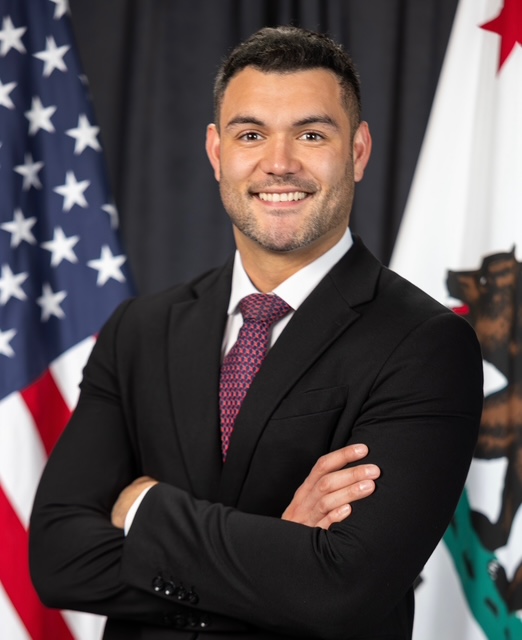
California Assemblyman-District 8
California agriculture is facing mounting challenges, from water shortages and increasing regulatory costs to taxation, government spending, and uncertainty about the state’s political future. For Assemblyman David Tangipa, representing California’s 8th Assembly District, these issues are personal. His commitment to fighting for farmers and working families stems from the support he received from the agricultural community during some of the most difficult moments of his life.
During an extensive interview with “The Ag Meter” Nick Papagni, Tangipa discussed his journey into politics, California’s water infrastructure, the state’s economic challenges, and why he believes significant changes are necessary to protect agriculture and the state’s business environment.
From Homelessness to Fighting for California Farmers
A former Fresno State Bulldog football player, small business owner, and real estate developer, Tangipa explained that his decision to enter politics was influenced by the farmers who helped him when he experienced homelessness approximately 10 years ago.
Members of the farming community provided him with a place to stay and helped him establish a foundation for future success. He eventually sponsored his mother’s immigration, helped his family move out of low-income housing, and built a successful career.
However, he continued hearing stories about hardworking Central Valley residents struggling with Sacramento’s regulations, rising labor expenses, restrictions on agricultural chemicals, and taxes.
Tangipa said he reduced his real estate activities to dedicate more time to public service, believing he has an obligation to give back to the community that helped change his life.
He also challenged California’s political establishment, arguing that the state’s Democratic supermajority has little incentive to change policies without meaningful electoral competition. However, he acknowledged that Republicans must develop a stronger message and offer voters practical solutions.
California’s Water Infrastructure Needs Immediate Attention
Water was one of the most important subjects discussed during the interview.
Papagni questioned why California’s gubernatorial debate involving Steve Hilton and Xavier Becerra devoted so little attention to agriculture and water, despite the industry’s enormous economic importance.
Tangipa emphasized the importance of the State Water Project and Central Valley Project, arguing that California should improve existing infrastructure and build additional storage rather than allow valuable water resources to go unused.
He criticized dam removal projects and questioned how California allocated funding from the 2014 water bond approved by voters.
Tangipa also expressed concern about the condition of existing dams and California’s preparedness for potential flooding associated with a strong El Niño weather pattern.
Referencing historical weather patterns, he discussed similarities between the wet years of 1983 and 1984 and those experienced in 2023 and 2024. He suggested that 2026 and 2027 could bring similar conditions, although these comparisons represent his observations rather than an established forecast.
He warned that California must prepare for heavy rainfall, flooding, and the potential wildfire consequences associated with vegetation growth.
His message was that emergency infrastructure is only effective when government leaders are prepared to use it properly.
Are California Farmers Funding Policies That Hurt Agriculture?
Tangipa raised concerns about agricultural organizations and their political contributions.
He argued that some farmers may be paying membership dues and political action committee contributions to organizations that subsequently support candidates responsible for policies those same farmers oppose.
He specifically questioned contributions benefiting Governor Gavin Newsom, Democratic legislative candidates, and Xavier Becerra.
His recommendation was for farmers to examine how their membership dues are being used and determine whether their organizations are genuinely representing agricultural interests.
Tangipa also criticized California’s approximately $350 billion budget, questioning whether the state’s spending is sustainable.
He argued that California depends heavily on capital gains and revenue from a relatively small number of wealthy taxpayers, creating vulnerability if financial markets decline.
He believes California has a spending problem rather than a revenue problem and that government performance should be measured by results instead of simply the amount of money spent.
Immigration Spending, Taxes and California’s Priorities
The discussion also addressed Fresno’s reported proposal to allocate more than $1 million toward legal expenses for undocumented immigrants.
Tangipa questioned why local governments would pursue additional taxation while allocating funds to programs that he believes should receive less priority.
He cited approximately $15 billion in state spending on benefits for undocumented immigrants and compared that figure with less than $500 million for California veterans.
He challenged lawmakers to explain why veterans who served the country receive comparatively limited state support.
Tangipa also referenced the Laffer Curve, arguing that excessive taxation can discourage economic activity and ultimately undermine government revenue.
His position was that California needs more responsible spending, fewer unnecessary regulations, and greater accountability for taxpayer dollars.
High-Speed Rail Versus Water Storage
Papagni questioned why California continues spending money on high-speed rail when the state has significant infrastructure needs involving dams, roads, and water storage.
Tangipa agreed that the current high-speed rail project should stop, arguing that its existing plan is financially and structurally unworkable.
He specifically questioned the project’s required easements and its ability to overcome obstacles involving a federal canal.
Instead, he advocated redirecting infrastructure investments toward dams, hydroelectric facilities, roads, broadband, and improvements that provide tangible benefits.
Papagni compared the project’s delays with the construction of the Golden Gate Bridge, while Tangipa noted that the International Space Station was completed faster than California’s high-speed rail project has progressed.
What Could Change Under New California Leadership?
Tangipa explained that a change in gubernatorial leadership could influence regulatory agencies, including the California Air Resources Board, CalGEM, and agricultural boards.
He argued that new appointments could change how California approaches energy, water allocation, and agricultural regulations.
He particularly criticized proposed increases in unimpaired river flows, which he said could further restrict water availability.
Tangipa cited figures suggesting that more than 80% of California’s water goes toward environmental purposes, with agriculture accounting for approximately 13% and municipalities approximately 4%.
He advocated capturing more surplus water during wet years and using flood irrigation to recharge groundwater aquifers.
He also questioned what a Xavier Becerra governorship would look like, suggesting that advisers and political consultants could exercise considerable influence over an administration.
Tangipa’s Voter Guide and Message to California Farmers
As the election approached, Tangipa shared his recommendations for California’s ballot propositions.
His stated positions included voting no on Propositions 1 through 38, although he clarified that he was neutral on Proposition 37. He recommended yes on Proposition 39, no on Proposition 40, yes on Propositions 41, 42 and 43, no on Proposition 44, and yes on Proposition 45.
He supports Proposition 45 because he believes it would streamline environmental and CEQA reviews.
Tangipa also reminded voters that media organizations calling an election do not constitute official election certification. He encouraged Californians to participate and verify that their ballots were received and counted.
His message to farmers heading into 2026 and 2027 was especially direct: prepare for uncertainty, keep debt low, pay down obligations when surplus funds are available, and examine whether agricultural organizations are truly supporting the industry.
He believes California must address its underlying problems rather than continue making incremental adjustments.
Listen to the Full Interview on The Ag Meter
California agriculture’s future depends on decisions involving water, regulations, taxes, infrastructure, and political leadership.
In this wide-ranging interview, Nick Papagni and Assemblyman David Tangipa explore the issues affecting farmers, agricultural businesses, and working families throughout California.
From water storage and groundwater recharge to government spending, immigration policy, high-speed rail, and the upcoming election, Tangipa offers his perspective on what needs to change.
Listen to the complete conversation between “The Ag Meter” Nick Papagni and Assemblyman David Tangipa to hear the full discussion and his message to California’s agricultural community.