








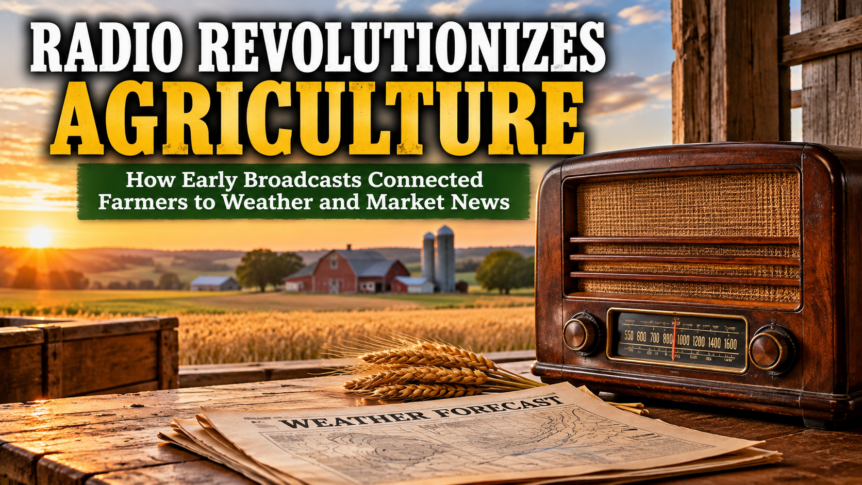
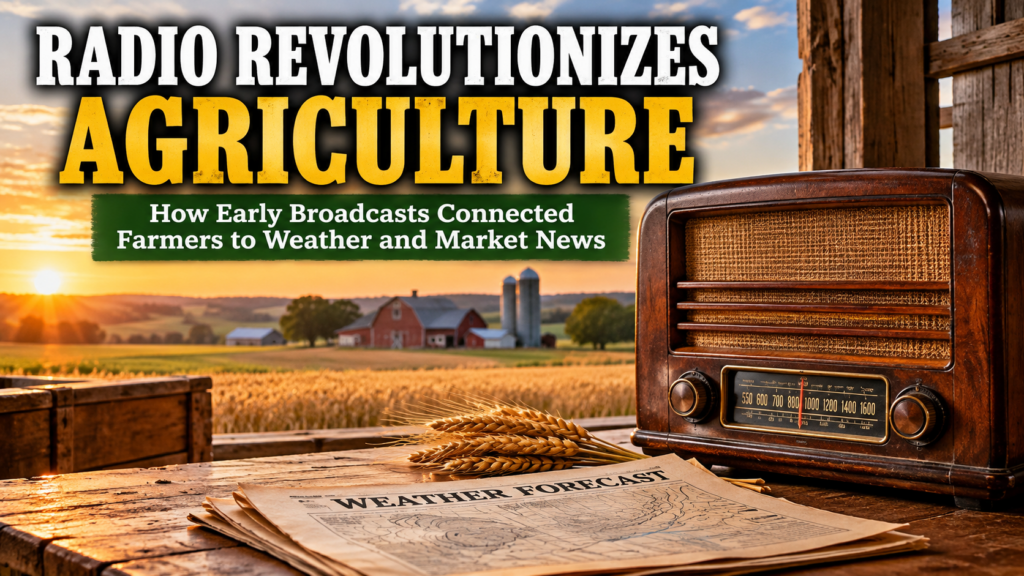
Radio became an important communication tool for American agriculture in the early 20th century, helping farmers and rural communities gain access to weather reports, grain prices and market information. In the early days of broadcasting, radio stations began connecting agricultural producers with information that could influence their daily decisions and business operations.
In this edition of American Agriculture History Minute, Mark Oppold explores the early development of agricultural radio broadcasting and how quickly the new technology began serving rural America.
Early Radio Broadcasts Bring Information to Rural America
Not long after the invention of AM radio, broadcasters began recognizing its potential to deliver valuable information to farmers and rural communities.
One early example came in January 1921, when WHA in Madison, Wisconsin, began broadcasting weather reports to rural America. Access to weather information was especially important for farmers, whose planting, harvesting and other field operations depended heavily on changing weather conditions.
Radio offered a new way to distribute these reports beyond the immediate reach of traditional communication methods, helping connect rural residents with information that mattered to their livelihoods.
Illinois Grain Dealer Uses Radio to Share USDA Prices
Just two months after WHA began broadcasting weather reports, another early agricultural radio initiative emerged in Illinois.
An Illinois grain dealer put station WDZ on the air to provide customers with five minutes of grain prices from the U.S. Department of Agriculture (USDA). The broadcasts gave listeners access to market information through radio, offering a convenient way to follow grain prices without relying solely on other sources of communication.
For farmers and grain producers, market prices are essential to making informed decisions about selling crops and managing farm income. By broadcasting USDA grain prices, WDZ demonstrated how radio could serve as a practical business tool for the agricultural industry.
The effort also illustrated an important early connection between agricultural markets, government information and emerging communications technology.
USDA Market Broadcasts Expand Across the Country
Agricultural radio broadcasting grew rapidly during its early years. According to Oppold’s history report, within approximately a year of these pioneering broadcasts, 35 radio stations had been approved to broadcast USDA market information.
That expansion reflected growing recognition of radio’s value as a way to distribute agricultural information to a wider audience.
Weather reports and grain prices were early examples of the information farmers could receive over the airwaves. As broadcasting developed, radio helped establish a foundation for delivering timely agricultural news and market updates to rural communities.
The early adoption of radio demonstrated that new communications technologies could help bridge the information gap between agricultural producers and the markets they depended on.
Radio’s Lasting Place in Agricultural History
The introduction of agricultural radio broadcasting marked an important step in the evolution of farm communications. What began with weather reports in Wisconsin and grain-price updates in Illinois quickly expanded into a broader effort to deliver USDA market information through radio stations.
These early broadcasts helped establish a tradition of sharing agricultural news and market data with farmers through mass media. Radio would go on to play a significant role in connecting rural America with information about weather, commodity prices and developments affecting the agricultural economy.
As Mark Oppold highlights in American Agriculture History Minute, radio’s contribution to American agriculture began almost as soon as the technology became available, demonstrating the enduring importance of timely information to farmers and rural communities.
American Agriculture History Minute is presented by Mark Oppold and sponsored by Image Wellness. The sponsor encourages listeners to prioritize their health and connect with a certified health and wellness coach to help them live their best lives. Visit Image Wellness on Facebook for more information.