









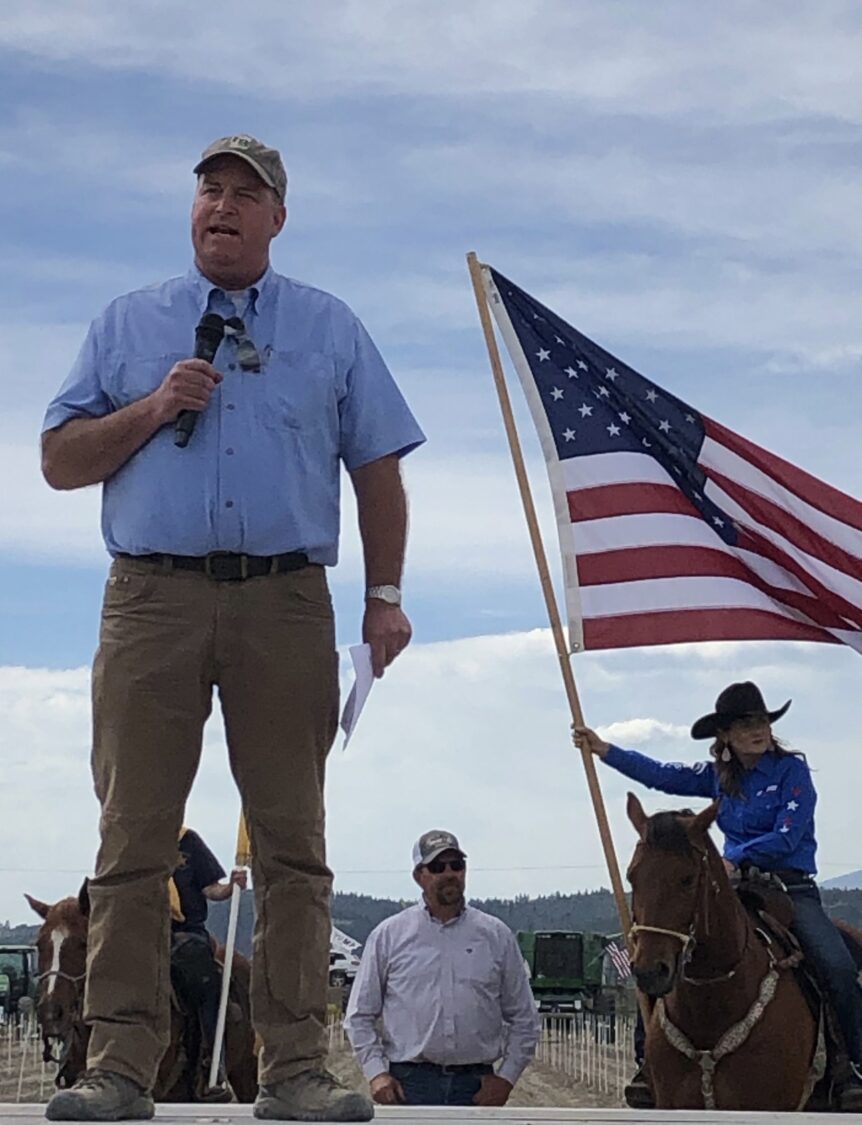
Former California Farm Bureau President Jamie Johansson joins Nick Papagni “The Ag Meter” to discuss water, farm regulations, energy costs, labor challenges and the future of rural California.
From water storage and wildfire prevention to the rising cost of running a farm, Johansson shares his perspective on the policies affecting California agriculture and the need for greater accountability in Sacramento. Drawing on his experience as a farmer, agricultural advocate and former Oroville vice mayor, he explains why he believes California must make changes to protect family farms, food production and the next generation of agricultural leaders.
The wide-ranging interview also examines food processing, forest management, immigration policy and the importance of giving rural communities a stronger voice in state government.
Water Storage and Groundwater Recharge Top Johansson’s Priorities
Johansson, who farms olives and citrus near Oroville, said California needs a more urgent approach to water management. He pointed to the droughts of 2015 and 2022–2023 as reminders that water shortages affect agricultural production and entire local economies.
He called for additional water storage infrastructure, renewed attention to hydropower and more effective groundwater recharge during high-flow events. Johansson also expressed frustration over delays involving a reservoir project supported by a 2014 bond measure.
He argued that California must prepare for future droughts instead of repeatedly responding to shortages after they occur. He also criticized regulatory barriers that, in his view, delay infrastructure and complicate water management.
Johansson said his experience with the California Farm Bureau has taught him the importance of holding regulatory agencies accountable for decisions affecting farmers and rural communities.
Farm Regulations and Rising Costs Threaten Competitiveness
Johansson believes California’s regulatory environment is making it increasingly difficult for agricultural businesses to remain competitive.
He called for reviewing major policies, including Assembly Bill 32, California’s landmark climate legislation, to evaluate their effects on energy prices, fuel costs and the broader economy. He questioned whether promised long-term savings from certain climate-related requirements have materialized.
He also advocated greater legislative accountability for new fees and taxes imposed through regulatory agencies, arguing that lawmakers should publicly evaluate the costs and benefits of those decisions.
Johansson said California’s agricultural economy could be stronger if farmers faced fewer barriers to production and investment. He warned that rising costs are contributing to changes in food production and increasing competition from imported products.
Food Processing Closures Put Growers at Risk
The loss of agricultural processing facilities is another concern. Johansson discussed the consequences of Del Monte’s bankruptcy and the loss of its Modesto-area peach canning operation, which he linked to the removal of approximately 400,000 peach trees.
He explained that when processors close, growers can lose established markets and struggle to find alternative buyers for their crops.
Drawing on his experience as Oroville’s former vice mayor, Johansson described efforts to help keep a local peach cannery operating. He said the city secured a $10 million tax-free bond to help Pacific Coast Producers address costly infrastructure requirements and remain in operation.
Johansson said the facility employed approximately 2,500 seasonal workers and 300 year-round employees. He also reported that it recovered about 25% of the contracts lost following Del Monte’s bankruptcy.
He argued that California must do more to retain food processors because a competitive processing industry gives farmers more marketing options and supports rural employment.
Automation, Labor and the Future of Family Farms
Johansson warned that rising labor costs are accelerating automation and farm consolidation. He recalled how mechanical tomato harvesting in the 1960s helped transform production, contributing to the loss of many smaller tomato farms as larger operations became more efficient.
He said automation requires substantial investment that smaller growers may struggle to recover. Johansson believes specialty markets can provide opportunities, drawing on his own experience developing a premium olive oil business when local canneries began closing.
However, he said excessive fees, permits and taxes make it increasingly difficult for smaller farms to compete.
The interview also addressed immigration and agricultural labor. Johansson said farmers need reliable workers while the country maintains border security and enforces immigration laws. He expressed concern that uncertainty surrounding immigration policy complicates workforce planning.
Wildfire Prevention and Wildlife Management
Johansson called for faster forest management projects, including prescribed burns and other measures intended to reduce wildfire risks. He cited devastating fires in Butte County and criticized delays he believes can prevent effective prevention efforts.
He also discussed wolf populations and livestock losses in Northern California, arguing that wildlife management must account for ranchers’ livelihoods and the role of grazing in managing vegetation.
Johansson urged greater accountability from government agencies and emphasized the importance of managing California’s natural resources before droughts, floods and wildfires create additional economic and environmental damage.
Listen to the Full Interview with The Ag Meter
Throughout his conversation with Nick Papagni, Johansson returned to a central theme: California agriculture needs reliable water supplies, affordable energy, practical regulations and policies that allow farmers and rural businesses to remain competitive.
He also stressed the importance of educating consumers and policymakers about where food comes from and what it takes to produce it.
Listen to the full interview with Jamie Johansson with “The Ag Meter” for his detailed perspectives on California agriculture, water policy, farm economics and the challenges facing rural communities.