









Fred Hatch and the Early Farm Silo
In 1873, Illinois farmer Fred Hatch developed what is believed to be one of America’s earliest variations of the modern farm silo, addressing a problem that farmers had faced for generations: how to safely store grain while protecting it from spoilage and rodents.
Before modern grain-storage systems became common, farmers relied on a variety of structures and methods to protect harvested crops. Storage losses caused by moisture, deterioration and pests could significantly reduce the value of a harvest. Hatch’s efforts represented an important step in the continuing development of agricultural storage technology.
Early Upright Silos Were Built From Brick and Wood
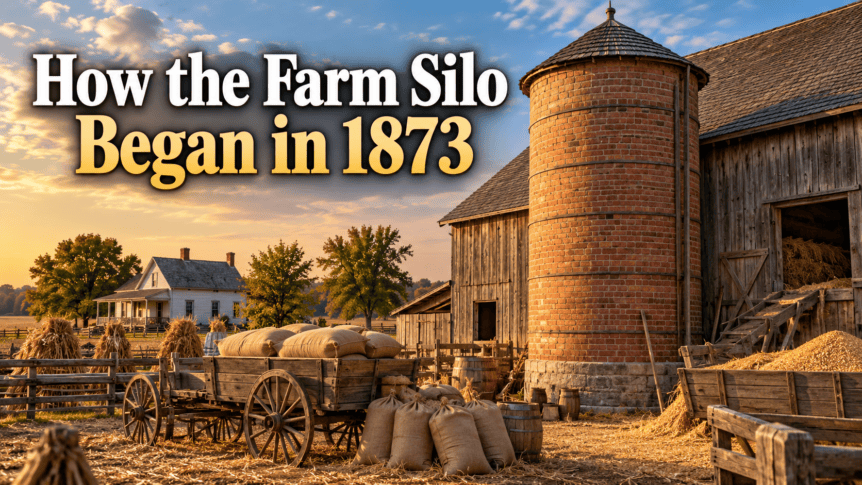
Some of the earliest upright silos were rounded structures constructed from materials such as brick or wood, with cement used in their construction. The basic approach was similar to the methods farmers and builders were already using to construct houses, barns and other farm buildings.
These early upright silos represented an important development, but they were not always built to withstand long-term use. As farmers gained experience with silo construction and storage, improvements were made to make the structures more durable and practical.
The upright silo would eventually become a familiar sight on farms across the country, particularly as farmers developed better ways to preserve and store forage and other agricultural products.
The Pit Silo Offered Another Storage Solution
Farmers also experimented with a different approach: the horizontal pit silo. Rather than building a tall, upright structure, the pit silo used a cement wall or enclosed area to provide storage.
The two basic approaches—upright and horizontal—continued to evolve as agricultural technology advanced. Farmers adapted silo designs to fit their operations, available materials and storage needs.
Although modern storage systems are far more sophisticated than those used in the 19th century, both upright and horizontal silo concepts remain part of agriculture today.
A Legacy of Agricultural Innovation
The history of the silo illustrates how farmers have continually looked for practical solutions to everyday agricultural challenges. Protecting harvested crops from spoilage and pests was essential to making the most of a year’s production, and innovations such as those associated with Fred Hatch helped establish the foundation for later improvements in farm storage.
From early brick and wooden structures to today’s modern storage systems, the silo remains an example of agricultural technology evolving in response to farmers’ needs.
This history is featured in American Agriculture History Minute, presented by Mark Oppold.
That’s today’s American Agriculture History Minute.