









American Agriculture History Minute Examines Washington’s Enslaved Labor Force
George Washington’s legacy in American agricultural history is closely connected to the institution of slavery. During his lifetime, Washington controlled a cumulative total of more than 577 enslaved people who were forced to work on his farms and in his household, including his residence in Philadelphia.
The history of Washington and slavery was complicated, with his actions and policies reflecting the contradictions surrounding slavery during the founding era of the United States.
Washington’s Role as a Farmer and Slaveholder
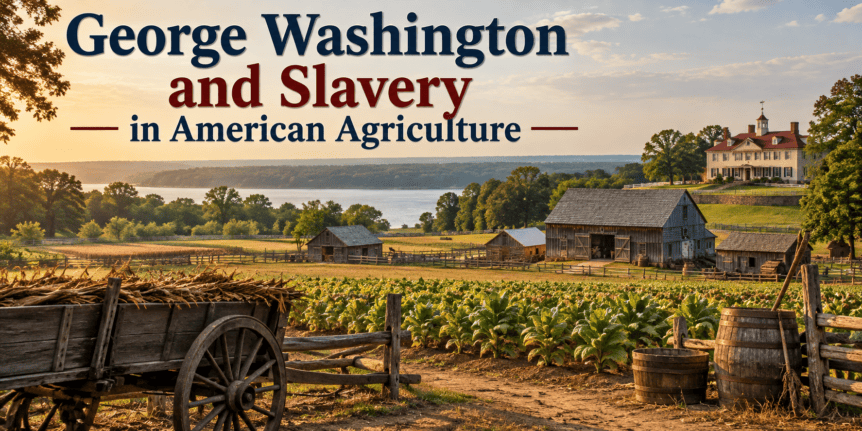
Washington was a prominent agriculturalist whose farming operations depended heavily on enslaved labor. The enslaved people under his control worked on his farms as well as performing household duties.
The scale of that labor force illustrates the significant role slavery played in the agricultural economy of Washington’s time. Although Washington became a central figure in the creation of the United States, his agricultural operations remained tied to a system in which enslaved people were denied their freedom and compelled to work.
As president, Washington also signed legislation passed by Congress that addressed slavery in different ways. Some of those laws curtailed aspects of the institution, while others provided protections for slavery.
William Lee and Washington’s Final Wishes
Washington’s will provided for the freedom of at least one enslaved man, William Lee. According to the historical account highlighted in the American Agriculture History Minute, Washington directed that Lee be freed upon Washington’s death.
Washington’s will also addressed the status of the other enslaved people he controlled. They were to continue working for his wife, Martha Washington, during her lifetime and were then to be freed after her death.
Martha Washington ultimately freed the enslaved people during her own lifetime rather than waiting until her death.
The transcript notes that she explained her decision by saying she wanted to eliminate any incentive for the enslaved people to hasten her death in anticipation of their eventual freedom.
A Complicated Historical Legacy
Washington’s relationship with slavery remains an important and complicated part of understanding the agricultural and social history of early America. His life connected him to the development of American agriculture while also placing him within a system of forced labor that affected hundreds of enslaved people.
The provisions in Washington’s will and Martha Washington’s subsequent decision to free the enslaved people provide an additional perspective on how slavery and emancipation were addressed within some prominent households of the early republic.
This chapter of American agricultural history demonstrates that understanding the nation’s early farming economy requires examining both agricultural production and the labor system that supported it.